Picture this: you finally got the tattoo you’d been planning for months. The linework is crisp, the color is saturated, and you can’t stop staring at it in the mirror. Then summer rolls around, you spend one too many afternoons in direct sunlight without thinking twice , and six months later, that once-vivid piece looks like a faded photocopy of what it used to be.
Here’s the truth nobody tells you at the tattoo shop: the sun is the single biggest threat to your tattoo’s long-term appearance, more than bad aftercare, more than swimming, more than almost anything else. UV rays break down pigment molecules, blur fine linework, and age the surrounding skin faster than anywhere else on your body. The good news? Protecting your ink doesn’t require anything complicated , just the right habits, applied consistently.
Below are 15 practical, tattoo-safe sunscreen protection ideas that will help your tattoo stay bold, sharp, and true to its original color for years to come , whether it’s brand new or decades old.
1. Know the Difference Between “Healing” and “Healed” Before You Reach for SPF

This is the single most important rule on this list, and it’s the one most people get wrong. Sunscreen should never touch a fresh tattoo. During the first two to four weeks, your tattoo is technically an open wound made of thousands of tiny puncture points, and sunscreen ingredients mineral or chemical can clog pores, trap bacteria, and even pull ink out as scabs lift. Wait until the skin has zero flaking, zero shine, and zero tenderness before introducing any SPF product.
Save-worthy tip: If you can still feel texture, tightness, or peeling when you run a finger over it, it’s not ready for sunscreen yet cover it with fabric instead.
2. Choose Broad-Spectrum Protection, Every Single Time
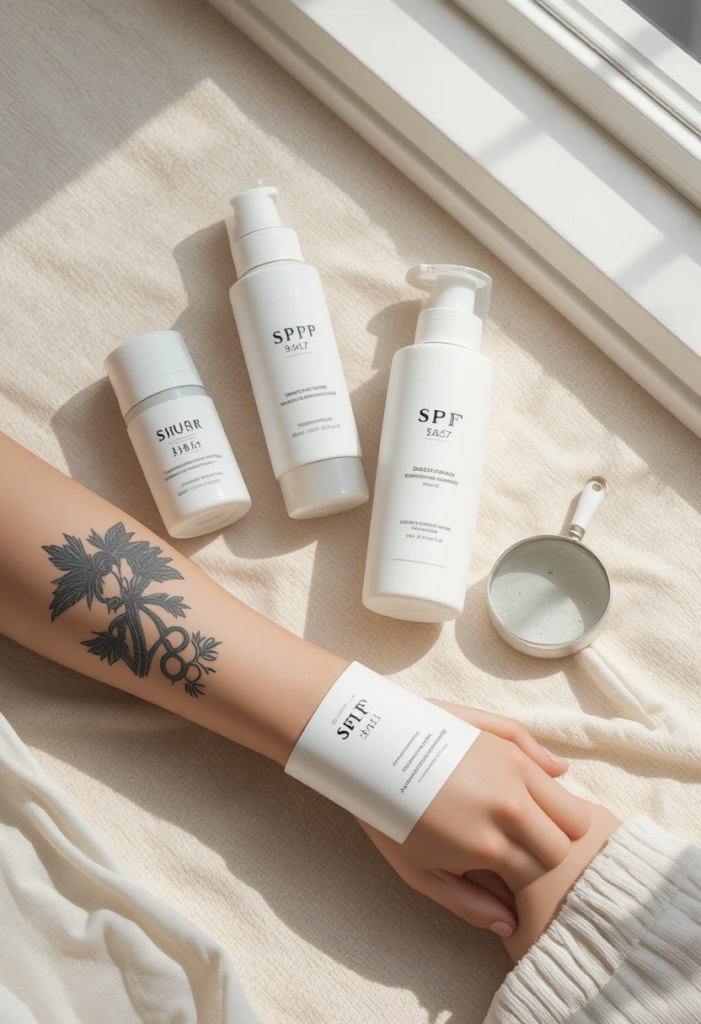
Not all sunscreens are created equal. “Broad spectrum” means the formula blocks both UVA rays (which cause premature aging and deep pigment breakdown) and UVB rays (which cause sunburn). A sunscreen that only blocks UVB will let UVA rays quietly fade your tattoo even while your skin looks fine on the surface. Always check the label before buying.
3. Stick With SPF 30–50 Skip the Marketing Hype Above That
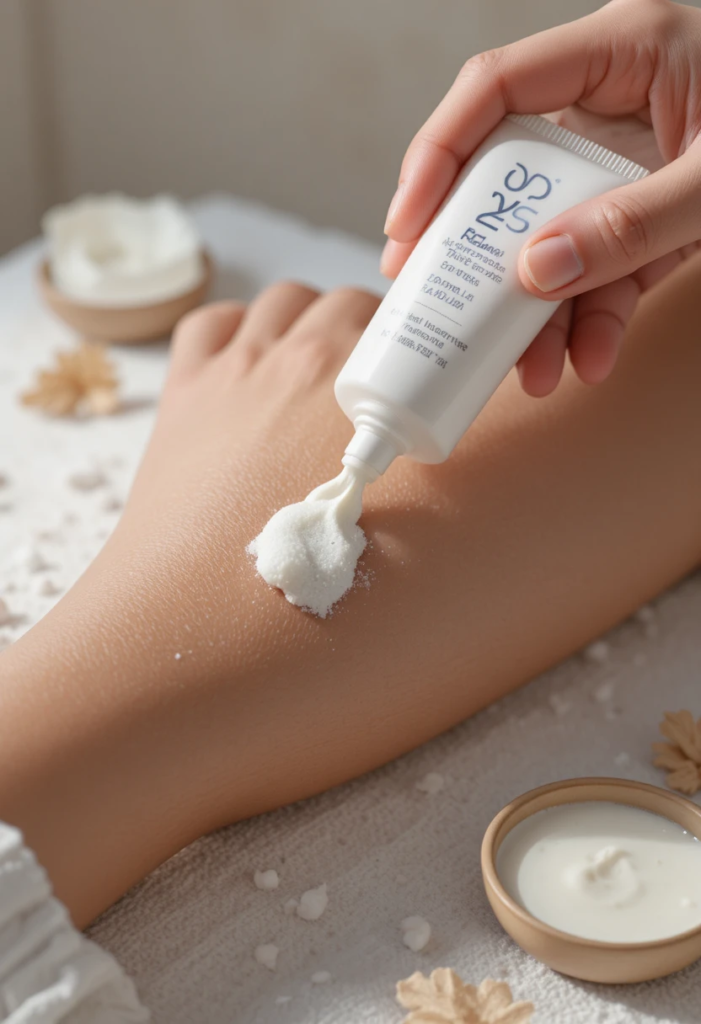
You don’t need SPF 100 to protect a tattoo. Once you hit SPF 50, the added protection becomes marginal, while the price tag climbs fast. SPF 30 blocks roughly 97% of UVB rays, and SPF 50 pushes that closer to 98% the difference is tiny. Save your money and put it toward reapplying more often instead, which matters far more than chasing a higher number.
4. Go Mineral, Not Just Chemical, for Sensitive or Newly Healed Ink
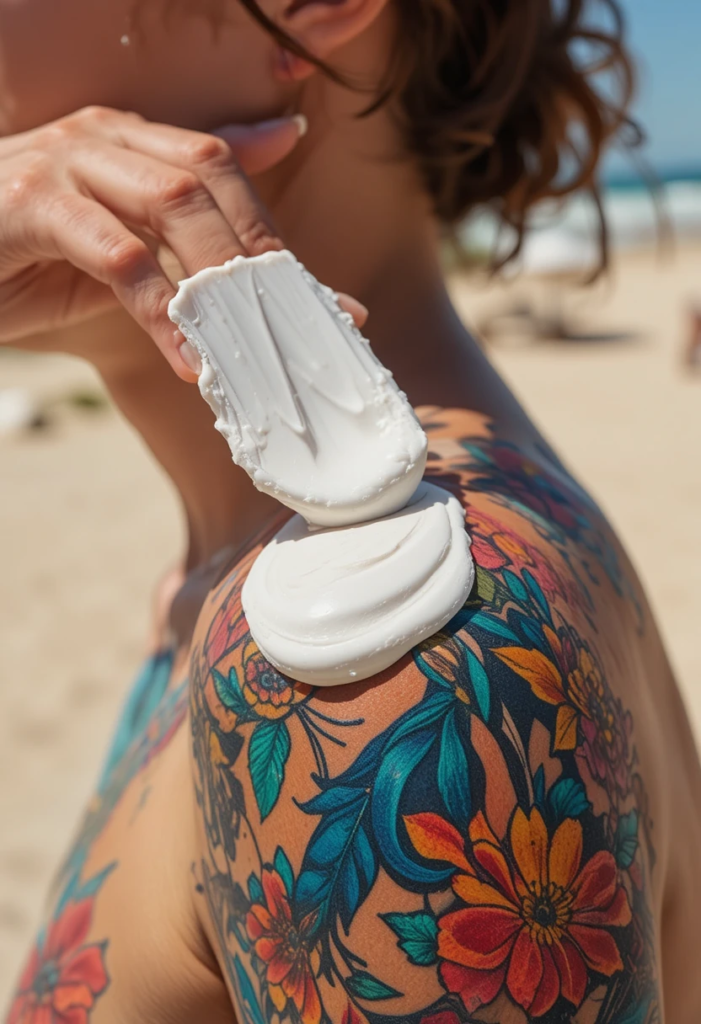
Mineral sunscreens (using zinc oxide or titanium dioxide) sit on top of the skin and physically deflect UV rays, rather than absorbing into the skin like chemical formulas. For tattooed skin especially skin that’s only just finished healing mineral formulas tend to cause less irritation and are less likely to interact with pigment. Look for “zinc oxide” or “titanium dioxide” as the active ingredient.
5. Apply Generously Most People Use Way Too Little
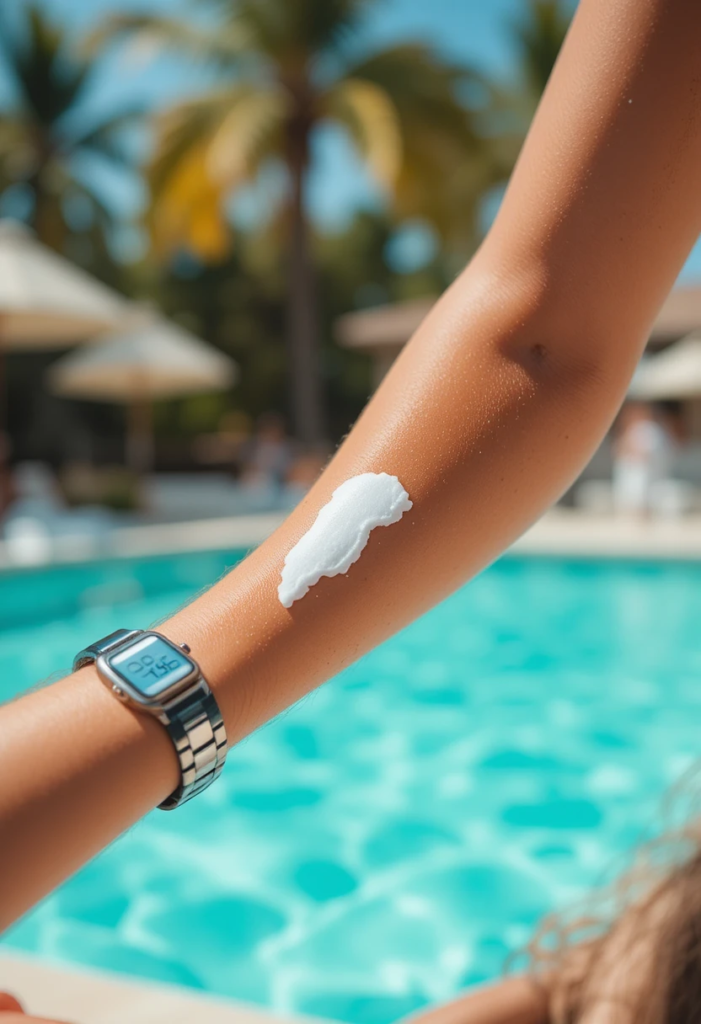
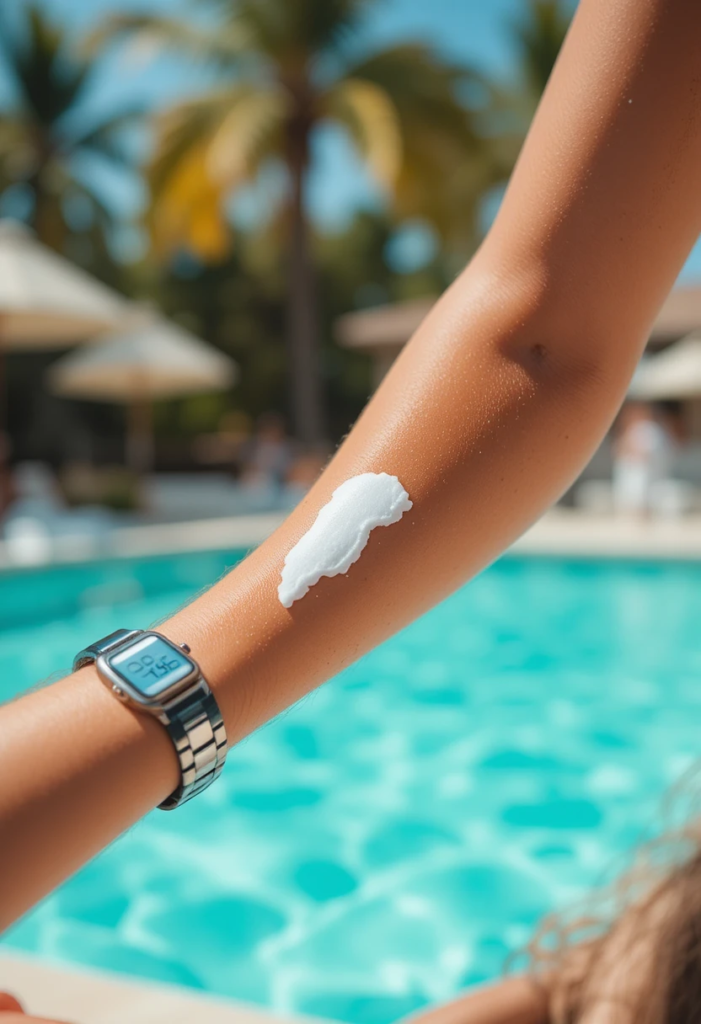
A thin, uneven layer of sunscreen barely counts as protection at all. The rule of thumb dermatologists use is about a nickel-sized amount of lotion for one average-sized tattoo (like a forearm piece), and more for larger back or thigh pieces. If you can still see your tattoo’s colors clearly through the sunscreen without any white residue, you’ve probably applied enough.
Read also: 18 Ocean Tattoo Ideas That Capture the Sea’s Wild, Untamed Beauty
6. Reapply Every Two Hours Outdoors No Exceptions

Sunscreen breaks down under heat, sweat, and friction from clothing. Even the most expensive, high-SPF formula stops working effectively after roughly two hours outdoors, and even sooner if you’re swimming or sweating heavily. Set a phone reminder if you know you’ll be losing track of time at the beach, a festival, or a hike.
Pinnable callout: “No sunscreen lasts all day. Reapplication is the real secret to tattoo longevity not the SPF number on the bottle.”
7. Apply 15–30 Minutes Before You Step Outside

Sunscreen needs time to bind to the skin before it becomes fully effective. Applying it the moment you walk out the door means your tattoo is exposed to unfiltered UV rays during those first crucial minutes. Build the habit of applying sunscreen while you’re still getting dressed or having breakfast, not on your way out the driveway.
8. Cover Fresh (Still-Healing) Tattoos With Fabric, Not Sunscreen

Since sunscreen is off-limits for the first few weeks, your only real defense during healing is physical coverage. Loose, breathable, tightly-woven fabric not thin cotton, which lets more UV through than people assume , is your best friend here. A lightweight long-sleeve shirt or a wide-brim hat works well for shoulder, chest, or scalp tattoos during this window.
9. Invest in UPF-Rated Clothing for Long-Term Coverage

UPF (Ultraviolet Protection Factor) clothing is specifically woven or treated to block UV rays, unlike regular fabric. A UPF 50+ shirt blocks about 98% of UV radiation, making it one of the most reliable ways to protect large tattoos sleeves, back pieces, or thigh tattoos without worrying about missed spots or sweat washing off protection.
10. Avoid Peak Sun Hours When You Can

UV intensity peaks between 10 a.m. and 4 p.m. in most regions. This doesn’t mean cancel your plans , it means being more deliberate. If you’re going to be outside during these hours, that’s when reapplication frequency, shade breaks, and clothing coverage matter most.
11. Don’t Skip Cloudy or Cold Days
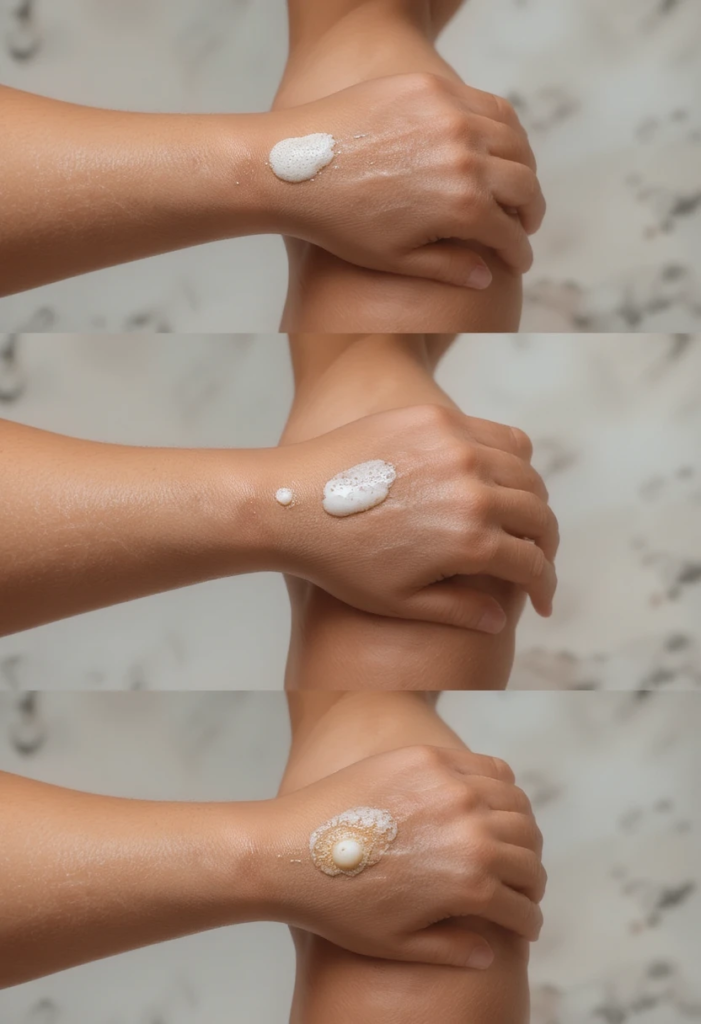
One of the most common tattoo-fading mistakes is assuming sunscreen is only a “summer thing.” Up to 80% of UV rays pass through cloud cover, and UV radiation reflects off snow, sand, water, and even concrete. A tattoo on your hand or wrist gets sun exposure every time you drive, walk the dog, or run errands , regardless of the season.
12. Pick a Formula Based on Where the Tattoo Is Located
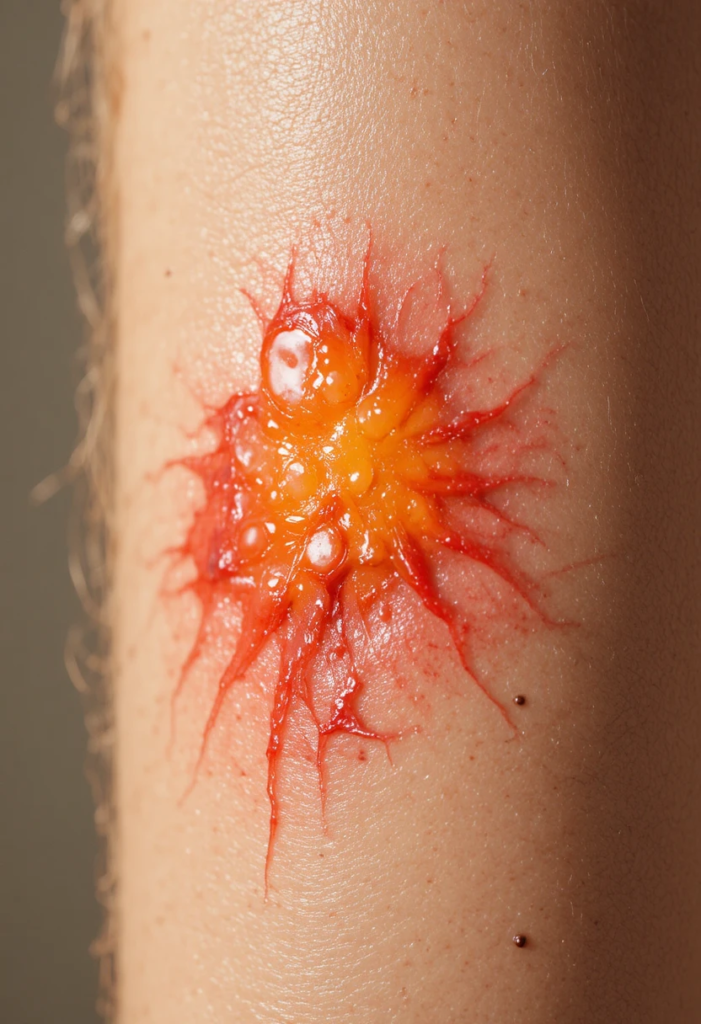
Not every sunscreen texture works for every body part. A cream or lotion is easier to see and evenly apply on larger areas like a back piece, which helps you avoid missed spots. A stick sunscreen is more precise for smaller tattoos on hands, fingers, or ankles. Sprays are convenient but risk uneven coverage, so if you use one, rub it in afterward rather than relying on the mist alone.
13. Watch for Photosensitivity From Certain Ink Colors
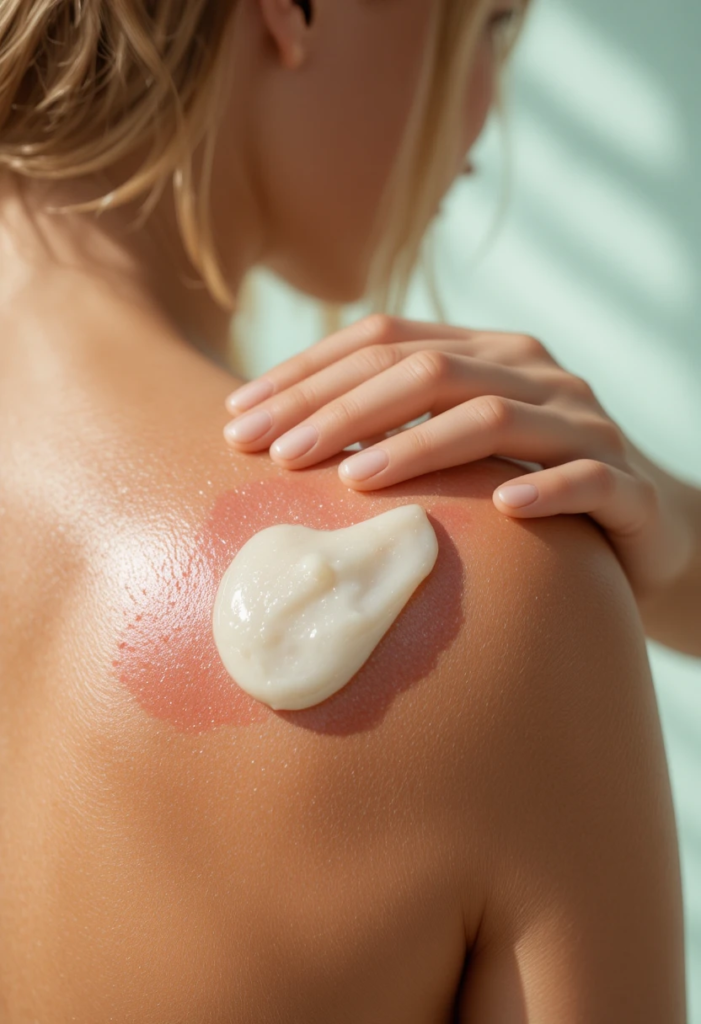
Some tattoo pigments particularly reds and yellows have historically been linked to higher rates of sun sensitivity and allergic-type reactions in some people. If a specific colored area of your tattoo seems to react differently in the sun (itching, raised texture, or unusual redness), that’s worth mentioning to a dermatologist, and it’s an extra reason to prioritize consistent SPF on those specific zones.
14. Treat Sunburned Tattoos Gently Don’t Reach for Harsh Products
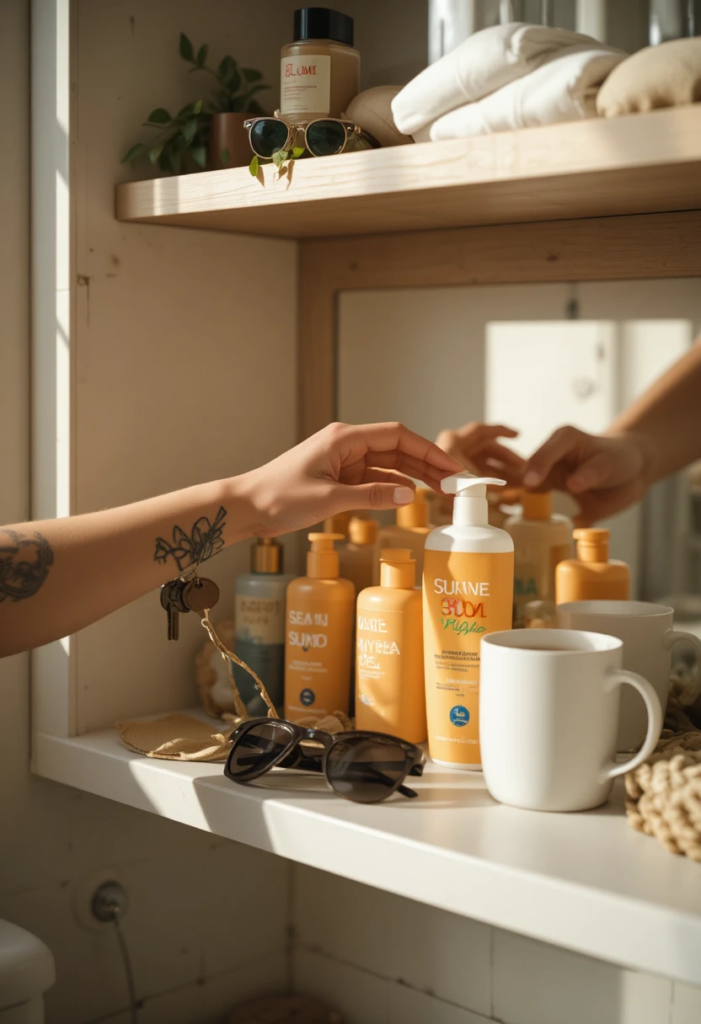
If a tattoo does get sunburned despite your best efforts, resist the urge to over-treat it. Cool (not cold) compresses, plain aloe vera, and staying out of the sun entirely until it calms down are the safest approach. Avoid exfoliants, retinols, or fragranced lotions on a sunburned tattoo, since they can worsen irritation and increase the odds of pigment loss during peeling.
15. Make Sunscreen a Permanent Part of Your Routine, Not a
Vacation-Only Habit
This is the mindset shift that separates tattoos that stay vibrant for 20 years from ones that look tired after five. UV damage is cumulative , it adds up quietly, day after day, whether you notice it or not. Treating sunscreen as a daily, year-round habit (the same way you’d brush your teeth) is what actually protects your investment long-term, not just remembering it before a beach trip.
Quick-Reference Summary Table
| Tattoo Status | What to Use | Key Reminder |
|---|---|---|
| 0–4 weeks (healing) | Loose fabric only, no sunscreen | Wait for zero peeling/tenderness |
| Newly healed | Mineral SPF 30–50, fragrance-free | Reapply every 2 hours outdoors |
| Fully healed | Broad-spectrum SPF 30–50, any format you’ll actually use | Apply daily, even when cloudy |
| Large pieces (sleeves, back) | UPF 50+ clothing + sunscreen combo | Fabric protects consistently; SPF fills the gaps |
Frequently Asked Questions
How soon can I put sunscreen on a new tattoo?
Generally 2–4 weeks, but go by how your skin looks and feels rather than the calendar. Wait until there’s no scabbing, peeling, shine, or tenderness left.
Do tattoo-specific sunscreens work better than regular sunscreen?
Not necessarily. Products marketed as “tattoo sunscreen” often contain the same active ingredients as standard broad-spectrum sunscreens the label is more about marketing than a meaningful difference in protection.
Can old, fully healed tattoos still fade from sun exposure?
Yes. UV damage is cumulative, meaning even tattoos that are years old will continue to lose vibrancy with ongoing unprotected sun exposure. Sunscreen is a lifelong habit, not a one-time healing step.
Is SPF 30 enough, or should I go higher?
SPF 30 is generally sufficient for daily tattoo protection. Going above SPF 50 offers only marginal additional benefit, so consistent reapplication matters far more than chasing a higher number on the bottle.
The Bottom Line
Your tattoo is a piece of art you’re wearing for life and like any piece of art displayed in direct light, it needs protection to stay vivid. The good news is that none of these 15 ideas require anything extreme: broad-spectrum sunscreen, consistent reapplication, smart fabric choices during healing, and treating sun protection as a daily habit rather than an afterthought will do more for your tattoo’s longevity than any expensive aftercare product on the market.
Start with just one or two of these habits today, and build from there. Your future self and your ink will thank you.