You’ve scrolled past a hundred generic “Japanese tattoo” round-ups. Most of them show you a pretty dragon, slap a one-line caption under it, and move on. That’s not what irezumi is about.
Irezumi isn’t decoration. It’s a language — one built from centuries of folklore, woodblock prints, and hand-poked ink — and every dragon, koi, or demon mask you choose says something specific about you. Get it right, and you’re wearing a story that will outlast every trend you’ve ever liked on Pinterest. Get it wrong, and you’re just wearing a picture.
Here’s the thing: by the time you finish this guide, you won’t just have 16 stunning irezumi ideas to save for your next consultation — you’ll actually understand what each one means, where it works best on your body, and which pairings a serious horishi (tattoo master) would approve of. Number 12 on this list surprises almost everyone who hears it for the first time.
Let’s get into it.
What Makes a Tattoo “Irezumi” (And Why It’s Not Just “Japanese Style”)
Before the list, a quick grounding — because this is where most guides get sloppy.
Irezumi (入れ墨) literally means “inserting ink.” The term carries artistic, historical, and cultural significance shaped by centuries of changing social attitudes in Japan, having represented punishment, protection, working-class identity, personal devotion, and organized crime associations across different eras. Today it’s recognized as one of the most respected tattoo traditions in the world. HardworkTattoos
A few things separate real irezumi from a “Japanese-inspired” tattoo:
- Scale. Irezumi traditionally focuses on large-scale connected compositions like full back pieces, chest panels, and full sleeves — small, isolated designs generally fall outside traditional irezumi structure. HardworkTattoos
- Background elements matter as much as the subject. Wind bars, clouds, waves, and rocks aren’t filler — they connect the story across your whole body.
- Motifs are paired deliberately. Traditional pairings include dragons with clouds or water, koi with waves, tigers with bamboo or wind, and snakes with peonies — while dragons and tigers are rarely placed in the same panel because they function as symbolic rivals. HardworkTattoos
Save this rule for later: if your design doesn’t have background elements tying it together, it’s not irezumi yet — it’s just a big picture.
1. The Full-Back Dragon Piece
Irezumi Tattoos the classic irezumi canvas, and the dragon is its most iconic subject. Oriental dragons are usually shown as wise, benevolent protectors who embody strength, good fortune, and control over natural forces like wind and water, rather than the destructive beasts of Western myth. A full-back dragon, swirling through clouds and wind bars, is the single most requested irezumi centerpiece — and for good reason. It reads as powerful from across a room and deeply detailed up close. JapanjunkyNihowa
Pinnable image idea: a vertical shot of a fresh back piece mid-session, dragon coiling from shoulder to hip through cloud work. Overlay text: “The Ultimate Irezumi Back Piece.”
2. Koi Climbing the Waterfall (Sleeve)
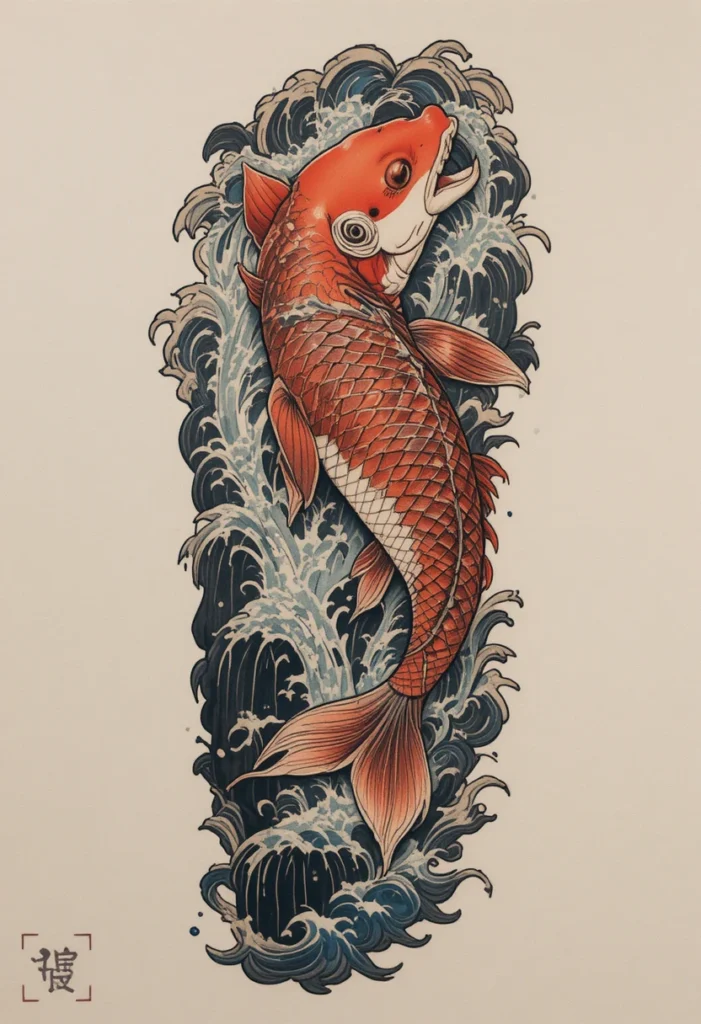
This is the tattoo everyone recognizes without knowing the story behind it. Legend holds that a koi who succeeded in climbing the falls at “Dragon Gate” on the Yellow River would transform into a dragon, making the fish a symbol of worldly aspiration and pushing through life’s challenges. Color changes the meaning: red koi represent love and bravery, black koi represent overcoming struggle, and gold koi represent wealth and fortune. Irezumi Art Tattoo StudioHardworkTattoos
Placement tip: koi are elongated by nature, so they wrap beautifully around a forearm, thigh, or full sleeve, always swimming through water elements rather than floating alone.
3. Hannya Mask Half-Sleeve
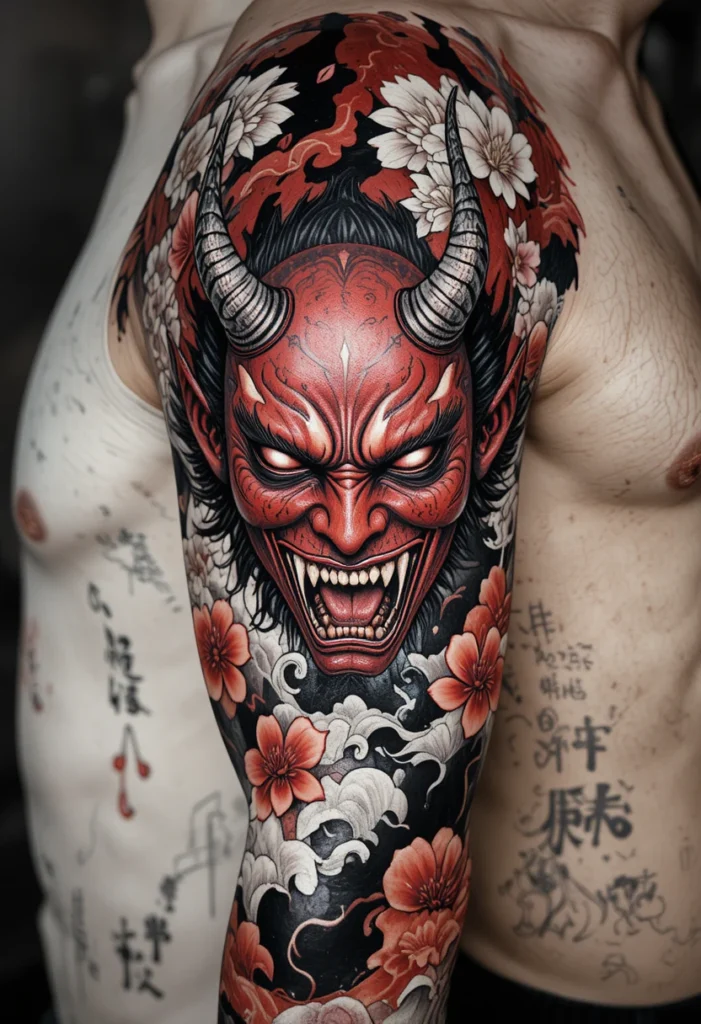
The Hannya is the design most people misread on sight. It comes from Japanese theater and represents a woman transformed into a demon by jealousy and rage — but it also conveys the deep suffering and passion behind those emotions. In irezumi tradition, a Hannya tattoo isn’t about menace; it’s closer to an act of resilience, acknowledging your own inner demons and mastering them. WildhearttattooshopDai Yokai
Irezumi Tattoo almost no Western tattoo shop gets right: direction matters. A Hannya facing upward loses all its dramatic force — its expression needs to “fall,” gazing downward for sorrow, or it becomes just a monster with no emotional duality. Dai Yokai
4. Tiger Prowling Through Bamboo
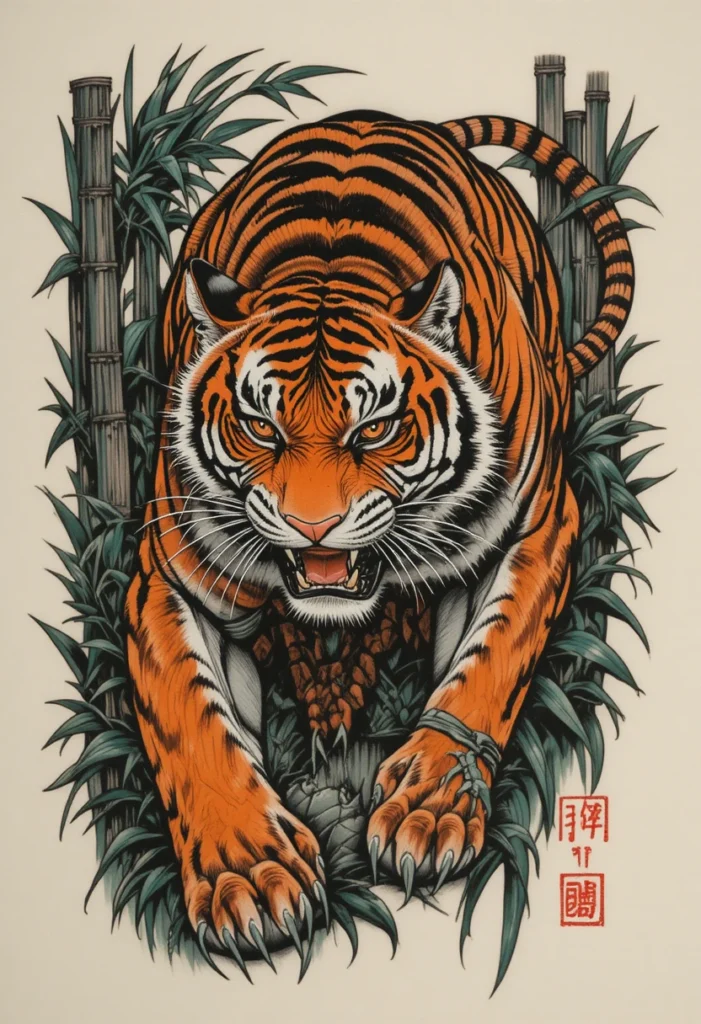
The tiger is considered the supreme land animal in Chinese-influenced tradition, symbolizing strength, courage, and long life, and is believed to ward off bad luck, disease, and demons. You’ll often see tigers rendered mid-stride through bamboo groves or mountain wind — never static, because irezumi tigers are about motion and instinct. JapanjunkyIrezumi Art Tattoo Studio
Quick tip: this is one of the best options if you want something bold but don’t want a mythical creature — tigers are real, ferocious, and still carry serious protective symbolism.
5. Phoenix (Hō-ō) Chest Piece
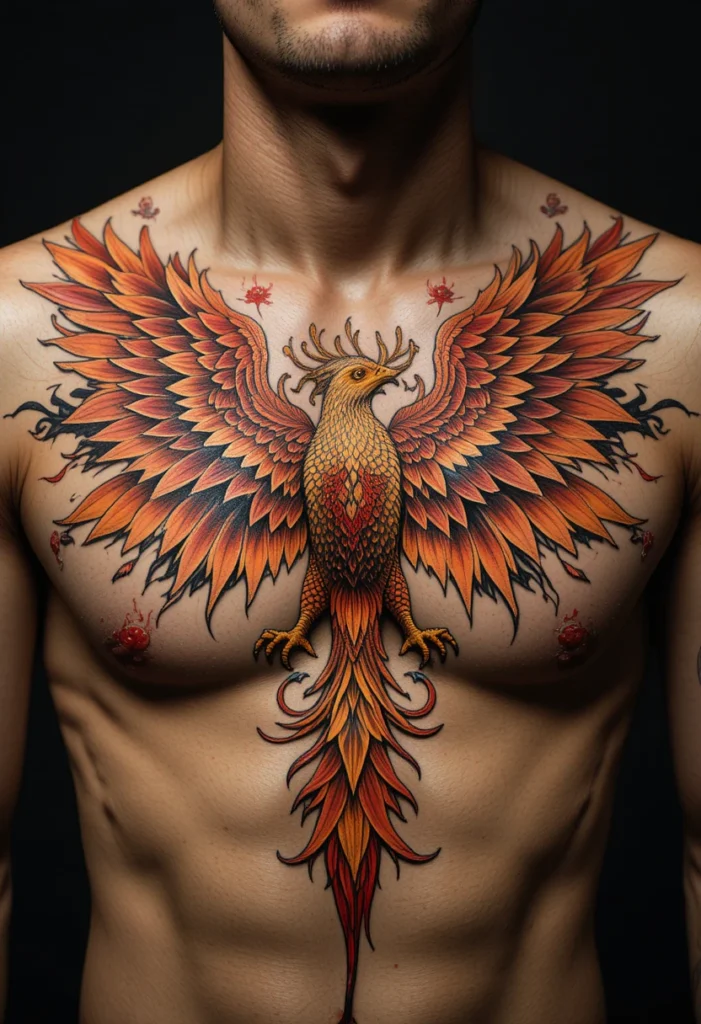
The hō-ō, Japan’s phoenix, is symbolic of the imperial household and represents fidelity, fire, justice, and the sun — a figure of harmony that descends during peace and retreats during strife. A chest or upper-back phoenix piece, wings spread across the collarbone, is one of the most visually dramatic irezumi options available, and it pairs traditionally with paulownia trees rather than cherry blossoms. Tattoodo
Pinnable image idea: close-up of phoenix wingtip detail with flame gradient. Overlay text: “Phoenix Irezumi: Rebirth on Skin.”
Read More : 15 Fading Tattoo Prevention Ideas That Actually Keep Ink Looking Fresh
6. Snake Coiled with Peonies
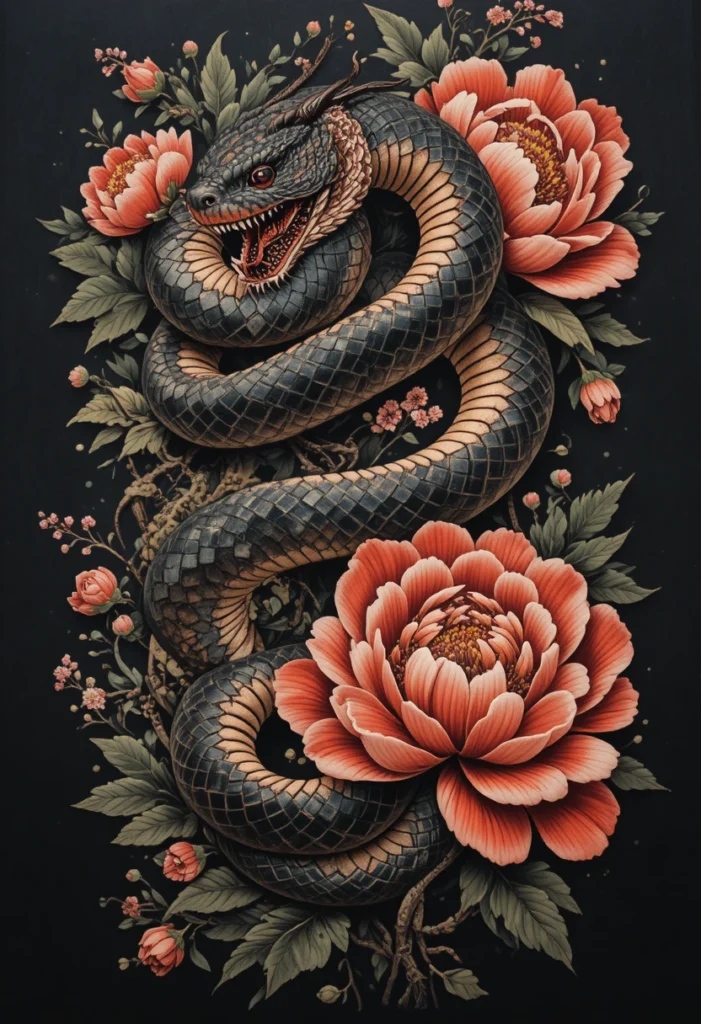
Snakes are underused in Western “Japanese tattoo” content, which is exactly why they stand out. In irezumi, snakes work best in movement-focused compositions — coiled around a leg, or guarding sakura petals as they fall — and traditionally pair with peonies for visual and symbolic balance. Burnedhearts
Save-worthy tip: snake tattoos are one of the few irezumi motifs that genuinely work well as a standalone calf or forearm piece without needing a full sleeve.
7. Oni Mask Guardian Tattoo
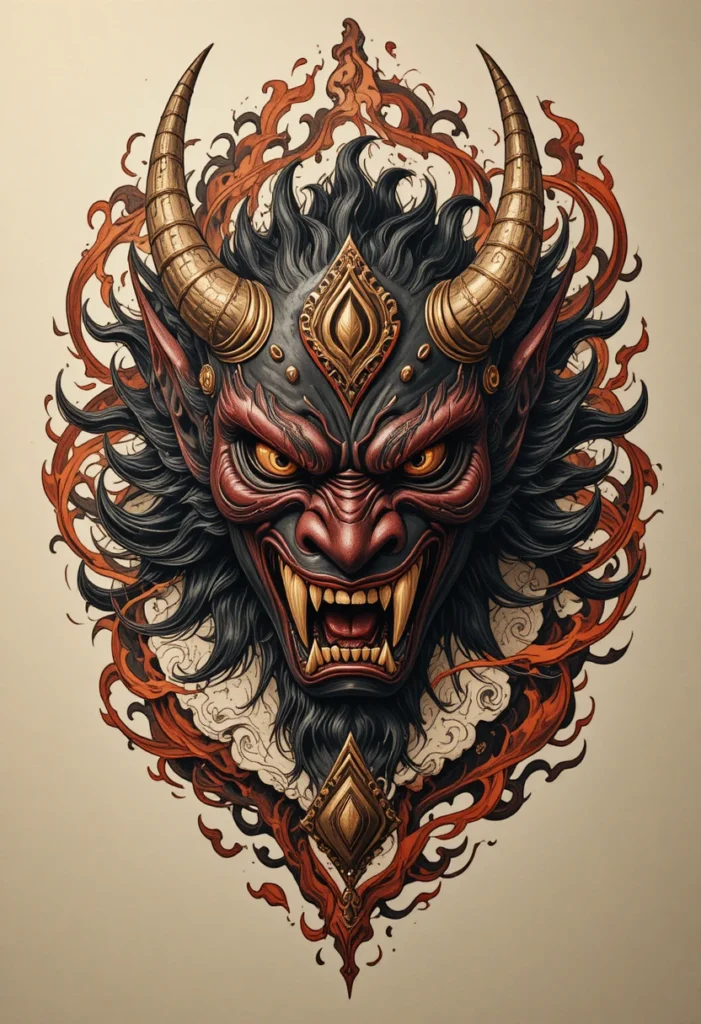
Oni are often depicted as complex protector and punisher figures, more frequently used to ward off evil than to represent it. There’s even an older tradition of oni becoming benevolent guardians — monks transformed into oni after death specifically to protect temples. An oni mask on the shoulder or upper arm reads as fierce guardianship rather than pure menace — a solid pick if Hannya feels too personal but you still want a mask motif. AitattoogeneratorNihowa
8. Cherry Blossom Wind Sleeve
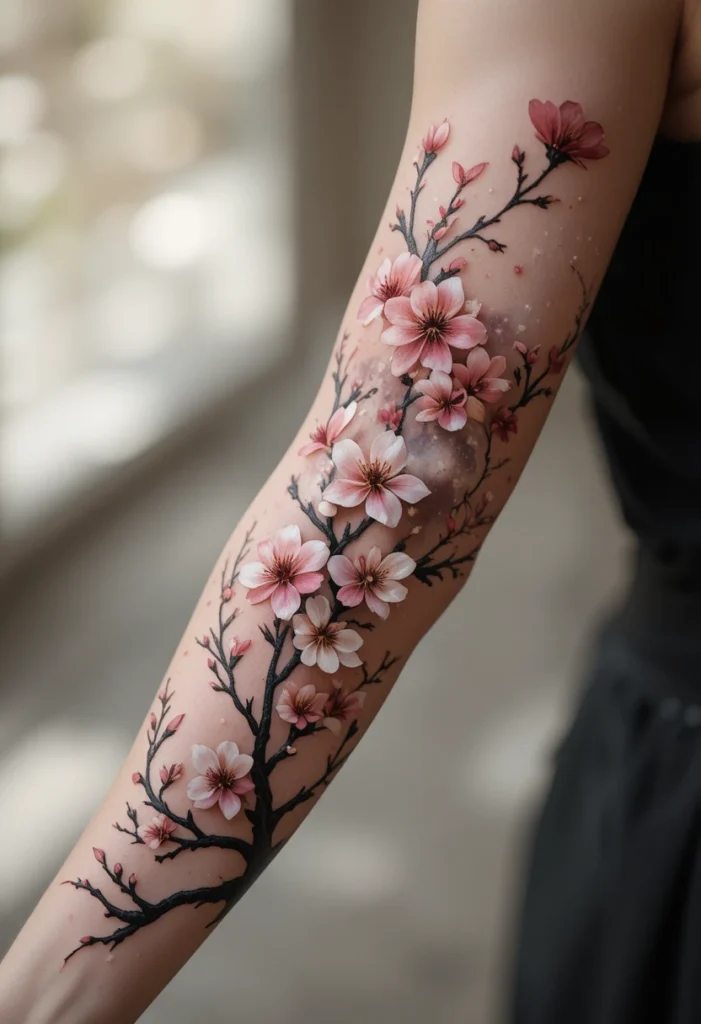
As Japan’s national flower, the cherry blossom represents spiritual beauty and the transience of life — blooming and falling in a flash, much like the samurai ideal of a glorious but brief existence. Sakura rarely stands alone in irezumi; it’s usually scattered through wind bars across a full sleeve or paired with a koi, dragon, or tiger to soften and season the composition. Yorozuya
Content gap most guides miss: sakura is a spring motif. Traditional seasonal consistency rules mean cherry blossoms shouldn’t appear in the same piece as autumn maple leaves — a detail worth raising with your artist before finalizing a design. Aitattoogenerator
9. Foo Dog (Karajishi) Guardian Piece
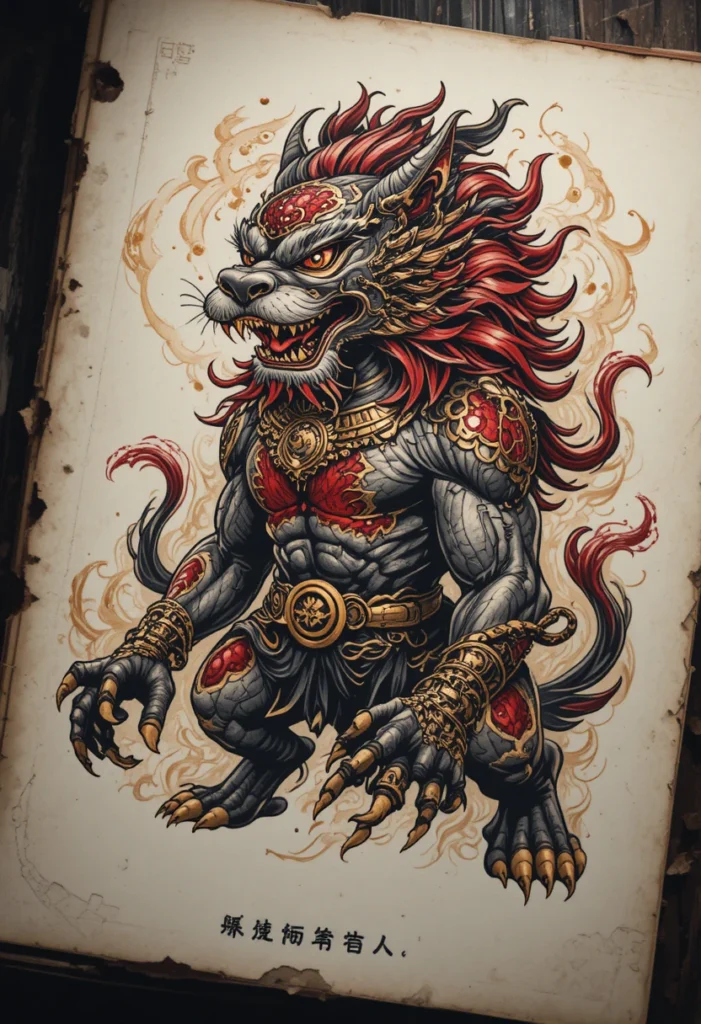
Less common than dragons or tigers, the karajishi (Japanese guardian lion-dog) is a strong option if you want something protective but distinctive. Traditionally shown guarding a peony, the foo dog represents courage and protection of what matters — ideal for a shoulder cap or upper-arm piece that doesn’t need a full sleeve commitment.
10. Samurai Warrior Back Piece
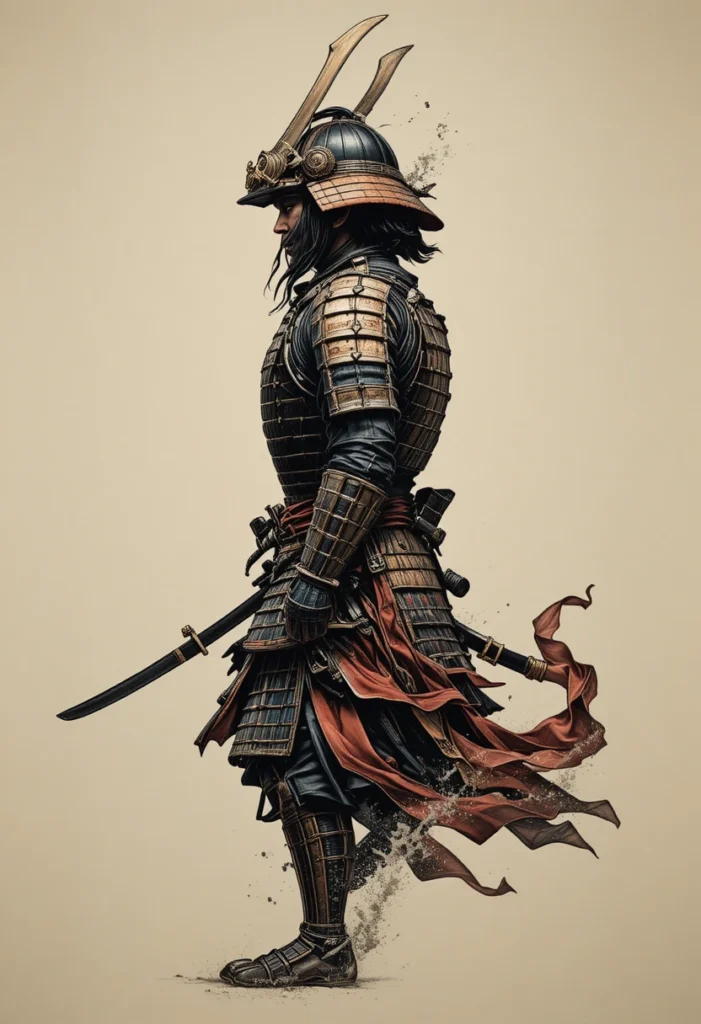
Samurai imagery draws directly from ukiyo-e woodblock prints. Chivalrous figures with irezumi were depicted in these prints as idealized heroes who “helped the weak and defeated the strong,” a tradition popularized by artist Utagawa Kuniyoshi. A samurai back piece, often mid-battle stance with wind and cloud work, tells a story of discipline and honor rather than just aggression. Yorozuya
Pinnable image idea: full back piece reveal shot, samurai figure with katana raised. Overlay text: “Samurai Irezumi: Discipline in Ink.”
11. Crane and Pine Tree Composition
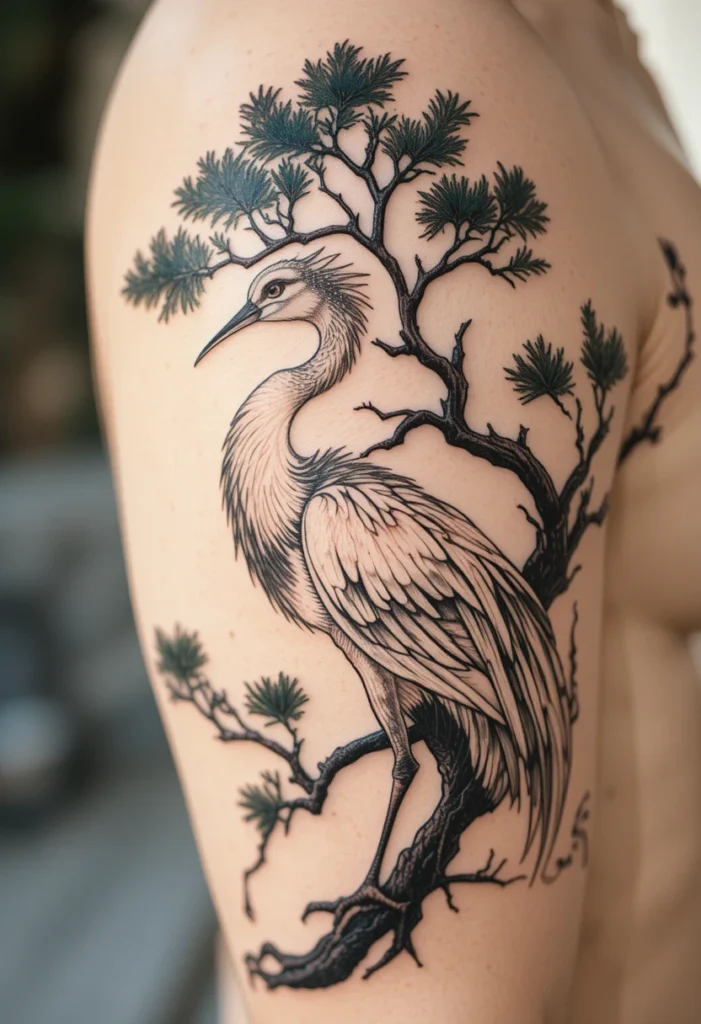
Cranes are highly revered in Japan, referred to as the “bird of happiness,” and are symbols of longevity, good fortune, and are thought in folklore to live for thousands of years. Paired with a twisted pine tree — another longevity symbol — this composition works beautifully as a quieter, less aggressive alternative to dragons or tigers, and it’s especially popular for ribcage or shoulder-blade placements. Tattoodo
12. Namakubi (Severed Head) Tattoo
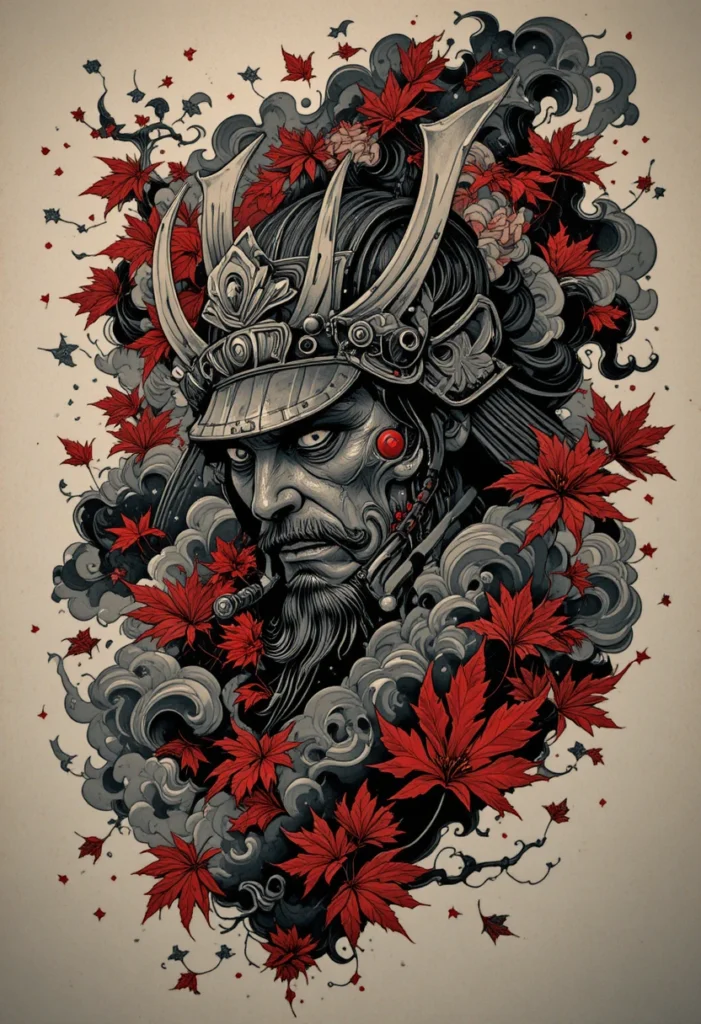
This is the one that surprises people. Namakubi imagery is a nod to the samurai practice of headhunting and symbolizes fearlessness — while unsettling at first glance, it’s historically about honoring a worthy opponent rather than glorifying violence. It’s a bold, niche choice, usually reserved for larger back or thigh compositions surrounded by chrysanthemums or maple leaves, and it’s not one to choose without a real conversation with your artist about context and intent. Japanjunky
13. The Great Wave (Nami) Panel
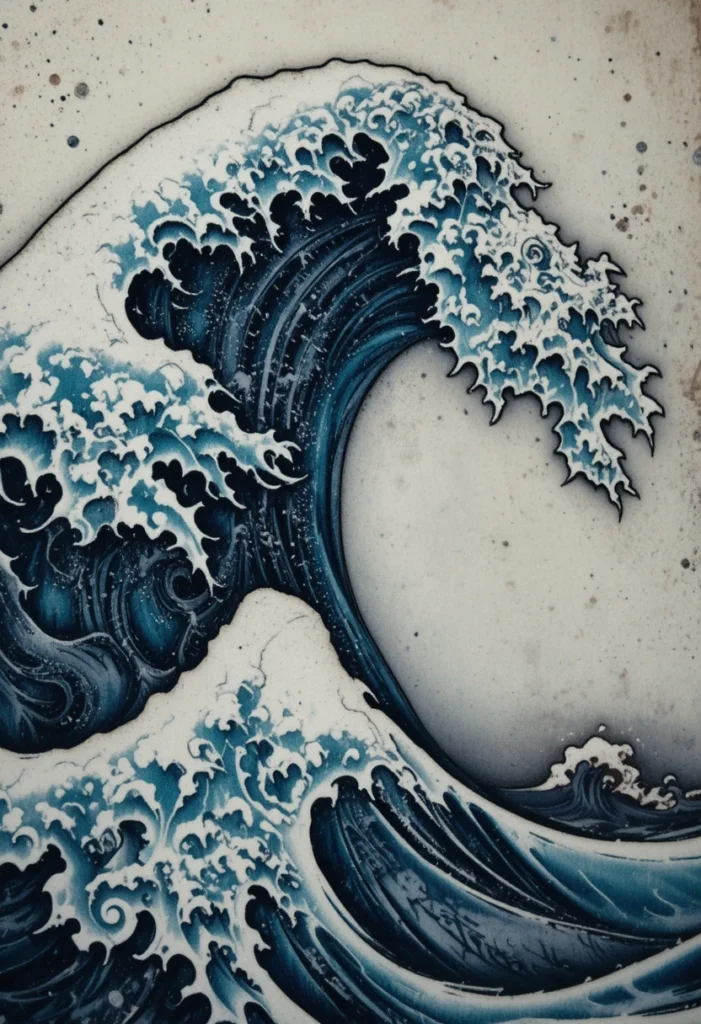
Water is the connective tissue of almost every irezumi piece on this list. If your design doesn’t include water in some form, it probably lacks cohesion — waves and waterfalls provide the visual rhythm that keeps other symbols from floating in limbo. A standalone Great Wave panel, inspired by Hokusai’s famous woodblock print, works well as a ribcage or thigh piece and pairs naturally with koi, dragons, or a rising sun. Burnedhearts
14. Kitsune Fox Spirit Tattoo
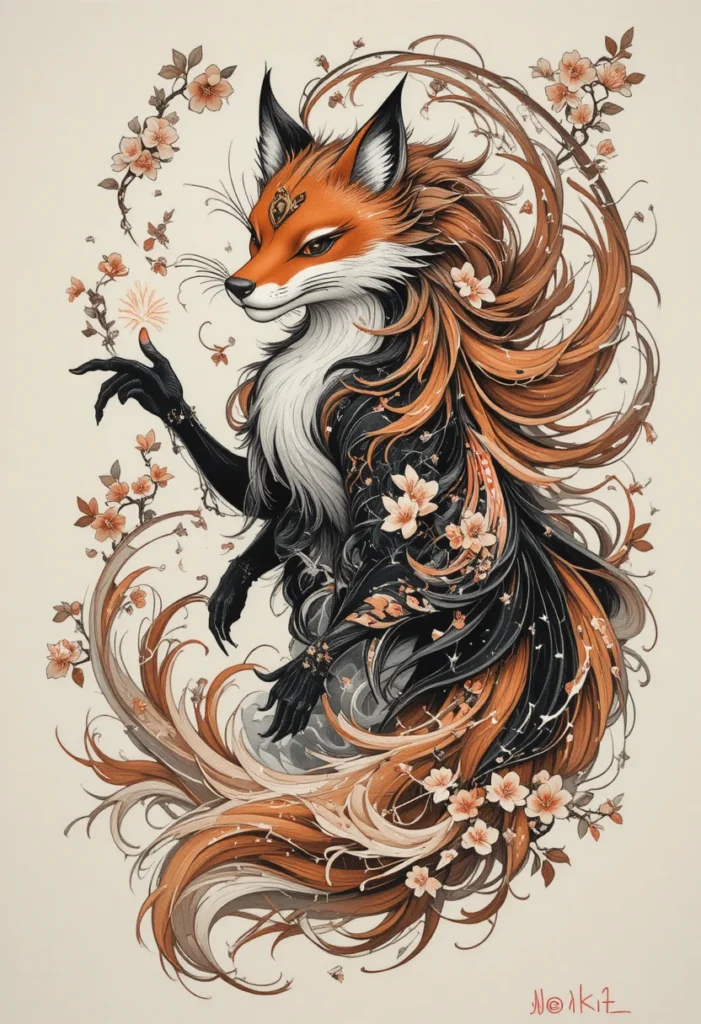
Tengu and other yokai figures represent protection, strength, and mastery of skill in Japanese folklore, and the kitsune (fox spirit) fits the same protective, slightly mischievous energy. Foxes are often shown mid-transformation or carrying a flame, and they’re a strong choice for someone who wants irezumi’s visual weight without leaning on the more commonly requested dragon or tiger. Aitattoogenerator
15. Peony and Lion Combination
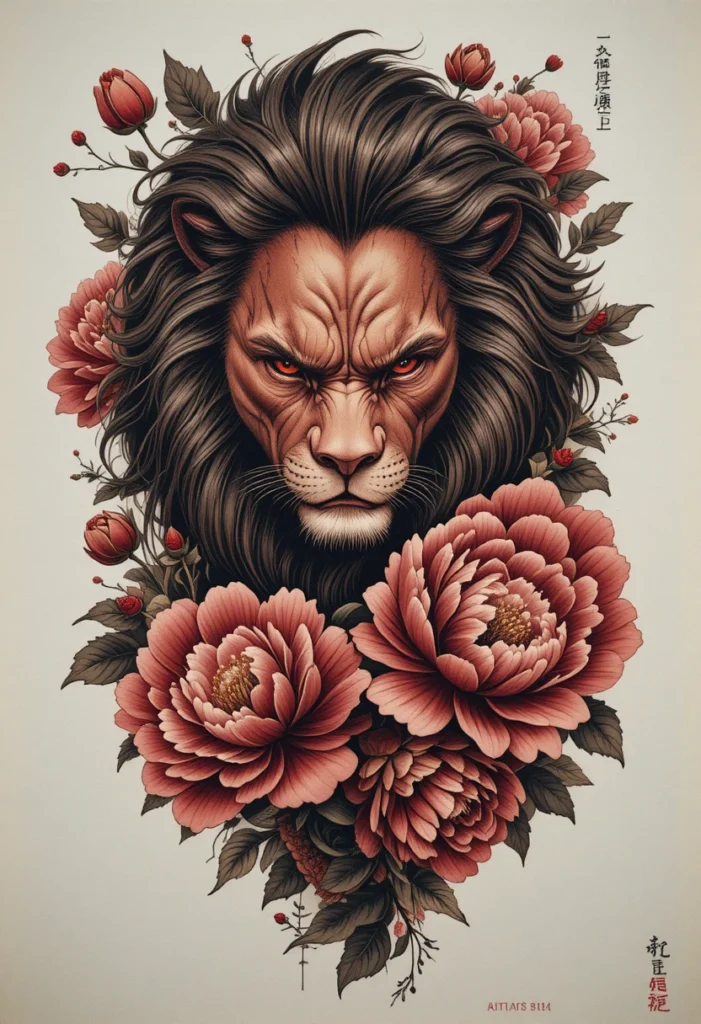
Peonies aren’t just background filler. The peony represents elegance and a kind of bold confidence, and paired with a foo dog or lion figure, it becomes one of the most decorative, color-rich irezumi compositions available — a favorite for hip, thigh, and ribcage placements where floral detail has room to breathe. Japambience
16. The Full Bodysuit (Soushinbori)
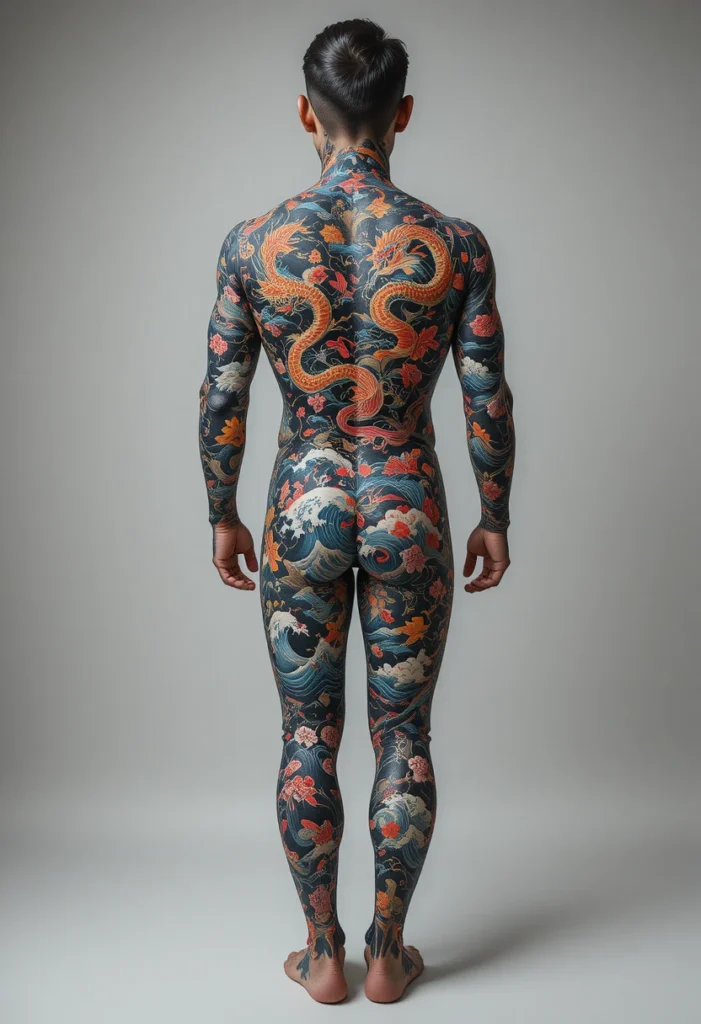
The ultimate irezumi commitment. A soushinbori covers the entire body from neck to ankles, leaving only the hands, feet, and a vertical strip down the center of the torso bare — a tradition rooted in the idea that the design should read as one continuous scene rather than separate images. Iglatattoo
This isn’t a decision to make lightly. A traditional bodysuit can take one to five years of weekly sessions to complete, and requires close, ongoing collaboration with your artist to decide which symbols connect with your story and how they’ll flow across your body. Irezumi Art Tattoo StudioIglatattoo
How to Choose the Right Irezumi Design for You
Quick summary before you scroll further — the shortcut version of everything above:
- Want strength and protection? → Dragon, tiger, or oni
- Want perseverance and personal growth? → Koi
- Want to process a hard chapter of life? → Hannya
- Want elegance without heaviness? → Peonies, cranes, cherry blossoms
- Ready for a multi-year commitment? → Full sleeve or bodysuit
But there’s a catch: picking a motif is only half the job. A specialist may recommend or reject a combination for reasons tied to narrative, season, lineage, anatomy, or visual balance — a clear explanation from your artist is worth far more than a copied symbolism chart. Bring your ideas to a consultation as a starting conversation, not a fixed order. Dai Yokai
A Note on Getting It Done Right
Historically, irezumi was done through tebori, a hand-poked method using bamboo or metal tools — though most artists today use modern machines, and what matters more is the artist’s understanding of traditional composition and symbolism than the specific tool they use. When you’re researching artists, ask to see full completed pieces, not just fresh linework — irezumi is judged by how it heals and ages, not just how it looks on day one. Iglatattoo
Irezumi FAQ
Is irezumi only done in Japan?
No. Many artists work with international clients, both in Japan and abroad, and the style has been respected worldwide for its visual power and symbolic depth. Japambience
How long does a full sleeve take?
A full sleeve can take dozens of hours spread across multiple sessions, so budget for a project measured in months, not weeks. Japambience
Can I still visit an onsen (hot spring) with irezumi?
Sometimes — coverage rules vary, and you may need to cover the tattoo or choose a specific tattoo-friendly location. Japambience
Do dragon and koi tattoos have to face a certain direction?
Not as a fixed rule. Claims like “a koi must always swim upward” are too absolute — a specialist may recommend a direction for reasons tied to your specific design, body shape, or story, not a universal law. Dai Yokai
Final Thoughts
Irezumi rewards patience — in the choosing, the planning, and the actual tattooing. Save this guide before your next consultation, and go in with a story you want told, not just a picture you liked. Whether you start small with a koi on the forearm or commit to the multi-year journey of a soushinbori, the goal is the same: ink that means something the day you get it, and still means something twenty years later.