You’ve scrolled past a hundred sleeve tattoos and none of them stopped your thumb. Then you saw one — colors bleeding into each other like spilled paint, no harsh black outline boxing it in, just pure movement flowing from shoulder to wrist. That’s the moment watercolor sleeves ruin every other tattoo style for you.
Watercolor sleeves don’t look inked. They look painted. And that’s exactly the problem most people run into when they try to plan one: it’s easy to find pretty pictures, but hard to find a design direction that will actually hold up on skin, heal well, and still look incredible five years from now.
That’s what this guide is for. Below are 17 watercolor sleeve tattoo ideas, organized by theme, plus the practical details — placement, pain, cost, and how to keep the colors from fading — that most “inspiration” posts skip entirely.
What Makes a Tattoo “Watercolor” in the First Place
Before jumping into ideas, it helps to know what you’re actually asking your artist for. A watercolor tattoo mimics the look of a watercolor painting: diffused color gradients, soft fluid washes of color, and faded edges with blurred transitions. Many designs skip the bold black outline entirely, letting color do all the storytelling instead of line work. Sullen Art Collective
There’s no special “watercolor ink” — the effect comes down to the artist’s technique. Skilled watercolor artists build the look through layering, controlled saturation, and whip-shading, essentially recreating what paint does on paper using a needle instead of a brush. That’s also why artist selection matters more for this style than almost any other — more on that below.
17 Watercolor Sleeve Tattoo Ideas
1. The Ombre Wash Sleeve
Rather than one central image, the whole sleeve becomes a gradient — lighter tones pooling near the shoulder, deepening into richer hues by the wrist. It’s minimal in subject matter but maximal in color, and it photographs beautifully in direct light.
2. Watercolor Splash Sleeve
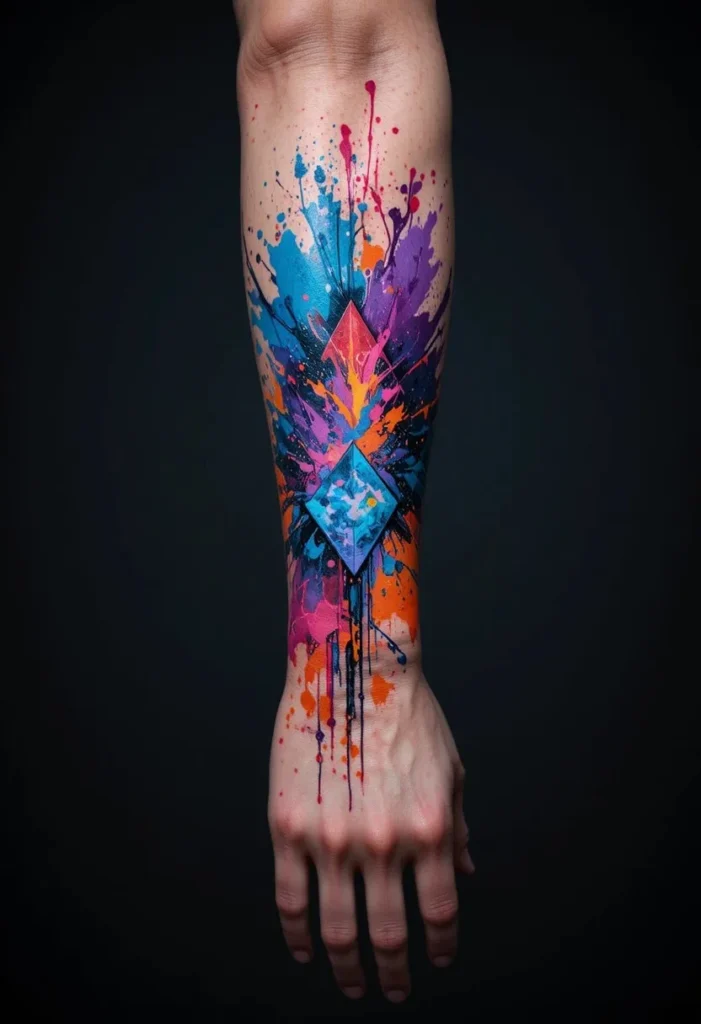
This is the design most people picture when they hear “watercolor tattoo”: bursts of color that look like they were flicked onto the arm, mid-drip. It works as a standalone abstract piece or as a backdrop behind a more defined subject like a bird or flower.
3. Wildflower Meadow Sleeve
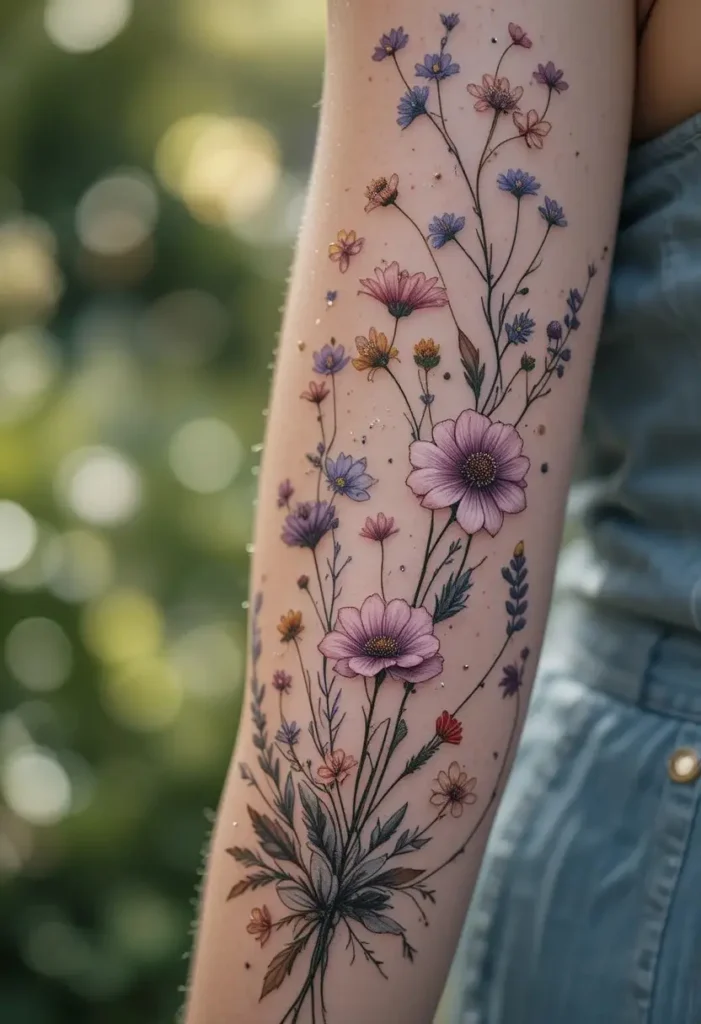
A cascade of loosely rendered wildflowers running the length of the arm, with color bleeding slightly past each petal’s edge. This is one of the most requested florals because it reads as delicate and feminine without feeling overly structured.
4. Botanical & Sunflower Sleeve
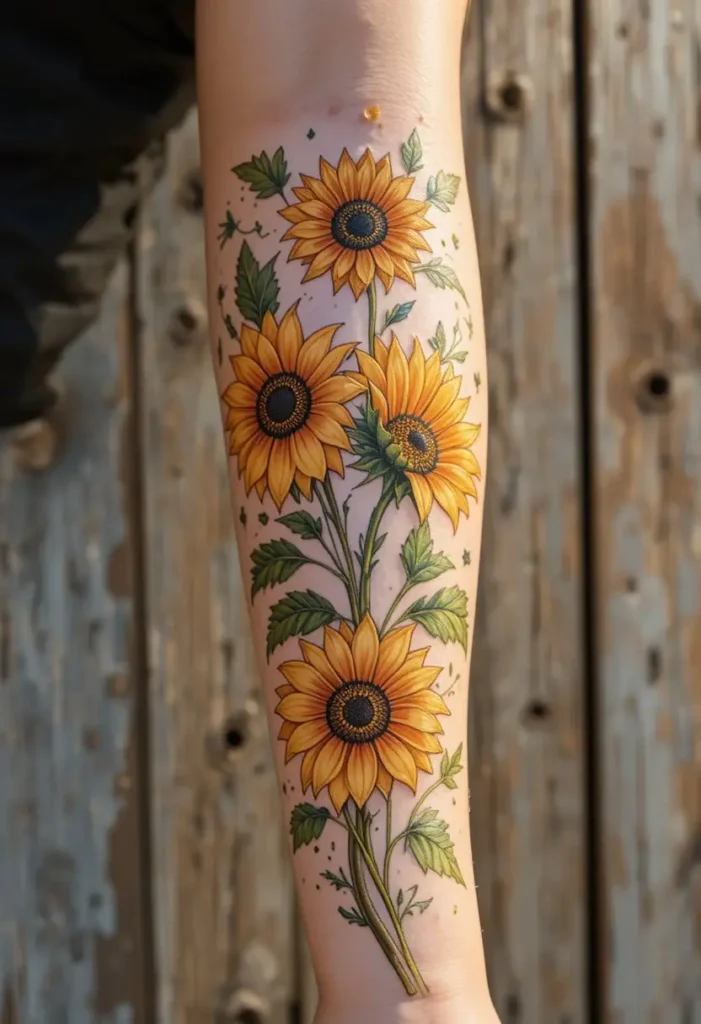
Bold, sunny, and high-contrast. Sunflowers hold their pigment noticeably better than pastel florals, which makes this a smart pick if you want a watercolor look with more staying power.
5. Cherry Blossom Drift Sleeve
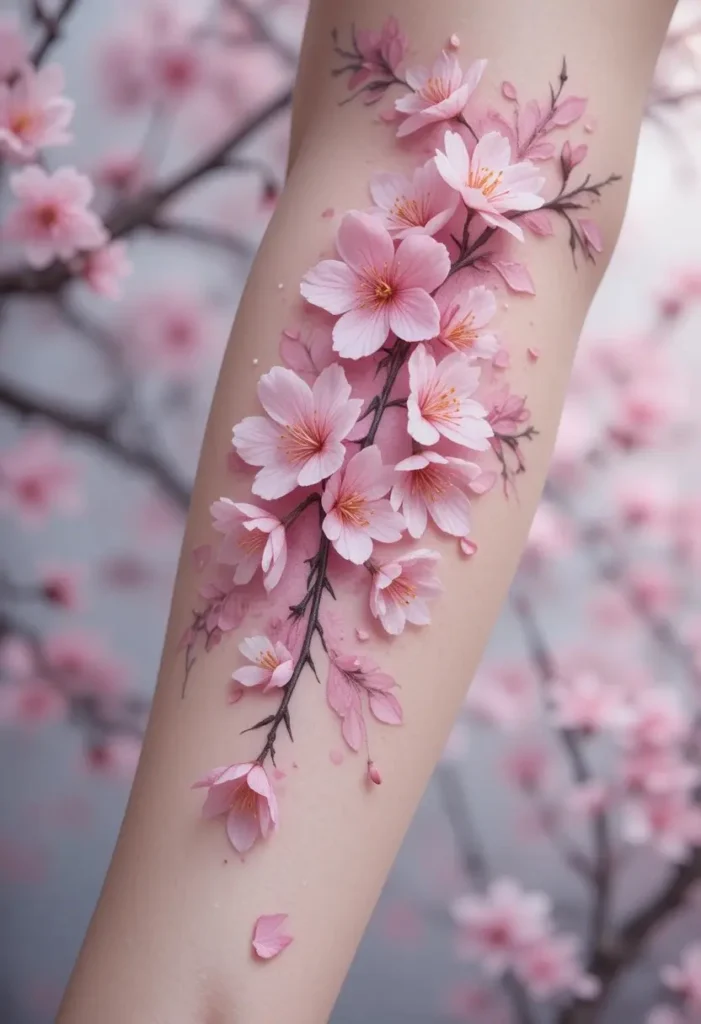
Soft pink blossoms scattered across the arm with visible “petal fall” trailing toward the wrist, often layered over a faint branch line for structure. Gorgeous on its own or combined with a koi or crane for a nature-scene sleeve.
Read More : 15 Rib Cage Tattoo Ideas That Are Bold, Beautiful, and Totally Worth the Sting
6. Galaxy & Nebula Sleeve
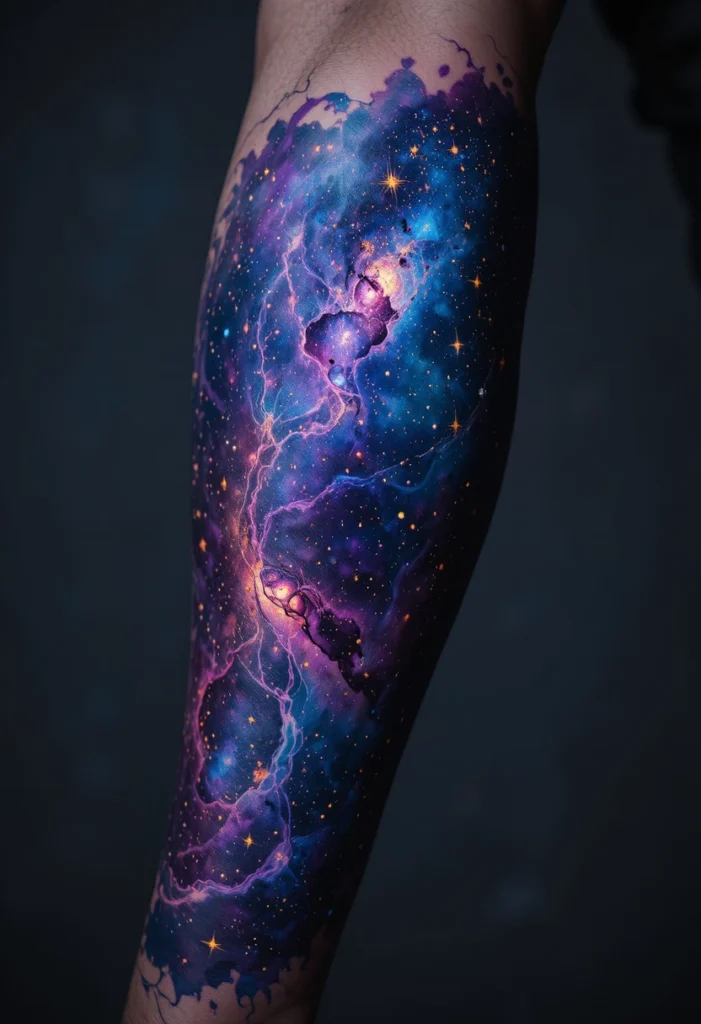
Deep purples, blues, and magentas blended the way nebulae actually look in astrophotography — no hard edges, just color drifting into black space. This is a favorite for full sleeves because the “canvas” of the arm mimics the vastness of the subject.
7. Abstract Rainbow Sleeve
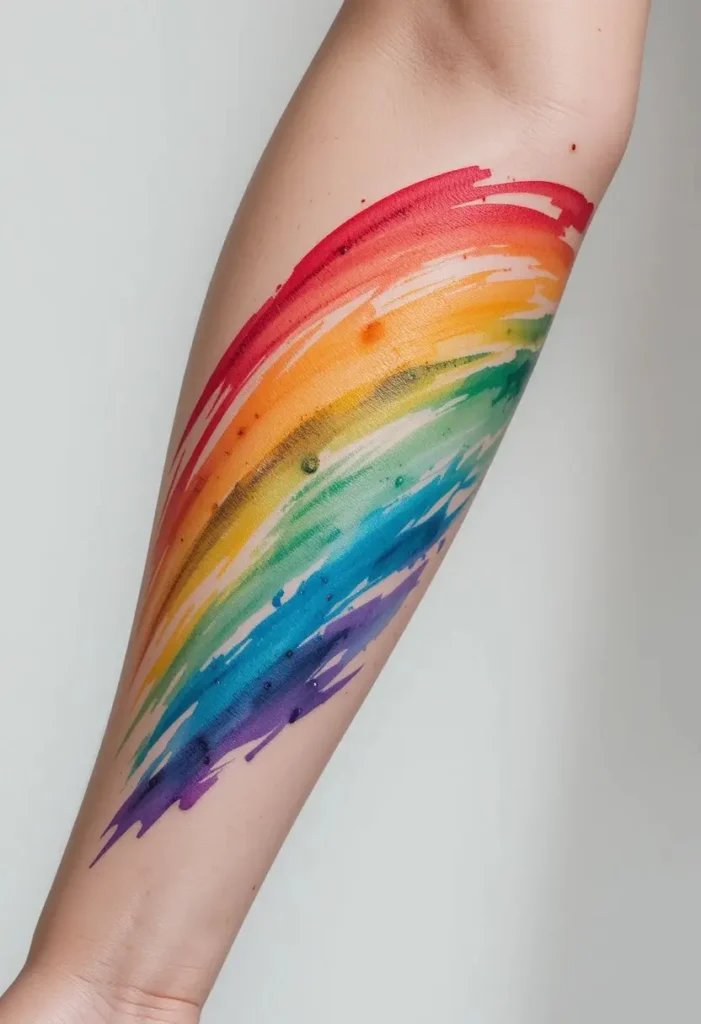
A minimalist approach: soft rainbow gradients washed across the arm with little to no representational imagery. It’s a popular pick for anyone who wants color without committing to a specific symbol or story.
8. Watercolor Compass Sleeve
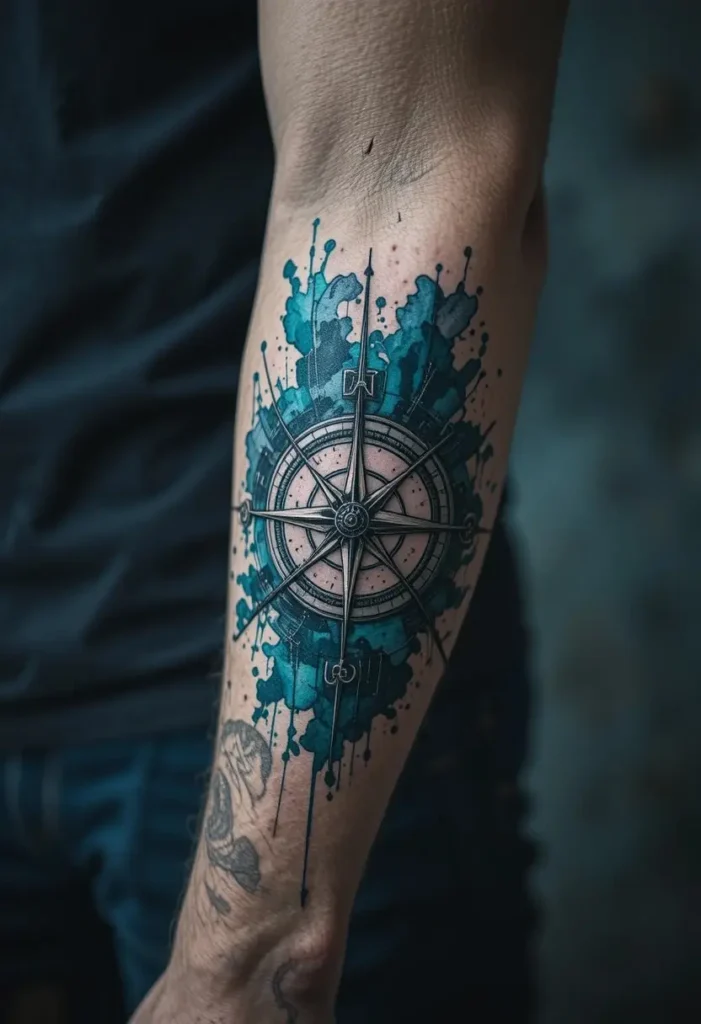
A compass rendered with painterly, spreading color at each cardinal point instead of crisp mechanical lines — a favorite for travelers who want direction and movement built into the design.
9. Tree of Life Sleeve
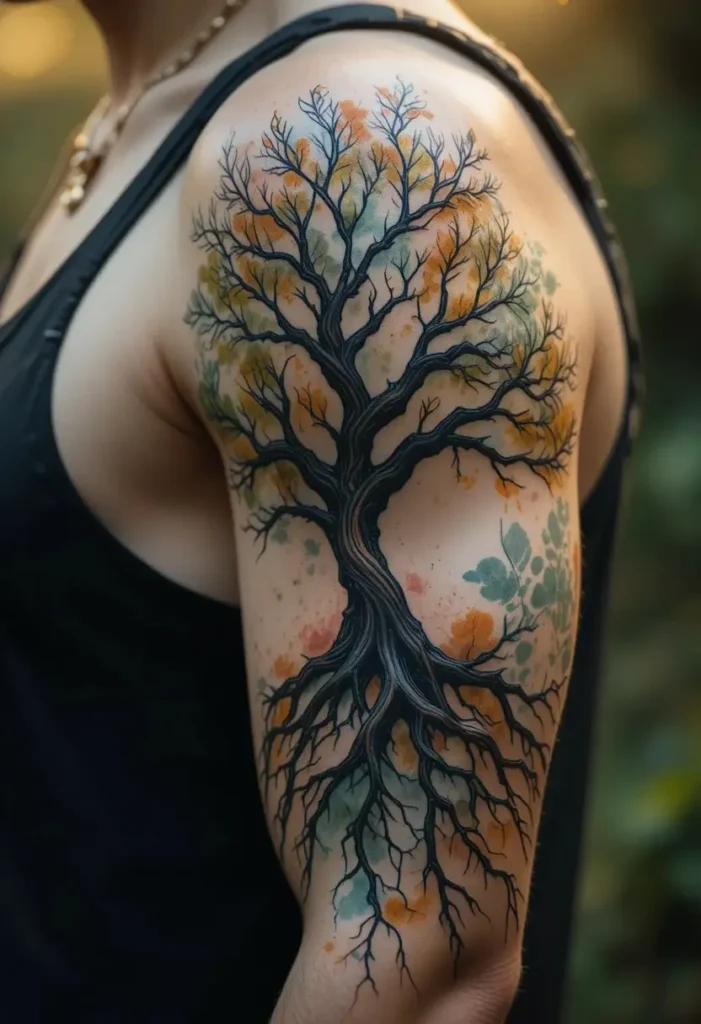
Branches that start structured near the trunk and dissolve into color as they reach outward, meant to represent roots, growth, and connection. The gradient from grounded browns to vibrant greens or blues gives the tattoo a natural top-to-bottom flow that suits the arm’s shape.
10. Watercolor Octopus Sleeve
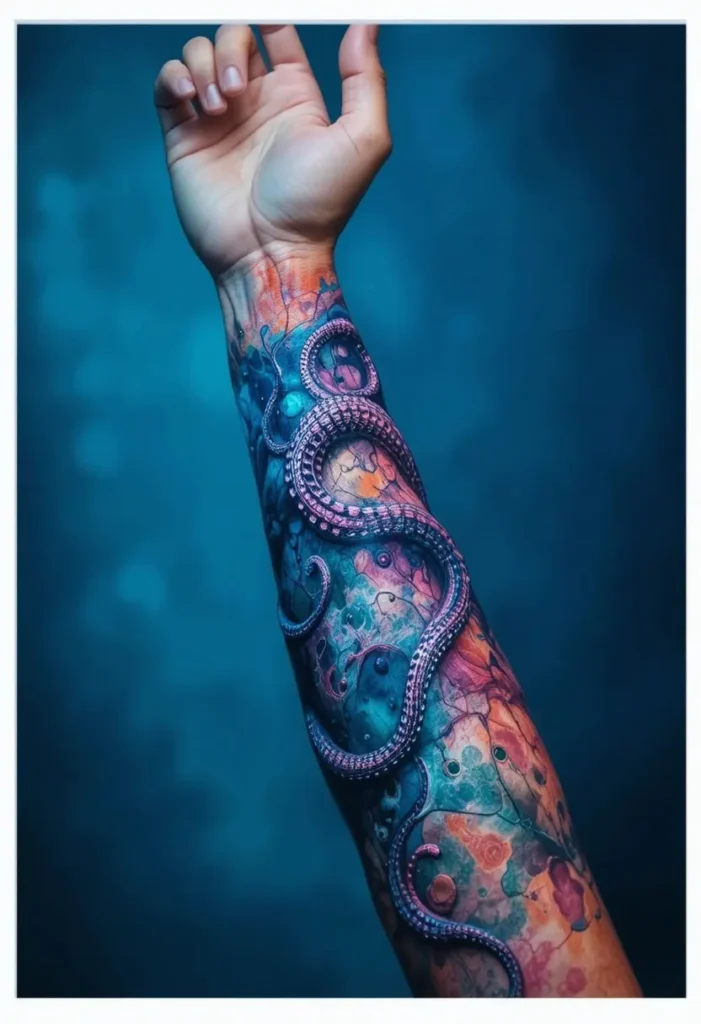
Tentacles wrapping around the arm in shifting blues, purples, and teals give this design built-in movement — it looks different depending on which angle you view it from, which is part of why it’s such a popular sleeve subject.
11. Koi Fish Sleeve
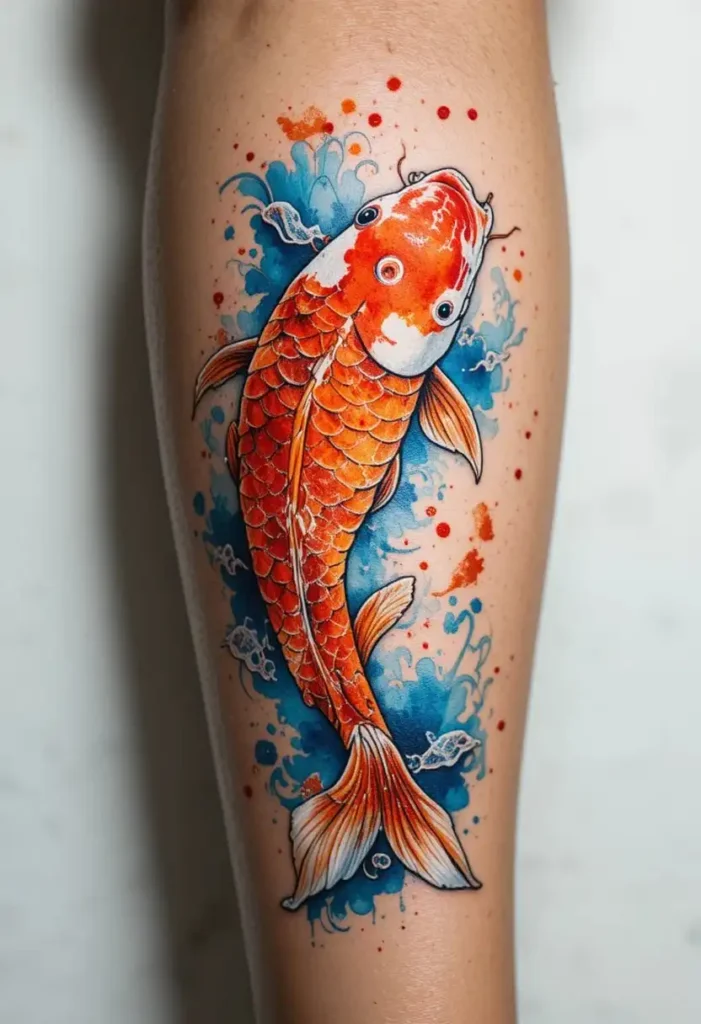
Traditionally a symbol of perseverance, koi take on a completely different mood in watercolor — the fish’s motion is echoed by the soft color trailing behind it like it’s swimming through paint.
12. Watercolor Wolf or Fox Portrait Sleeve
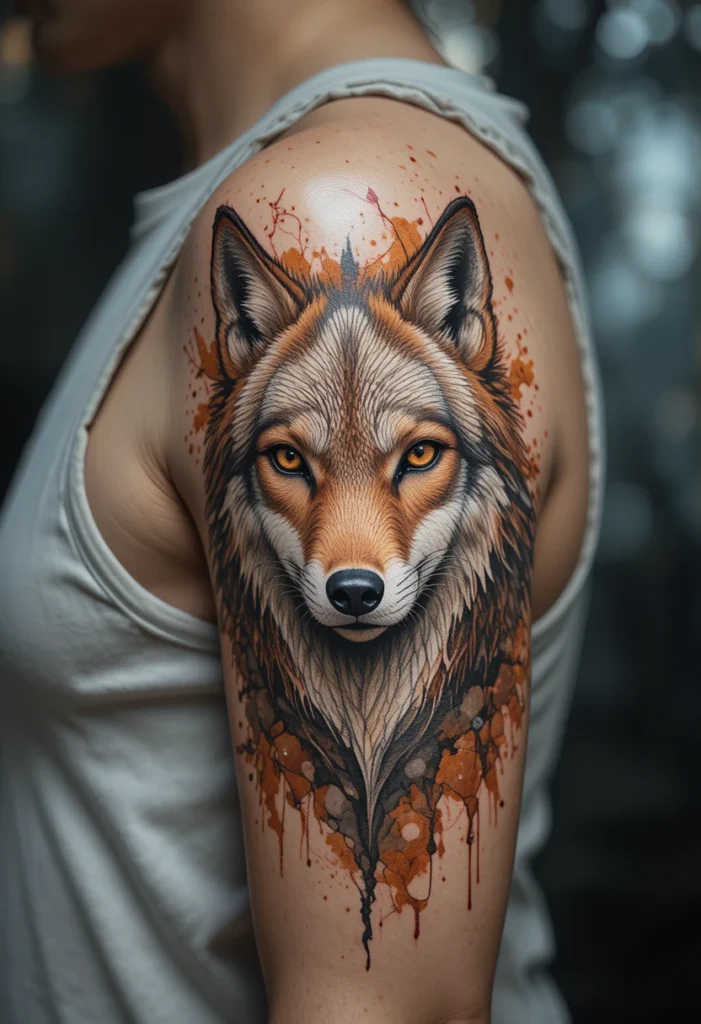
A realistic or semi-realistic animal face rendered with structural black-and-grey shading, then framed by a burst of watercolor color around the head and shoulders. This hybrid approach (more on it below) is one of the best ways to get the watercolor aesthetic with better long-term durability.
13. Deer Skull & Florals Sleeve
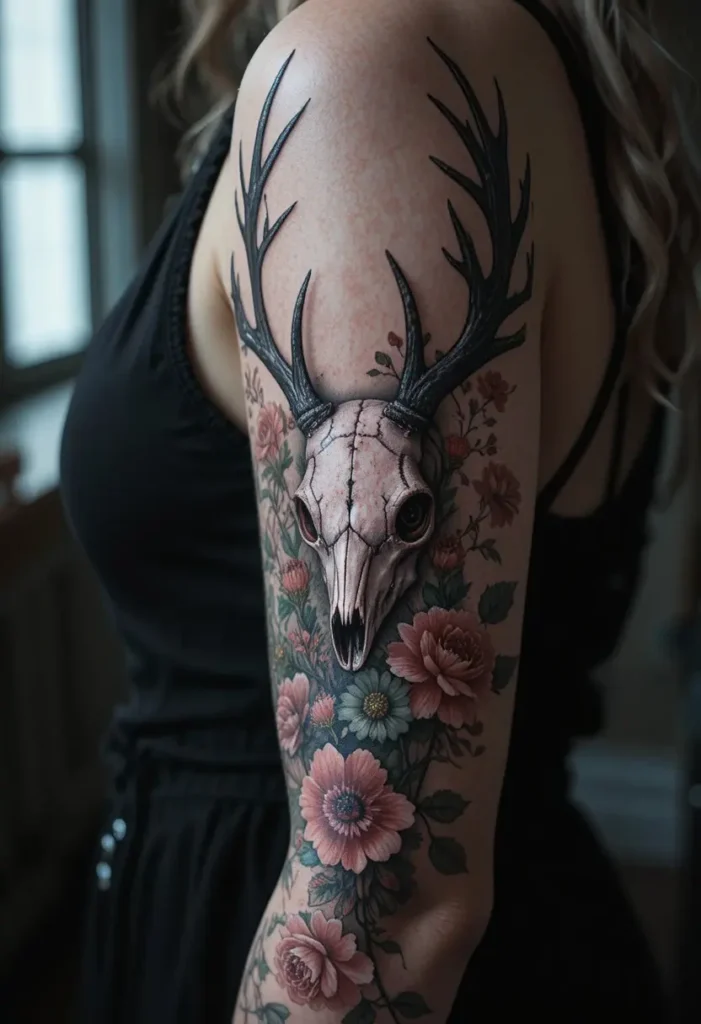
Rustic and a little wild — a skull motif softened by flowers blooming from the antlers or eye sockets, blending themes of mortality and growth. The contrast between bone-white detail and saturated floral color makes this a striking centerpiece.
14. Watercolor Bee & Honeycomb Sleeve
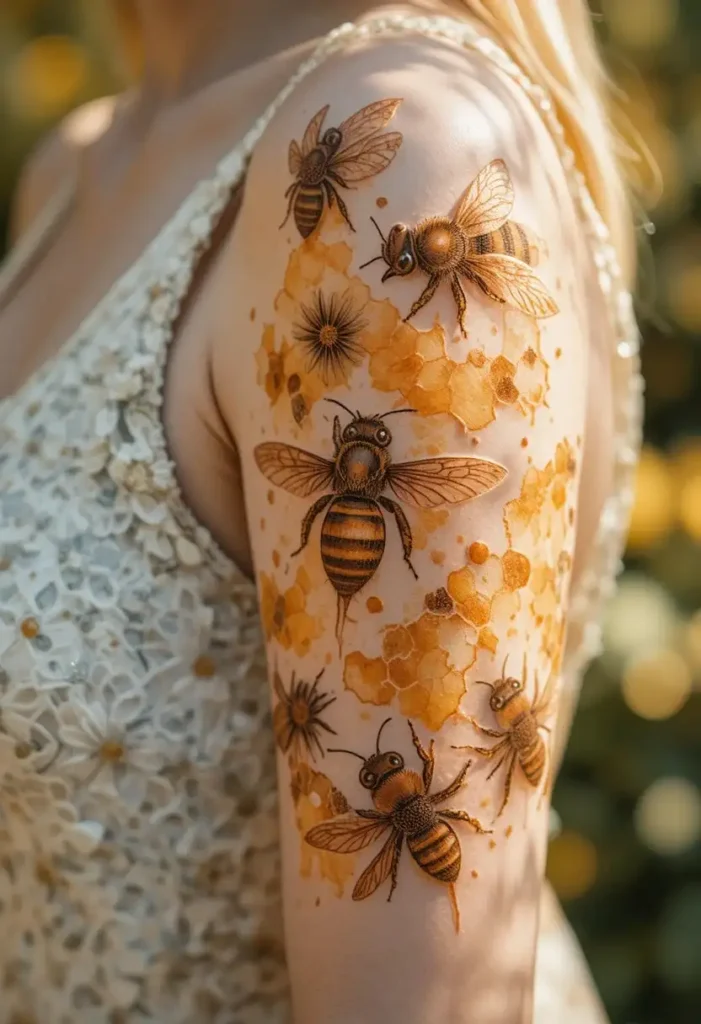
Smaller in scale but often repeated down the arm — a few bees trailing pollen-like color splashes between botanical elements. Great for a sleeve that reads as “nature-inspired” without being one single large scene.
15. Space & Planet Sleeve
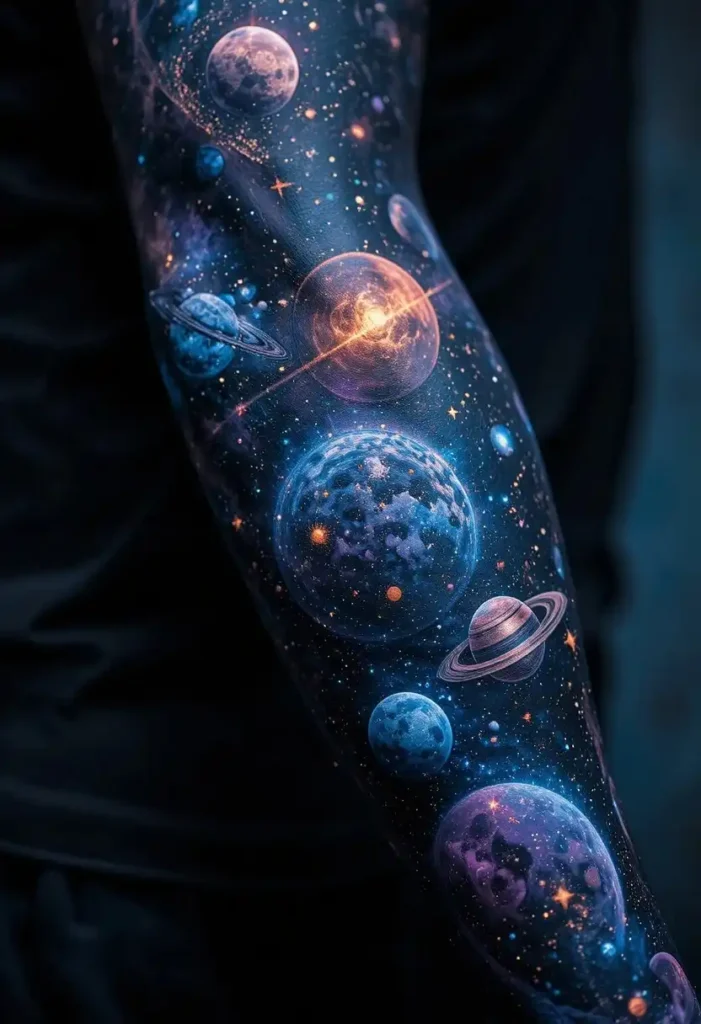
Similar to the galaxy sleeve but more graphic — stylized planets and orbit rings with color bleeding around them like solar flares. Popular with people who want a sleeve that feels more sci-fi than cosmic-abstract.
16. Watercolor Dinosaur Sleeve
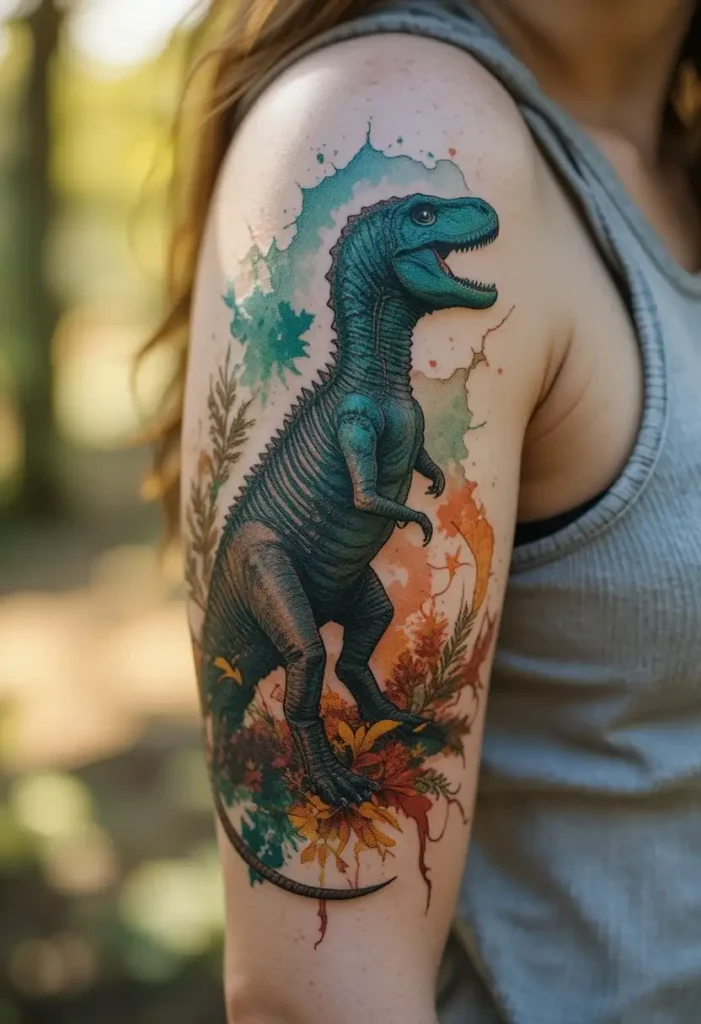
An unexpected but growing favorite — a T-Rex or pterodactyl silhouette filled in with unnatural, painterly color instead of realistic tones, giving a nostalgic subject a completely fresh, artistic treatment.
17. Mixed-Element Storytelling Sleeve
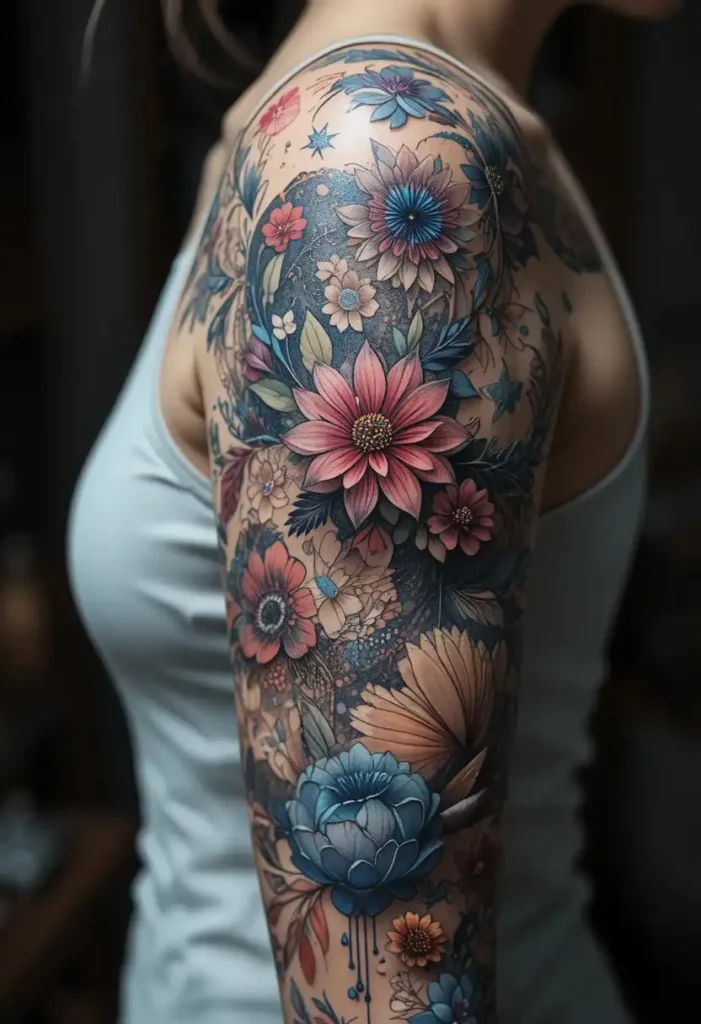
Instead of one theme, this combines two or three motifs from the list above — say, a koi fish swimming through a floral cascade that fades into an abstract color wash near the shoulder — connected by consistent color palette rather than one continuous scene. This is the most personal option, since the “story” is built entirely around what matters to you.
Half Sleeve or Full Sleeve? How to Decide
If you’re not ready to commit to the whole arm, a half sleeve — starting at the shoulder and stopping at the elbow, or running from elbow to wrist — gives you room to explore watercolor without covering the entire limb. A full sleeve works more like a single continuous piece of art, letting the design flow with the natural shape of your arm from shoulder to wrist. Many people start with a half sleeve and extend it later once they know how their design ages.
The One Design Choice That Affects Longevity Most
Here’s the part almost nobody tells you before you book: watercolor tattoos fade faster than traditional bold-line tattoos, typically showing noticeable softening somewhere in the 3–7 year range depending on pigment and care. Lighter tones like pastel pinks and yellows go first, since they carry the least pigment density to begin with.
The good news is you have real control over this. Many watercolor artists now use structural anchoring — a subtle black or grey outline or shading placed at key points in the design — so that even as the color mellows, the overall shape of the tattoo stays intact. If longevity matters to you as much as the aesthetic, ask your artist directly whether they build in any anchoring, and consider requesting it for at least the focal elements of your sleeve.
Placement also plays a bigger role than most people expect. Areas with heavy friction or constant sun exposure — hands, wrists that go uncovered often, or anywhere that stretches a lot — will fade faster than the upper arm or areas that are usually covered by clothing.
What a Watercolor Sleeve Actually Costs
Sleeve pricing varies enormously by artist skill and design complexity, but as a general range, sleeve tattoos run anywhere from roughly $1,500 to $10,000+, with most artists charging by the hour ($100–$300/hour) or as a flat project rate for the whole piece. Because color work — especially layered watercolor blending — takes more time and skill than black linework, expect watercolor sleeves to land on the higher end of that range.
A few costs people forget to budget for:
- Deposit: usually 10–20% of the total, applied to your final bill
- Multiple sessions: a full sleeve typically takes 20–50 hours of tattoo time across 8–15+ sessions, spaced weeks apart for healing
- Aftercare products: roughly $20–$50 for ointment, fragrance-free lotion, and SPF
- Tip: standard practice is 15–20% of the total cost
Keeping Your Watercolor Sleeve Vibrant for Years
Since fading is the biggest trade-off with this style, a solid aftercare and maintenance routine makes a real difference:
- Wear SPF 50+ on the tattoo whenever it’s exposed to sun — this is the single biggest factor in how long your colors stay saturated, since UV rays break down pigment faster than almost anything else.
- Keep it moisturized daily with a fragrance-free lotion. Hydrated skin holds color better and looks less dull over time.
- Skip pools, hot tubs, and saltwater for the first several weeks while it heals.
- Avoid tanning beds entirely — they do the same UV damage as direct sun, just faster.
- Budget for a touch-up every 2–3 years if you want the sleeve to stay looking fresh indefinitely. This isn’t a sign something went wrong; it’s just part of owning watercolor work.
Frequently Asked Questions
Do watercolor sleeve tattoos hurt more than traditional sleeves?
Not inherently — pain depends more on placement and your personal tolerance than the style itself. Watercolor work often uses lighter pressure and less dense shading than bold traditional pieces, which some people find slightly more comfortable, though sessions can run longer due to the layering involved.
How long does a watercolor sleeve last before it needs a touch-up?
Most watercolor sleeves start showing noticeable fading somewhere between 3 and 7 years, though a well-executed piece with proper aftercare and smart placement can look great for a decade or more.
Can I combine watercolor with traditional black linework?
Yes, and many artists recommend it. Adding subtle black outlining or shading to key parts of the design (a technique called structural anchoring) helps the sleeve age more gracefully once the color starts to soften.
Is a watercolor sleeve harder to cover up or change later than a traditional one?
Generally no — because watercolor tattoos use lighter layers of ink and less solid black, they tend to be easier to modify, extend, or cover than dense traditional work.
Finding the Right Artist
Because watercolor relies so heavily on the artist’s control over blending and saturation rather than fixed technique, portfolio research matters more here than with almost any other style. Look specifically for sleeve-length watercolor work (not just small pieces) in an artist’s portfolio, ask how they approach fading and longevity, and don’t be afraid to ask directly whether they use anchoring techniques. A consultation before booking will tell you almost everything you need to know about whether they’re the right fit for the sleeve you’re picturing.
Final Thoughts
A watercolor sleeve is one of the most personal, painterly tattoo styles you can wear — but it’s also one that rewards a little planning. Pick a theme that means something to you, ask about anchoring if longevity matters, and treat aftercare as part of the design process, not an afterthought. Do that, and you’ll end up with a sleeve that doesn’t just look like art on day one — it keeps looking like art for years to come.