If you’ve ever paused mid-scroll on a Japanese snake tattoo, you already know why they’re so hard to look away from. The coiled body, the impossibly detailed scales, the way it seems to move even when it’s sitting still on skin — a well-done Hebi (snake) tattoo is one of the most striking pieces in traditional Japanese ink. But before you screenshot the first design you like, it helps to know what you’re actually choosing. In Japanese tattoo culture, the snake isn’t a villain. It’s a guardian, a healer, and a symbol of transformation, and the style, color, and companion elements you pick all change what your tattoo says.
This guide breaks down 14 Japanese tattoo style snake designs, the meaning behind each one, and exactly where they work best on the body — so you walk into your consultation already speaking the artist’s language.
Why the Japanese Snake (Hebi) Tattoo Means So Much More Than It Looks
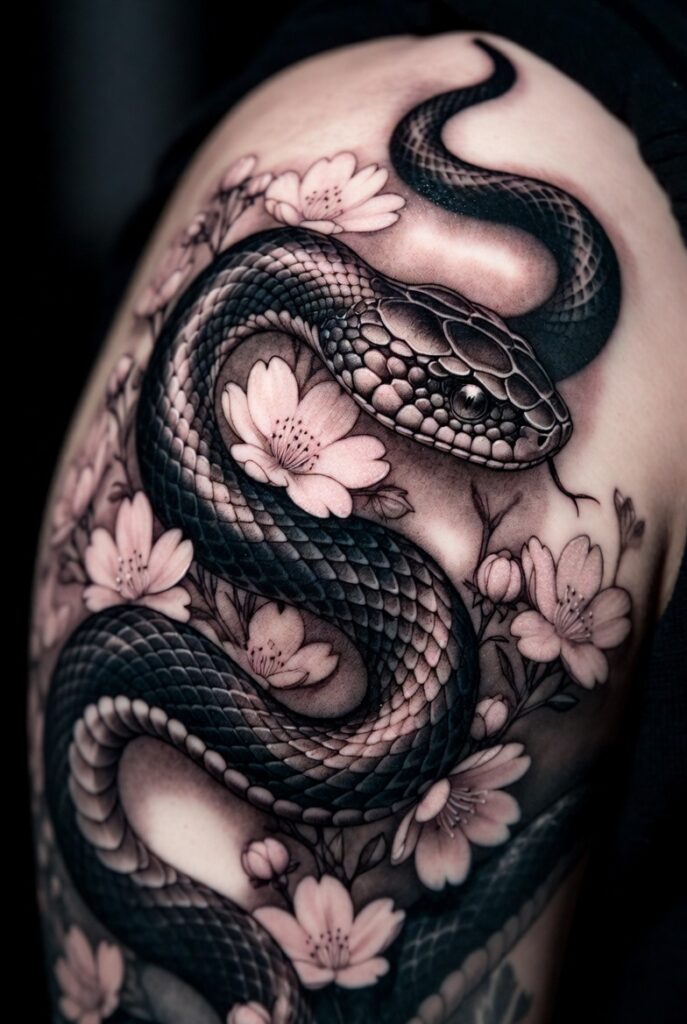
In Japanese folklore, snakes were never treated as something to fear. The Hebi is seen as a symbol of protection, transformation, and rebirth, and in certain Shinto beliefs, snakes are regarded as messengers and incarnations of deities who bring blessings and ward off evil. That belief still shapes rural Japan today many people in the countryside won’t chase away or kill a snake found in their yard, treating it as both a sacred being and an ally. Sunset TattooHubPages
The other piece of the puzzle is the shed skin. Snakes were seen as the ultimate embodiment of rebirth and renewal because of how completely they molt shedding everything, including their eye caps and some viewed this cycle as a representation of eternal life. That’s why so many people choose a snake tattoo during or after a major life change: a recovery, a breakup, a career reset, a health scare. HubPages
Color plays a role too. Black traditionally signals formality, dignity, and wisdom, while white is tied to purity and holiness — and white snakes specifically are considered the sacred ones, believed to connect the wearer directly to the divine. Red carries meaning around vitality, strength, and passion, much like it does in Western symbolism, since it’s so closely tied to blood, and also functions as protection against evil. Keep that in the back of your mind as you go through the styles below the same pose can carry a different message depending on the palette. HubPagesInk Happened
14 Japanese Tattoo Style Snake Designs Worth Saving
1. The Classic Coiled Hebi
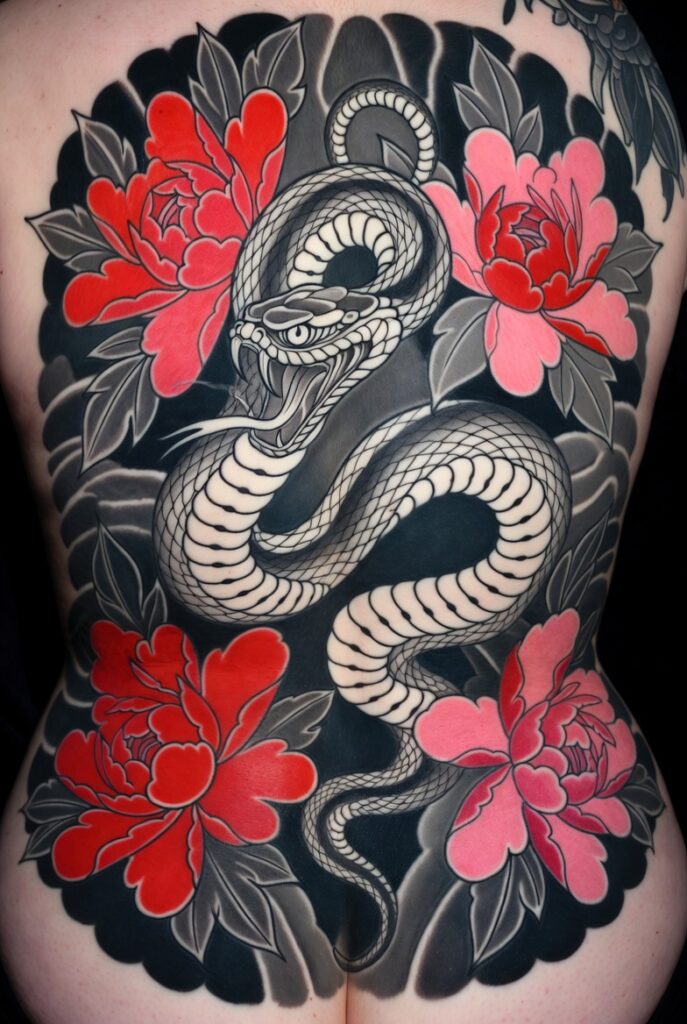
This is the design most people picture first, and for good reason. The snake wraps into a tight circle, scales rendered in painstaking detail, head raised and alert. It reads as quiet, contained power — a protector at rest, not on the attack. It fills round spaces beautifully, which is exactly why it’s such a strong fit for the upper arm or calf.
Best for: upper arm, calf, shoulder cap
Save-worthy detail: ask your artist to keep the scale work hand-drawn looking rather than uniform — it’s the difference between flat and alive.
2. Hebi with Cherry Blossoms (Sakura)
Pairing a snake with sakura branches creates one of the most requested combinations in traditional Japanese tattooing. The cherry blossom represents beauty and transience while the snake represents wisdom and protection, so together they tell a story about holding onto strength even as everything else changes. Seikatsumi
Best for: shoulder-to-chest panel, back piece, forearm
Pairs well with: soft pink and green palettes for contrast against the snake’s darker tones
3. Snake and Peony Composition
Peonies symbolize wealth, prosperity, and good fortune in Japanese culture, and when combined with a snake, they represent a harmonious balance between power and beauty. This is a favorite for larger pieces because the peony’s full, layered petals give the composition visual weight without competing with the snake’s linework. Thank You Co Tattoo
Best for: thigh, back, full sleeve
Color note: deep reds and golds intensify the “prosperity” symbolism
4. Wave-Wrapped Serpent
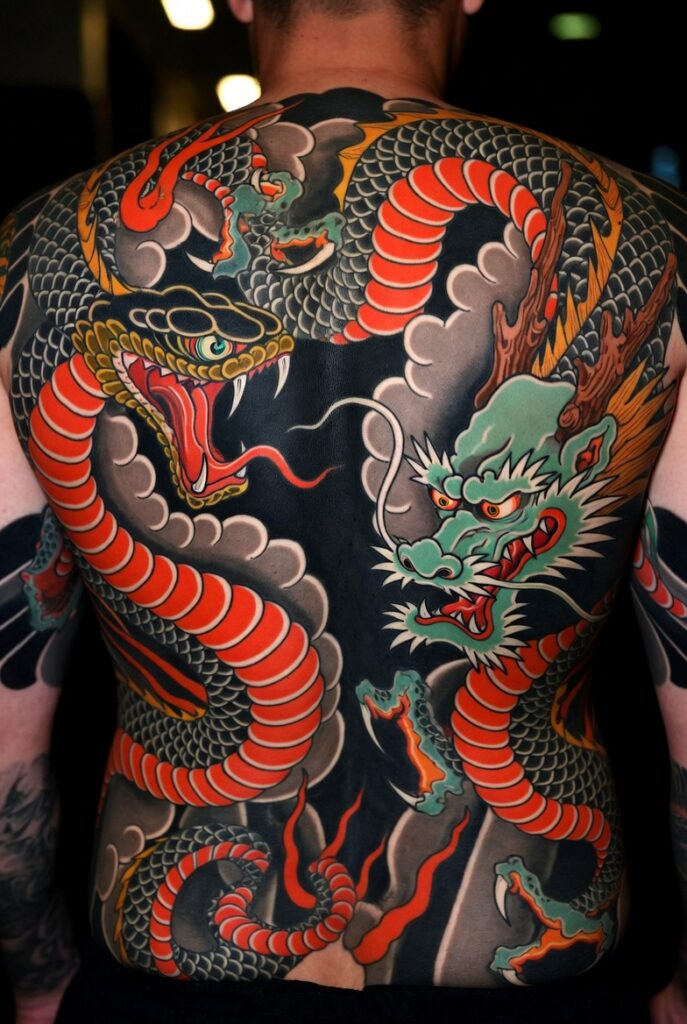
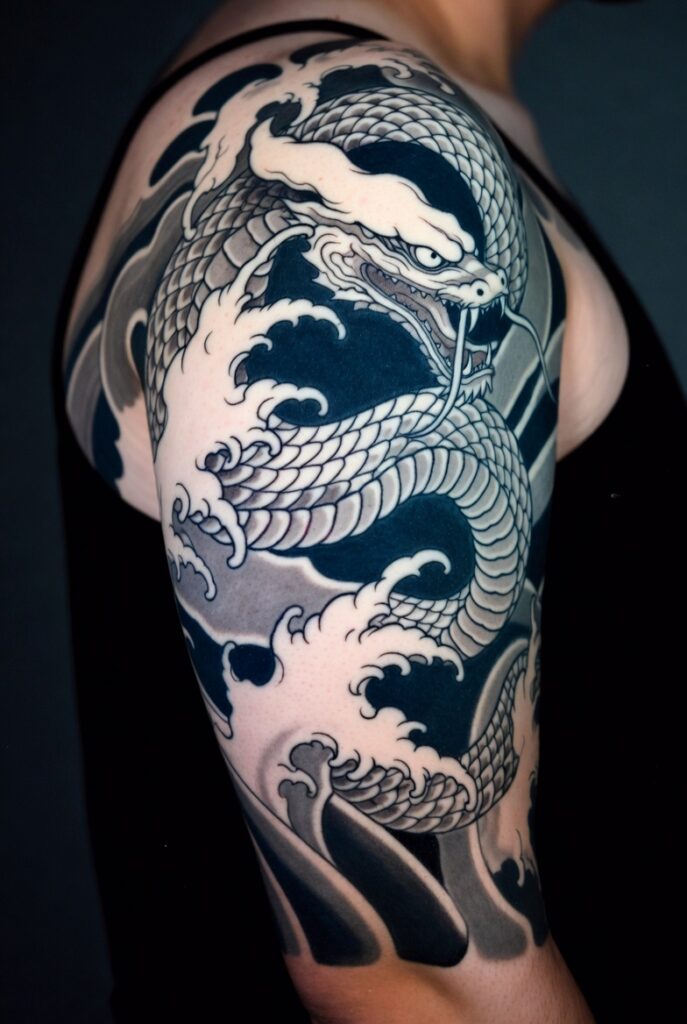
Waves symbolize the ebb and flow of life and the unpredictable nature of existence, and when incorporated into a snake tattoo, they add dynamism and emphasize the serpent’s fluidity and adaptability. This design tends to look the most “in motion” of any on this list, which makes it a standout choice for anyone who wants a tattoo that feels alive rather than static. Thank You Co Tattoo
Best for: sleeve, side ribs, back
Pinnable detail: wave crests in classic ukiyo-e style (think layered foam lines) elevate this from good to gallery-worthy
5. Black and Grey Traditional Sleeve
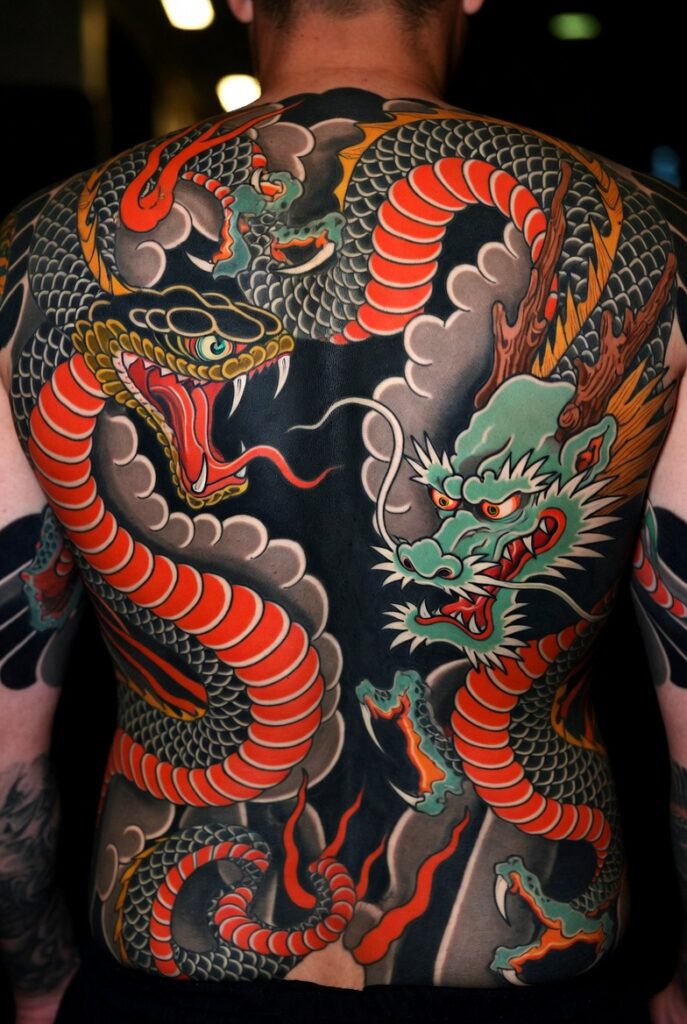
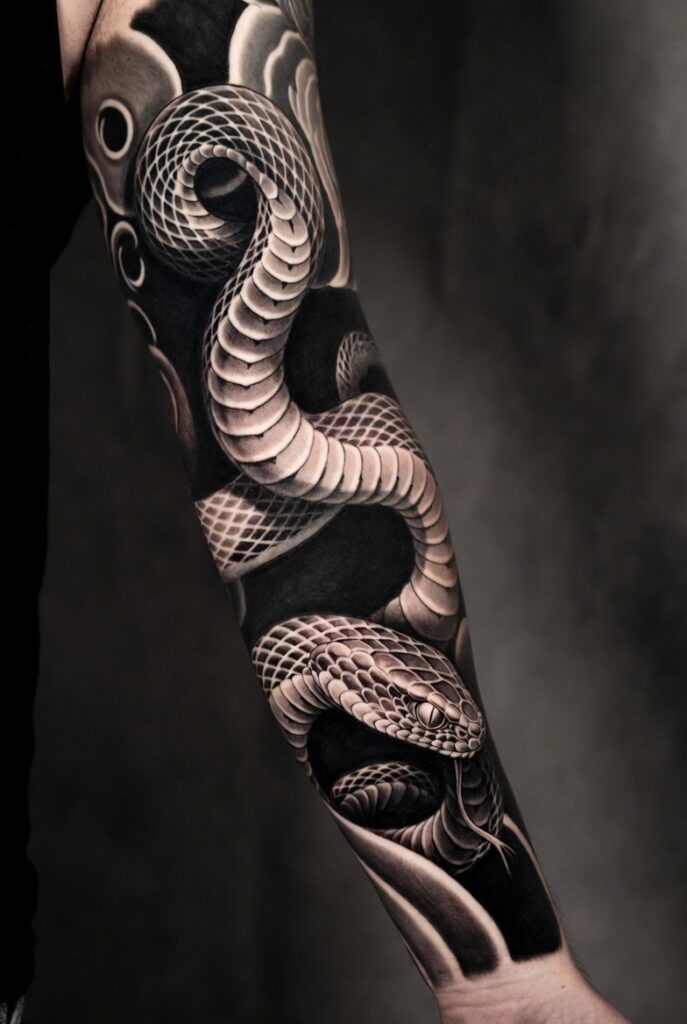
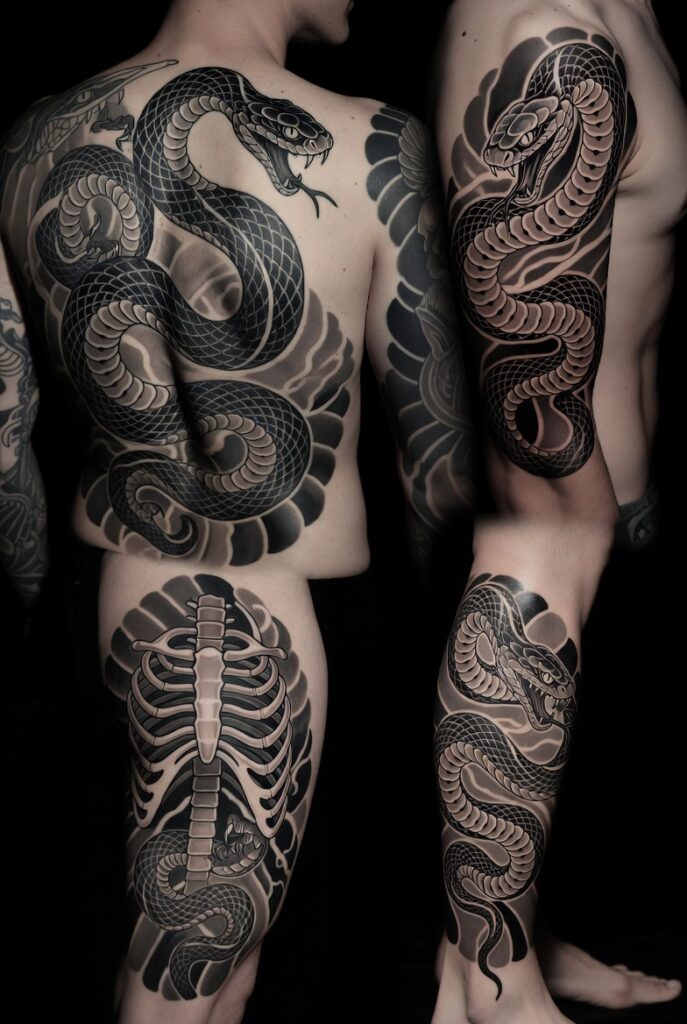
Not every Japanese snake tattoo needs full color to hit hard. A black-and-grey full sleeve keeps the traditional composition big coiled snake, supporting florals, background clouds but trades vibrancy for depth and shadow work. It reads as more understated and works well for people who want the cultural weight without the boldness of color.
Best for: full arm sleeve
Meaning shift: a black Hebi tattoo leans into meanings of wisdom, dignity, formality, and purity rather than the vitality associated with red or green versions Ink Happened
6. Snake and Dragon Face-Off
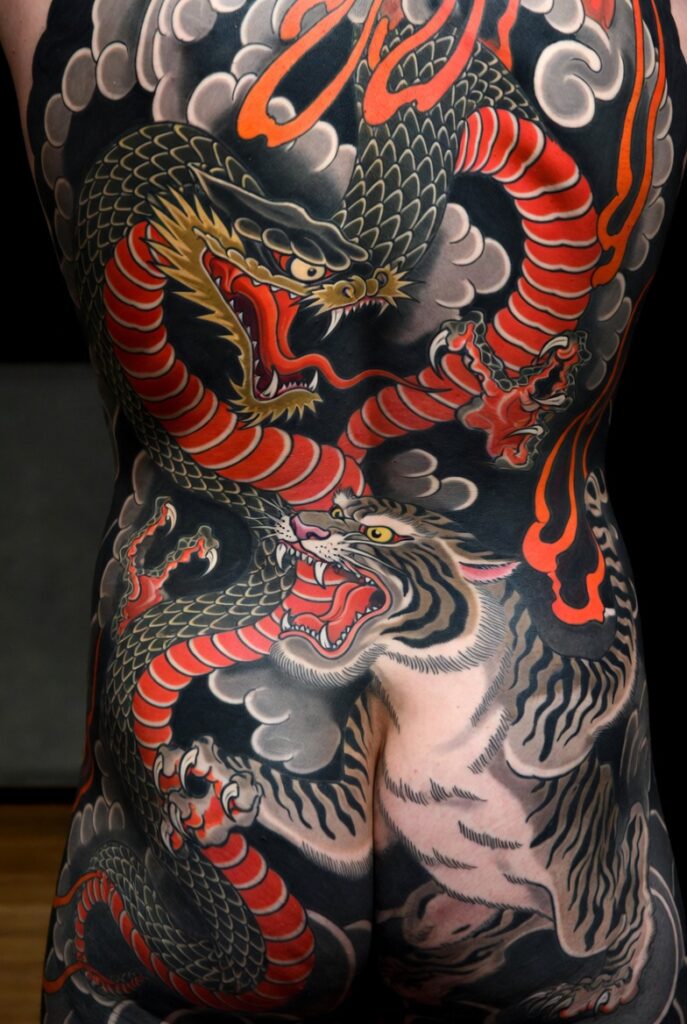
This is a statement piece, and it’s meant to be. The dragon represents celestial power while the snake represents earthly power, and together the two feel complete. Because both creatures need room to actually read as themselves, this design demands space a full sleeve, back, or chest panel is the minimum canvas. Amaze Tattoo
Best for: back piece, chest panel, full sleeve
Placement tip: give each figure its own “half” of the space rather than overlapping them too tightly
7. Snake Coiled Around a Katana
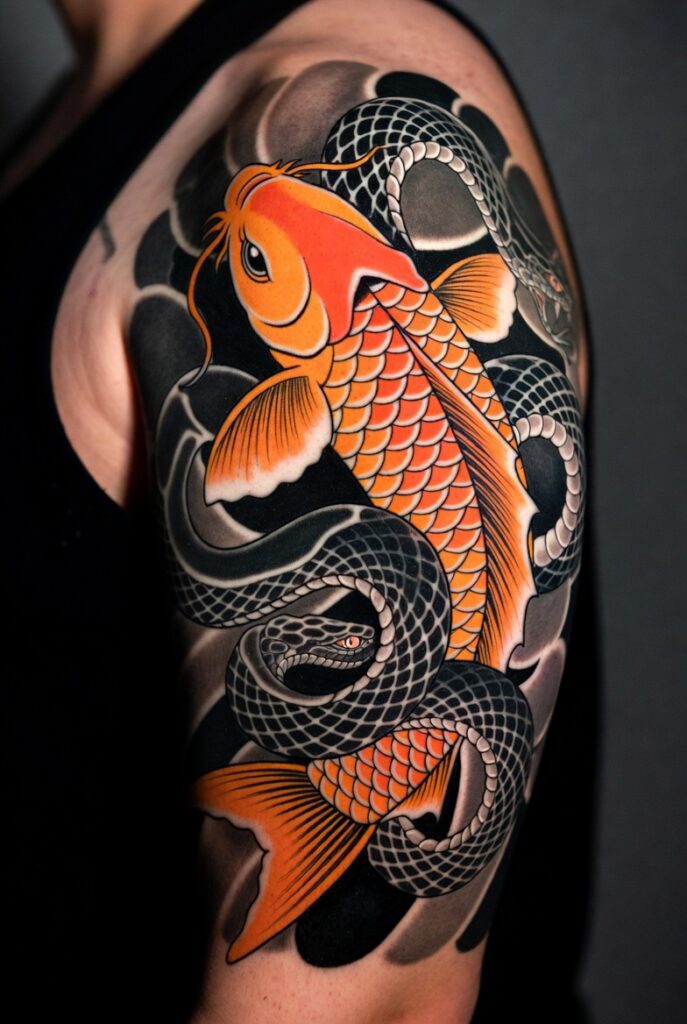
A snake wound around a sword blade layers two heavy symbols into one design. The katana represents honor and discipline while the snake adds cunning and protection, and the vertical line of the blade naturally follows the limb, which is why this one is so popular on the forearm or shin. Amaze Tattoo
Best for: forearm, shin, upper arm
Good for: anyone drawn to themes of discipline, restraint, and quiet strength
8. Snake and Tiger in Battle
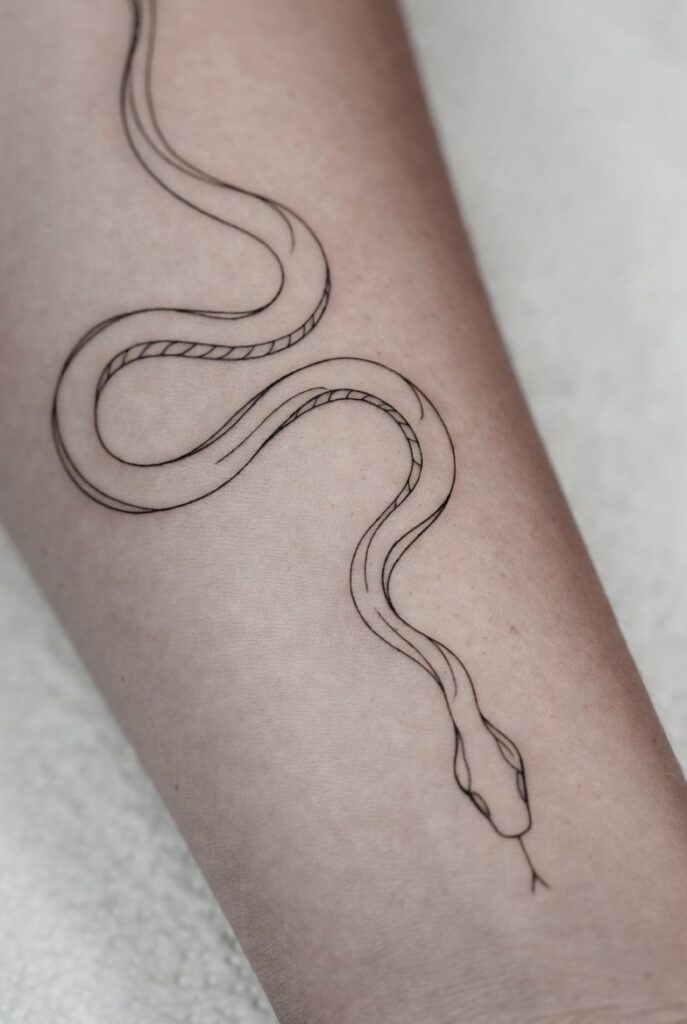
A predator-versus-predator composition that Japanese tattoo artists have leaned on for generations. It’s less about which animal “wins” and more about the tension between two different kinds of power the tiger’s raw aggression against the snake’s patience and cunning. This one carries serious visual drama, which is part of why it consistently shows up in tattoo galleries and portfolios.
Best for: full sleeve, back
Composition tip: let the snake wrap partially around the tiger’s body rather than placing them side-by-side it creates the sense of an actual confrontation
9. Snake and Koi Fish
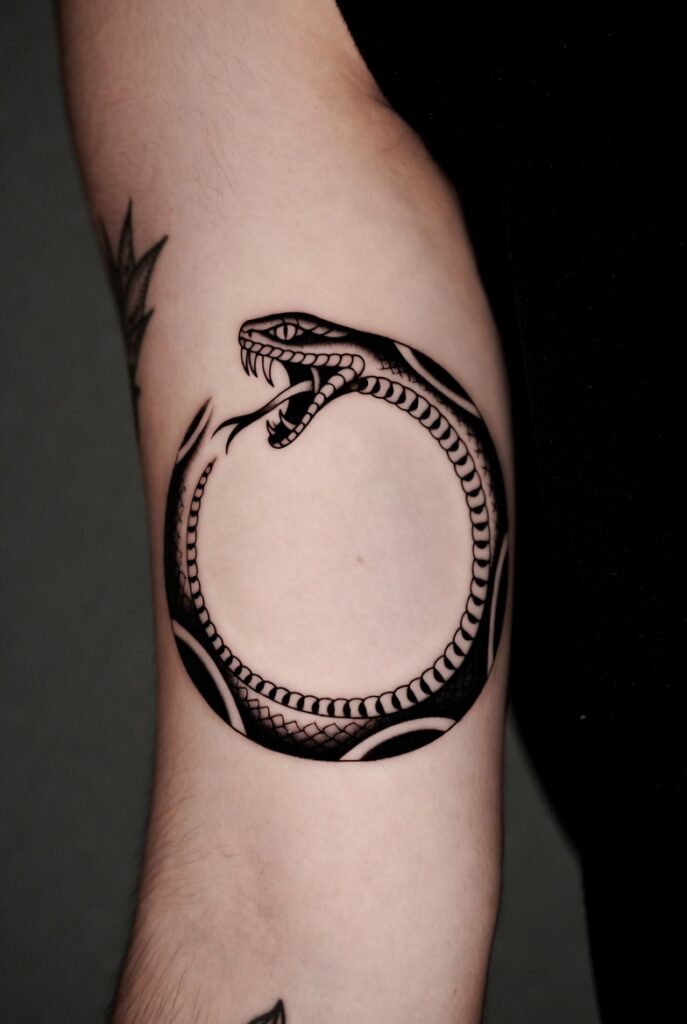
The snake and koi together create a natural scene full of tension one predator, one symbol of perseverance. It’s a quieter combination than the tiger or dragon pairings, which makes it a strong option for someone who wants meaning and movement without an oversized, aggressive piece. Amaze Tattoo
Best for: forearm, hip, side panel
Symbolic pairing: koi’s perseverance against adversity plays nicely against the snake’s transformation theme
10. Fine Line Snake
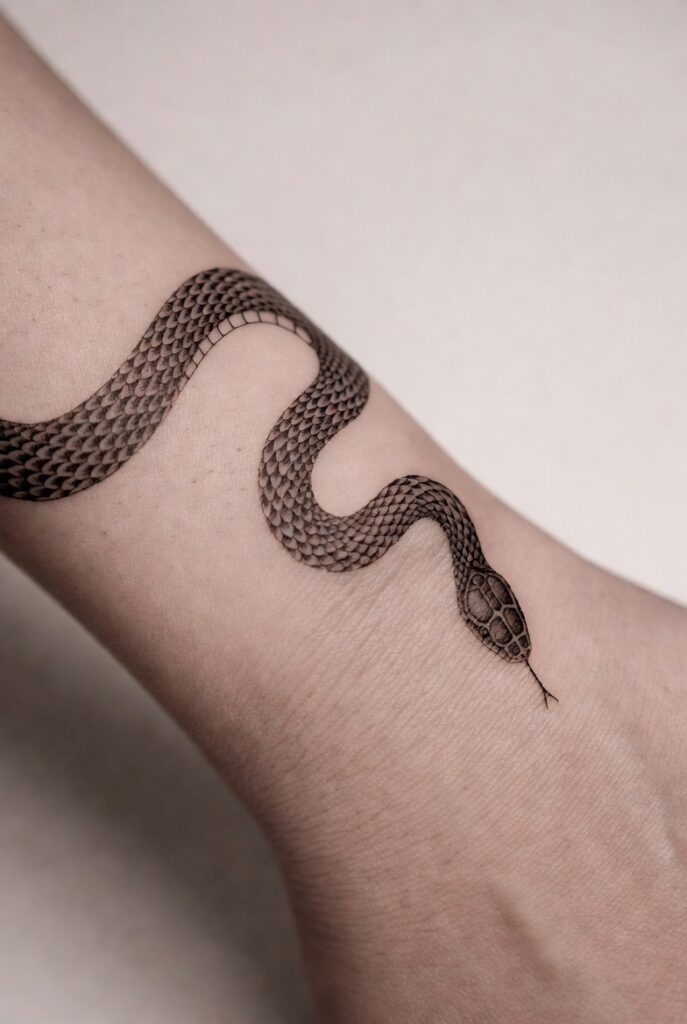
Full traditional Irezumi isn’t for everyone, and that’s completely fine. Fine line snake tattoos capture the texture and movement of the serpent with extraordinary delicacy, rendering individual scales and the precise curve of the body in thin linework that feels almost like botanical illustration. It’s the most approachable entry point into Hebi symbolism if you want something smaller and quieter. Monolith Studio
Best for: forearm, ankle, behind the ear, ribs
Great first-tattoo option: lower commitment, still rich in meaning
11. Ouroboros (Snake Eating Its Tail)
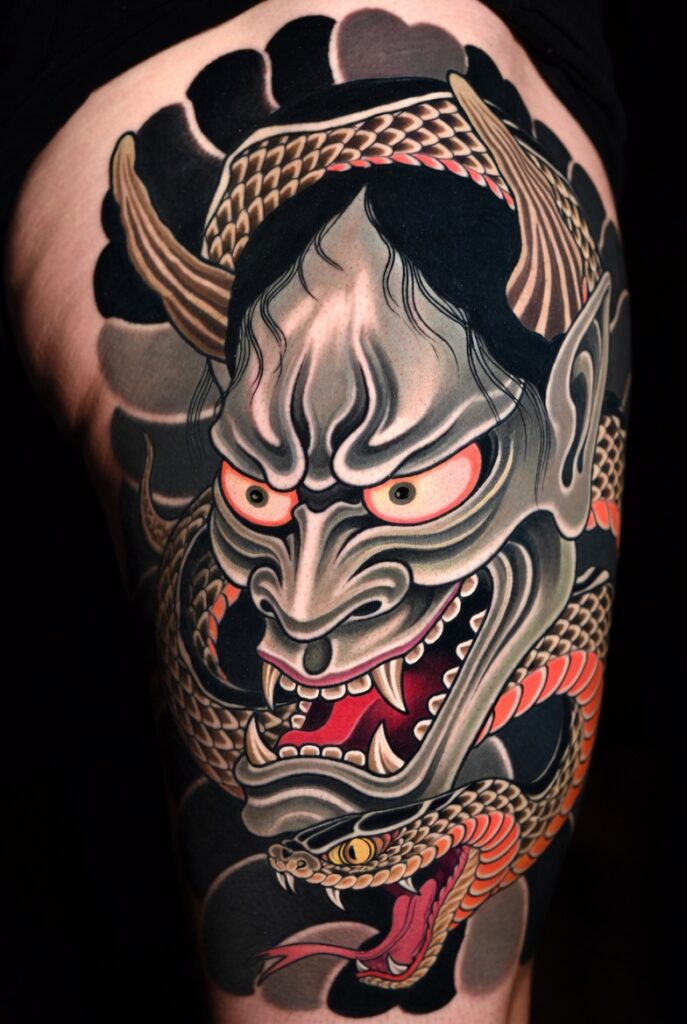
The Ouroboros depicts a snake eating its own tail, a circular motif symbolizing eternity and the cyclical nature of life, making it a profound choice for anyone drawn to concepts of rebirth and perpetual renewal. When rendered in Japanese style detailed scales, traditional shading it becomes a smaller but no less meaningful piece than a full sleeve. Kreafolk
Best for: wrist, upper arm, behind the ear
Symbolic focus: best for marking a completed chapter or a full-circle moment in your life
12. Snake Wrapped Around the Wrist or Finger
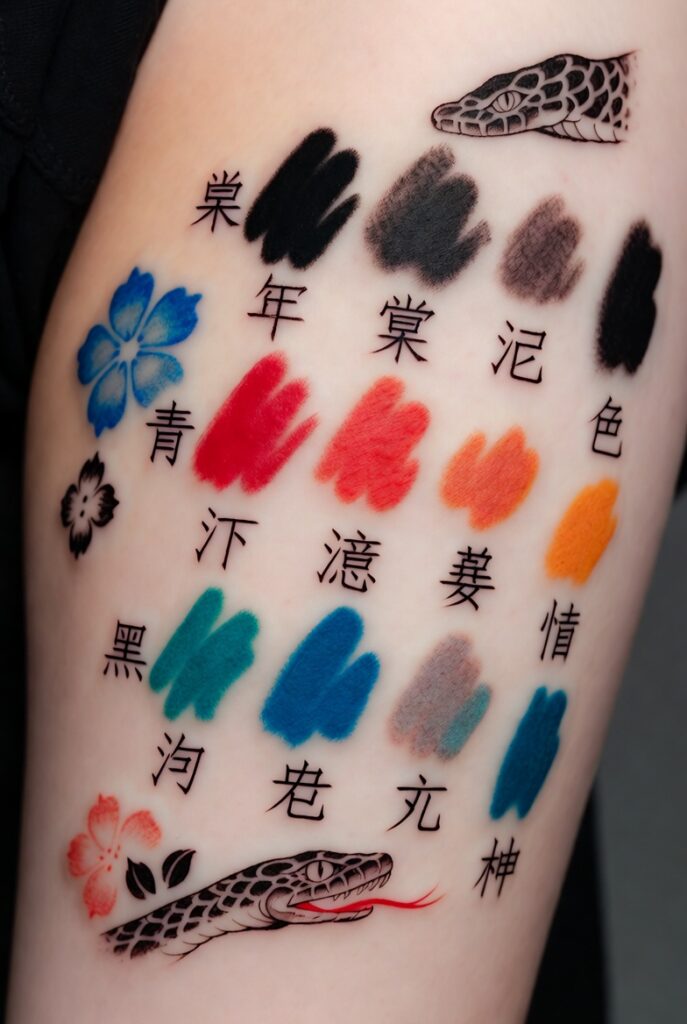
Not every serpent needs to be a sleeve. A small, precise snake winding around a finger, sitting on the wrist, or coiling behind the ear can be just as loaded with meaning as a large piece. This is the most Pinterest-favorite-sized version on the list easy to hide for work, easy to show off when you want to. Monolith Studio
Best for: wrist, finger, behind the ear
Detail tip: ask for a slightly raised head at the wrist bone to give the design a natural focal point
13. Oni Mask and Snake Combination
Pairing a snake with a traditional Oni (demon) mask leans into the darker, more dramatic side of Japanese tattoo art. This composition trades the “healing guardian” symbolism for something bolder and more intimidating a favorite for larger back pieces and sleeves where the artist has room to build a full scene around the mask.
Read also:15 Nature Sleeve Tattoo Ideas That Turn Your Arm Into Living Art
Best for: back, chest panel, full sleeve
Good for: collectors who already have Japanese-style work and want to build out a themed body suit
14. Snake and Skull Motif
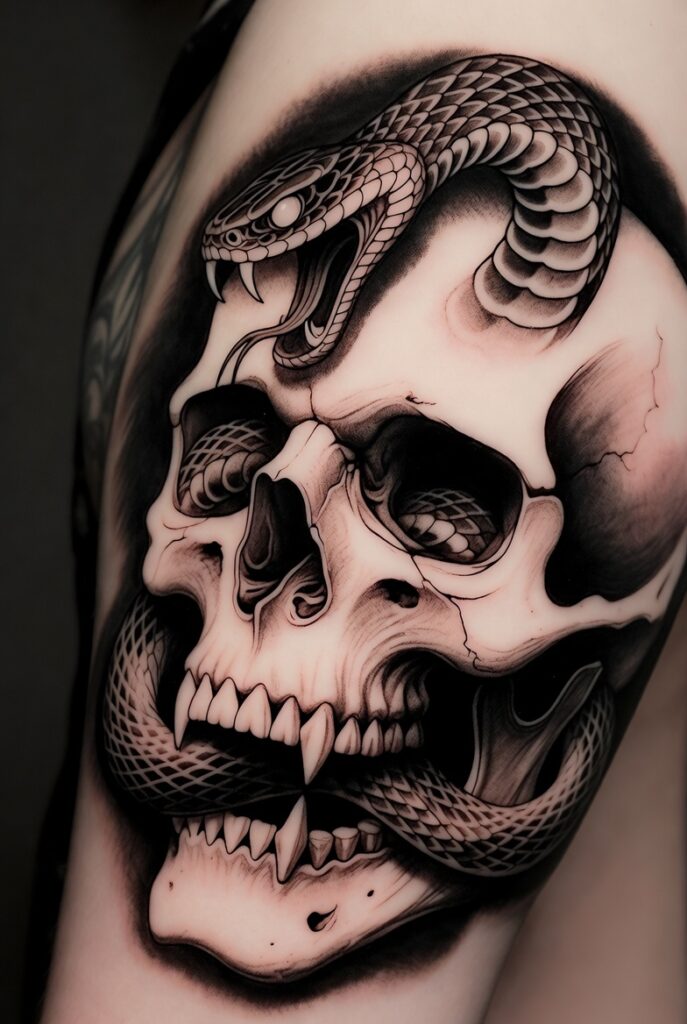
This design features a snake wrapped around a skull, representing death and mortality, while the snake represents rebirth and renewal together forming a powerful reminder of the cycle of life and death. It’s the edgiest option on this list and works best for people who want their tattoo to feel a little heavier and more memento-mori in tone. Seikatsumi
Best for: forearm, calf, upper arm
Pairs well with: muted, desaturated color palettes to keep the tone somber rather than cartoonish
Quick Reference: Japanese Snake Tattoo Color Meanings
- Black (Kuro): formality, dignity, and wisdom HubPages
- White (Shiro): purity and holiness, closely tied to sacred ceremonies HubPages
- Red (Aka): vitality, strength, passion, and protection against evil Ink Happened
- Blue/Indigo (Ao): a color historically tied to protection, in part because indigo dye had antibacterial properties once used on wounds
- Green (Midori): energy, vitality, and new beginnings, echoing spring
- Purple (Murasaki): historically reserved for royalty, since purple dye was among the most expensive in the world to produce
Where to Place Your Japanese Snake Tattoo
Placement changes how the design reads just as much as color does. Larger, full-scene designs (dragon face-offs, wave-wrapped serpents, Oni combinations) need a canvas big enough to let every element breathe think full sleeve, back, or chest panel. Smaller, single-figure designs (fine line snakes, wrist wraps, the Ouroboros) work well anywhere you want something meaningful without a multi-session commitment. As a general rule, snakes look most natural wrapping around a limb the cylindrical shape of an arm or leg lets the serpent’s body follow the muscle instead of sitting flat against it.
Frequently Asked Questions
Is a Japanese snake tattoo bad luck?
No. Unlike some Western associations with danger or deceit, the Japanese snake (hebi) is not a symbol of fear it stands for protection, wisdom, transformation, and good luck. Amaze Tattoo
What does a white snake tattoo mean in Japanese culture?
A white snake is traditionally considered a symbol of good luck, and more broadly, white ink and imagery in Japanese culture is tied to purity and sacredness. Seikatsumi
Can I combine a snake with other Japanese tattoo elements?
Yes — snakes are almost always designed to interact with something else in traditional Irezumi. Cherry blossoms, peonies, waves, tigers, dragons, and koi are the most common companion elements, and each pairing shifts the overall meaning of the piece.
Do Japanese snake tattoos have to be large?
Not at all. While full sleeves and back pieces are common because of how much detail goes into scale work, smaller wrist, finger, and behind-the-ear placements carry the same symbolic weight in a lower-commitment format.
Final Thoughts
A Japanese snake tattoo is one of the rare designs that looks just as striking as a small wrist piece or as a full sleeve the meaning holds either way. Whether you’re drawn to the quiet power of a coiled Hebi, the drama of a dragon face-off, or the delicate detail of a fine line design, the key is choosing the color, companion elements, and placement that actually match the story you want your tattoo to tell. S