You catch your reflection in the mirror and do a double take. That tattoo that used to stop people in their tracks now looks… tired. Dull. A little blurry around the edges. And the sinking question hits you: did I ruin it, or can this actually be fixed?
Here’s the good news before we go any further: a faded tattoo is almost never a lost cause. Whether your ink has gone soft from sun exposure, dry skin, age, or just time doing what time does, there’s a fix that matches your situation — and one of the tips below (the touch-up timing trick) is the one most people get completely wrong.
Save this guide before you keep scrolling — you’ll want to come back to the aftercare checklist near the end.
[Image placement 1: Vertical before/after split image of a faded tattoo next to a restored version. Overlay text idea: “Faded Ink? Here’s the Fix.” Alt text: “Before and after comparison of a faded tattoo color restoration touch-up”]
Why Tattoo Colors Fade in the First Place
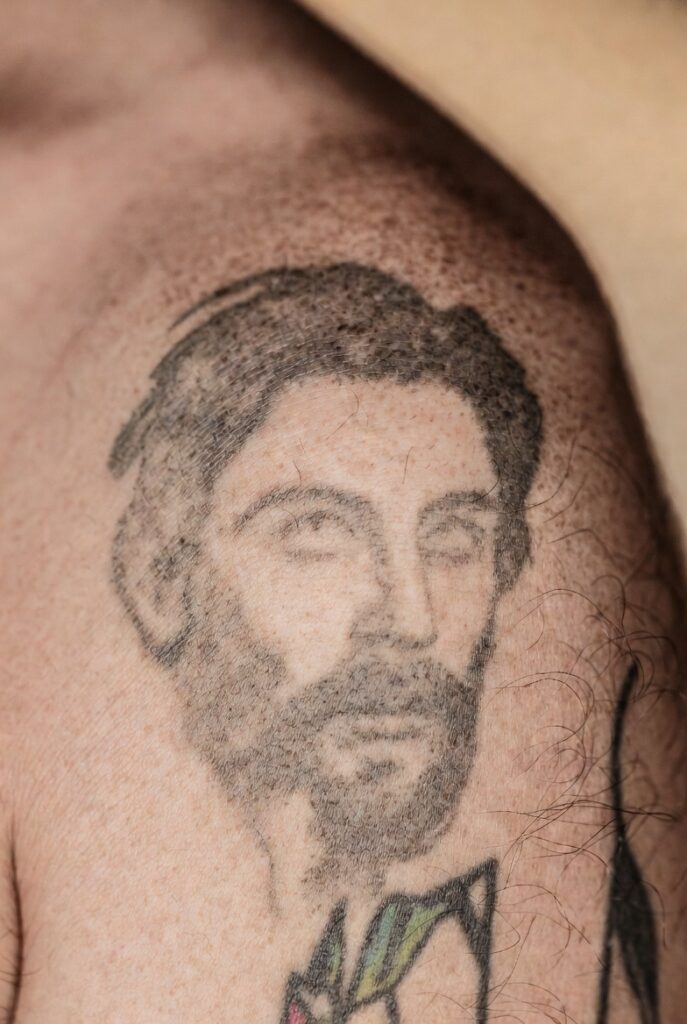
Before fixing the fade, it helps to know what you’re actually up against. Tattoo ink sits in the dermis, the deeper layer of your skin, where your immune system slowly treats it like a foreign substance and works to break it down over years. That part is unavoidable — it’s just how skin works.
But most premature fading comes down to a handful of accelerants:
- UV exposure — sunlight breaks down pigment molecules faster than almost anything else
- Dry, dehydrated skin — dull skin makes even healthy ink look lifeless
- Poor healing habits — picking scabs or over-washing during the healing window
- Chlorine and saltwater — both have a mild bleaching effect on fresh ink
- Friction-prone placement — hands, feet, elbows, and waistbands wear ink away faster
- Ink and technique quality — inconsistent pigment or shallow needle depth fades faster than pro-grade ink placed correctly
Here’s the thing: not all fading is equal. Some of what you’re seeing might be “surface dullness” that a good skincare routine can fix in days. Other fading is genuine pigment loss that needs a professional’s hand. Knowing which one you’re dealing with changes everything about how you fix it.
Two Types of “Faded” — And Why the Difference Matters
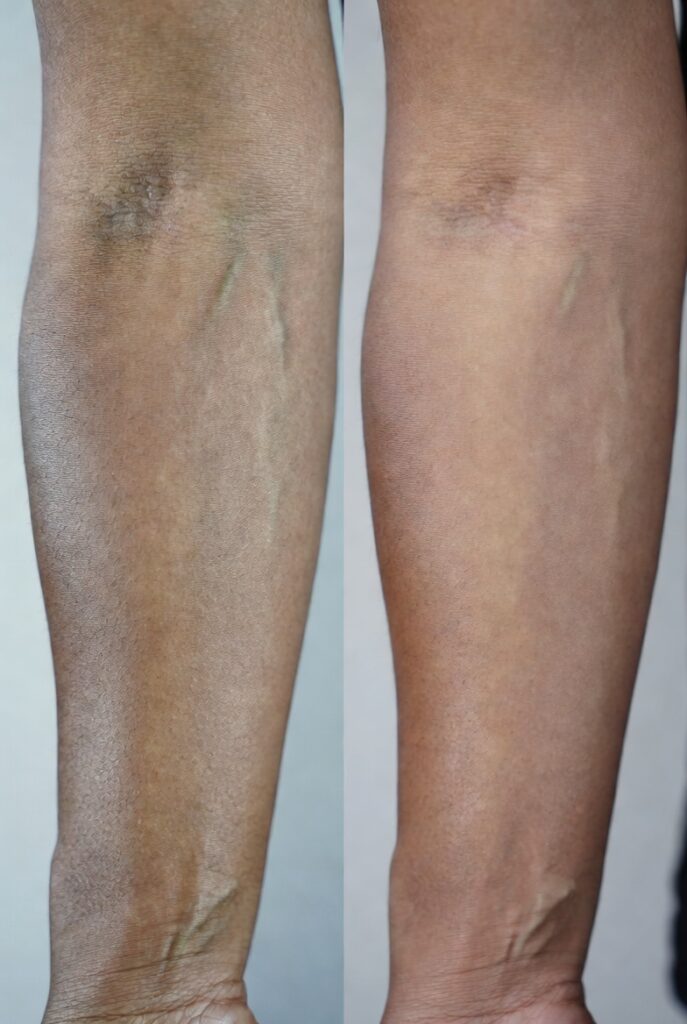
There are really two different problems hiding under the word “faded,” and mixing them up wastes time and money.
Surface dullness. Dry, flaky, or sun-damaged skin sitting on top of otherwise healthy ink. This looks like fading but is really a skin-texture issue.
True pigment loss. The ink particles themselves have actually broken down or migrated out of the dermis. No amount of lotion brings this back — it needs intervention.
So what does this mean for you? Try the easy, cheap fixes first. If your tattoo still looks flat after that, it’s time to talk to a professional.
Rehydrate the Skin First (The Free Fix Everyone Skips)
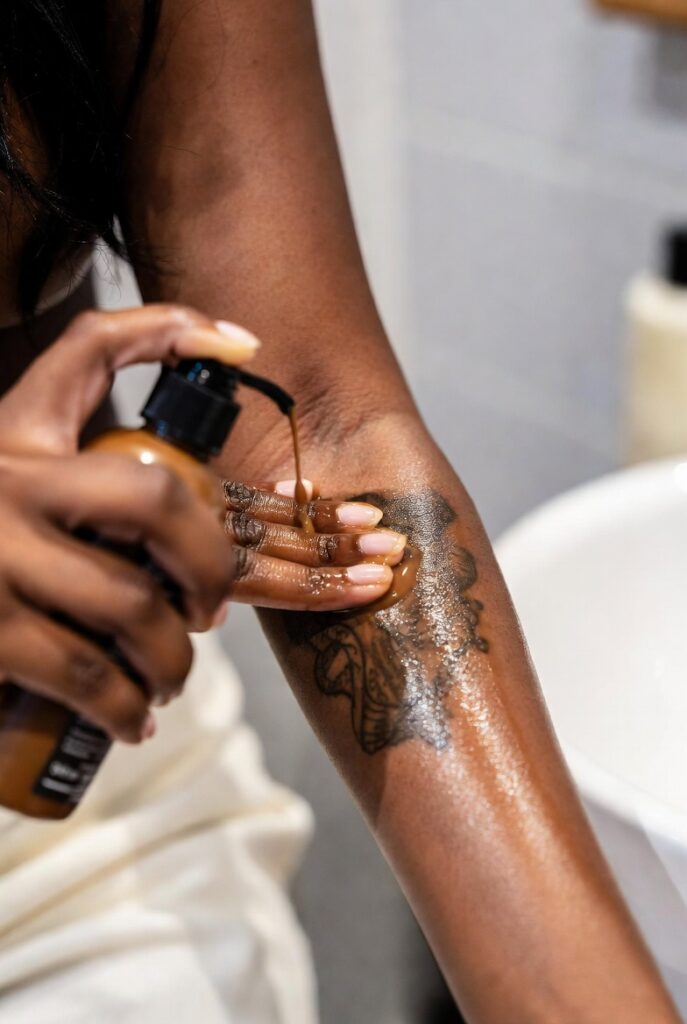
This is the single most underrated tattoo color fading fix, and it costs nothing but consistency. Dry skin scatters light unevenly and makes ink look chalky and dull, even when the pigment underneath is perfectly intact.
What to actually do:
- Moisturize daily with a fragrance-free, gentle lotion or tattoo-specific balm
- Drink enough water that your skin isn’t a limiting factor in how it looks
- Avoid harsh exfoliants like AHAs, retinoids, or alcohol-based products directly over the tattoo — they strip the top skin layer and can lighten ink over time
- Gently exfoliate dead, flaky skin (not scrubbing, just light buffing) so ink underneath can show through clearly
Give this two to three weeks of consistency before judging results. Healthy skin is the cheapest color boost you’ll ever get.
[Image placement 2: Vertical close-up of hands applying moisturizer to a tattooed arm. Overlay text idea: “Step 1: Hydrate Before You Panic.” Alt text: “Applying tattoo aftercare moisturizer to boost faded ink vibrancy”]
Lock In Sun Protection Immediately
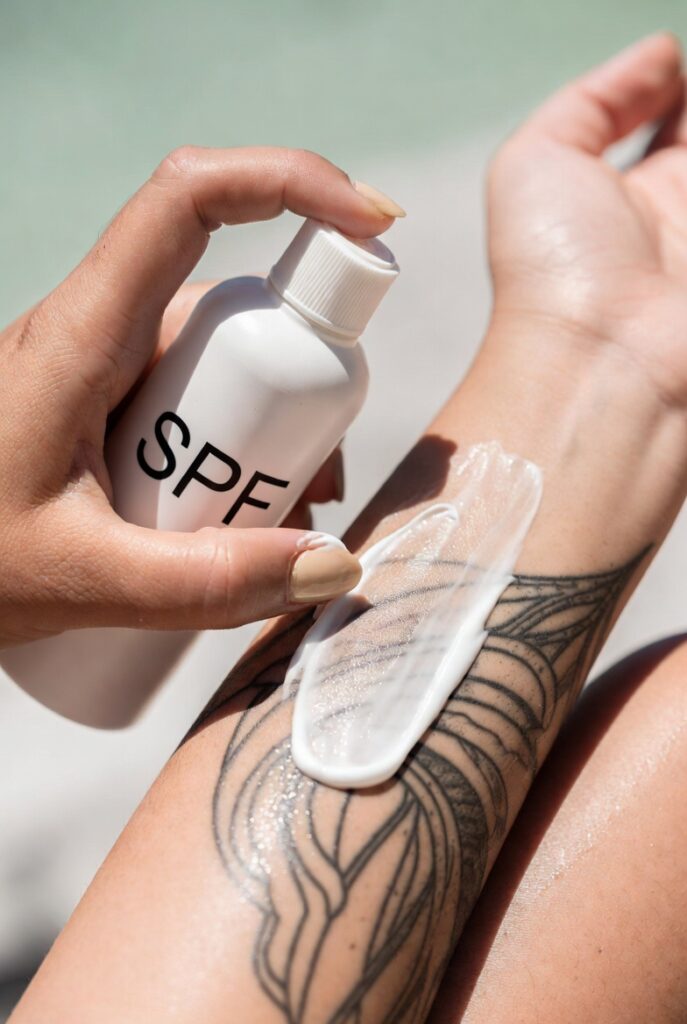
If UV exposure caused the fade, more UV exposure will only make it worse — even after a touch-up. This step isn’t optional if you want any fix to actually stick.
- Use broad-spectrum SPF 30 or higher on tattooed skin any time it’s in daylight, even on cloudy days
- Reapply every couple of hours during extended outdoor time
- Cover up with clothing on long sun exposure days rather than relying on sunscreen alone
- Avoid tanning beds entirely on tattooed areas
Black ink tends to shift toward a soft blue-grey under sun damage, while reds, yellows, and oranges fade into washed-out pastels fastest. If your color piece has any of those brighter tones, sun protection deserves top priority.
Book a Professional Touch-Up
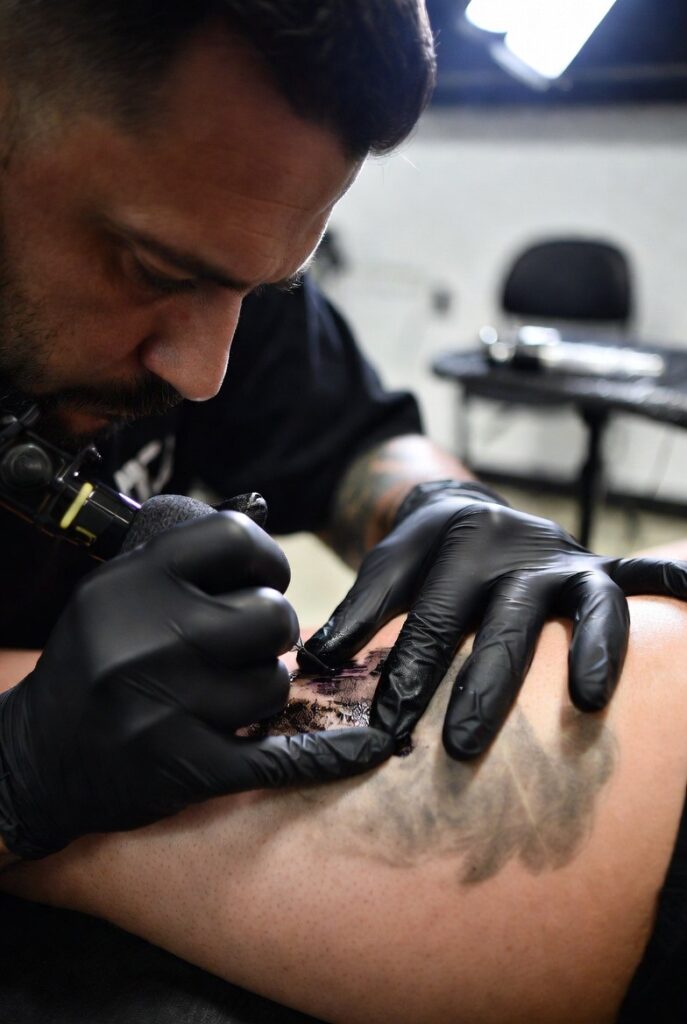
Once you’ve ruled out surface dullness, a touch-up is the most common and effective real fix. This is a short follow-up session where an artist adds fresh ink to areas that have thinned out.
What actually happens in a touch-up:
- Your artist examines the piece and identifies which areas have genuinely lost pigment versus which are just soft-looking
- Ink is reapplied at the correct depth to areas that need reinforcement
- Outlines get sharpened if lines have blurred
- Color is matched as closely as possible to your original palette
Go back to your original artist if you can. They already know exactly which inks and technique they used, which means a much closer color match than a new artist starting from scratch.
One detail people consistently get wrong: timing. Book the touch-up only after the tattoo has been fully healed for weeks to months, not while it’s still settling. Going in too early can actually undo the healing process and make fading worse, not better.
[Image placement 3: Vertical shot of a tattoo artist performing a touch-up session on a color tattoo. Overlay text idea: “When Lotion Isn’t Enough: Book a Touch-Up.” Alt text: “Professional tattoo artist restoring color on a faded tattoo during a touch-up session”]
Consider a Full Re-Color or Rework
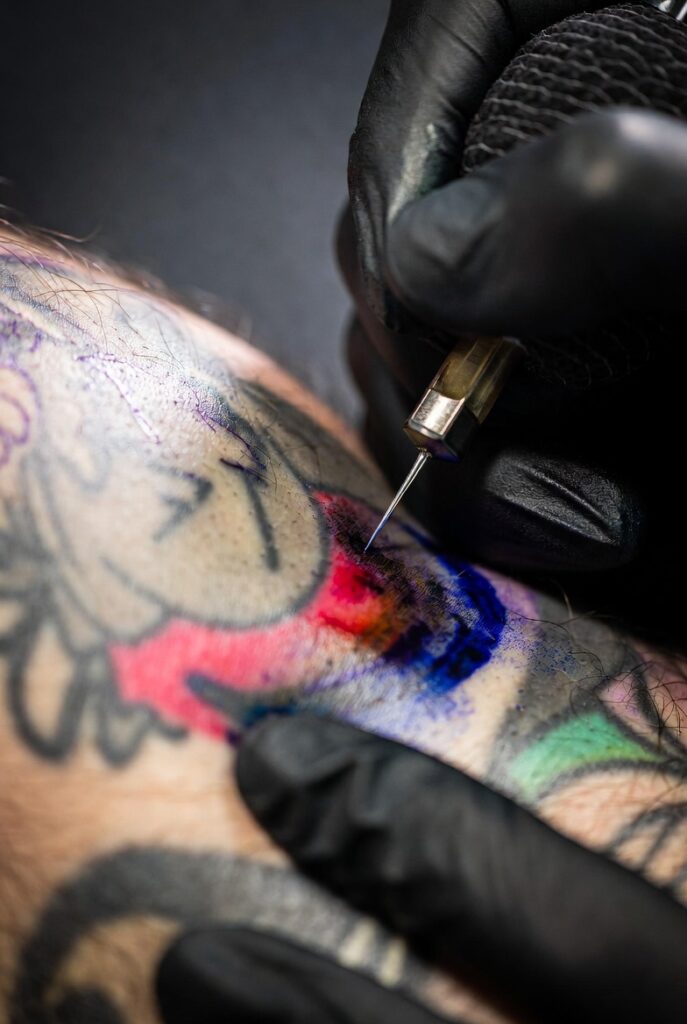
For tattoos with more significant fading — especially color pieces that have lost saturation across large areas — a full re-color goes further than a quick touch-up. This is essentially your artist redoing the shading and color layers of the piece while keeping the original linework and design intact.
This option makes sense when:
- Fading is widespread rather than in a few small spots
- The original color palette has gone noticeably muddy or grey
- You want the opportunity to slightly enhance or update the design while restoring it
A skilled artist can often make an old tattoo look sharper and more vibrant than it’s looked in years — sometimes even better than the original.
Ask About Mild Laser Rebalancing
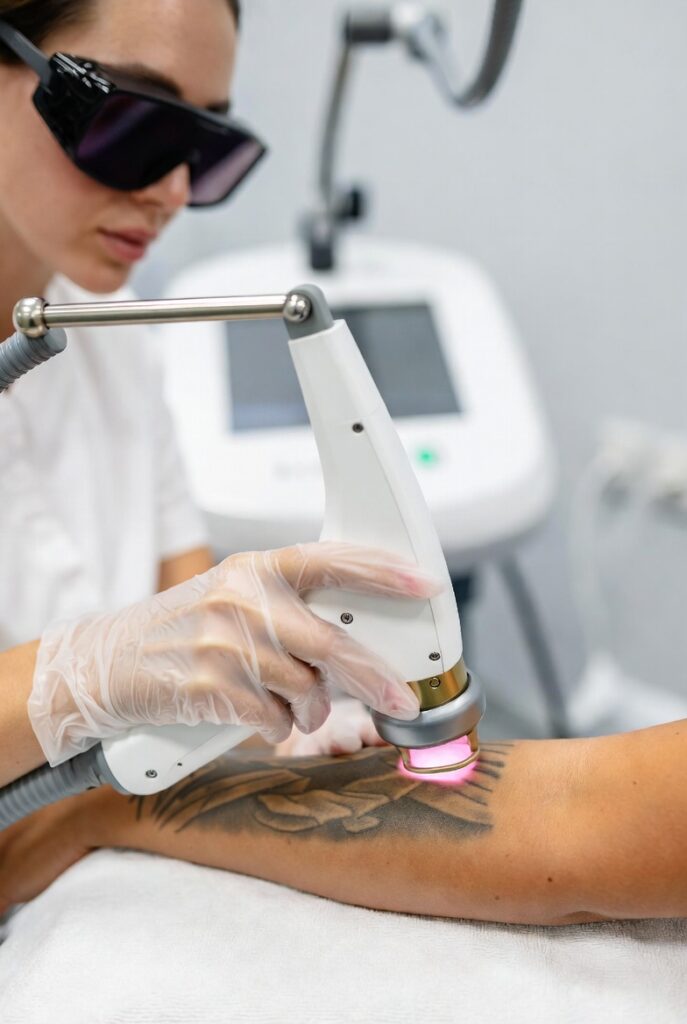
This one surprises people. Laser treatment isn’t only for removal. Some artists and dermatology-adjacent clinics use light laser sessions to soften overly dark or muddied ink, which can rebalance a tattoo before new color is added on top.
This is a more specialized route and not every studio offers it, so it’s worth asking specifically about “laser rebalancing” or “laser-assisted touch-up” rather than assuming standard laser removal applies here.
The Cover-Up (When Restoration Isn’t Realistic)
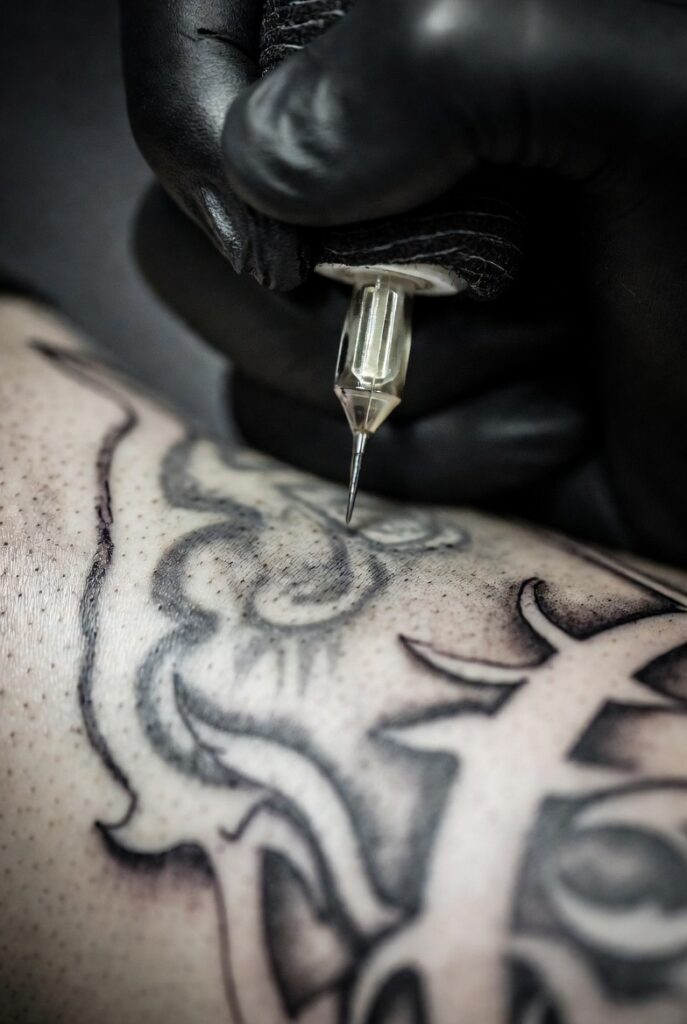
If a tattoo has faded unevenly, blurred significantly, or was poorly done to begin with, sometimes the most satisfying fix isn’t restoration — it’s transformation. A skilled cover-up artist can incorporate faded linework into an entirely new design.
This is worth exploring when a touch-up or re-color would still leave you unhappy with the underlying design itself, not just the color.
Read also:18 Best Friend Tattoo Ideas That Capture a Bond Words Can’t Explain
Colors That Fade Fastest (And What That Means for Future Ink)
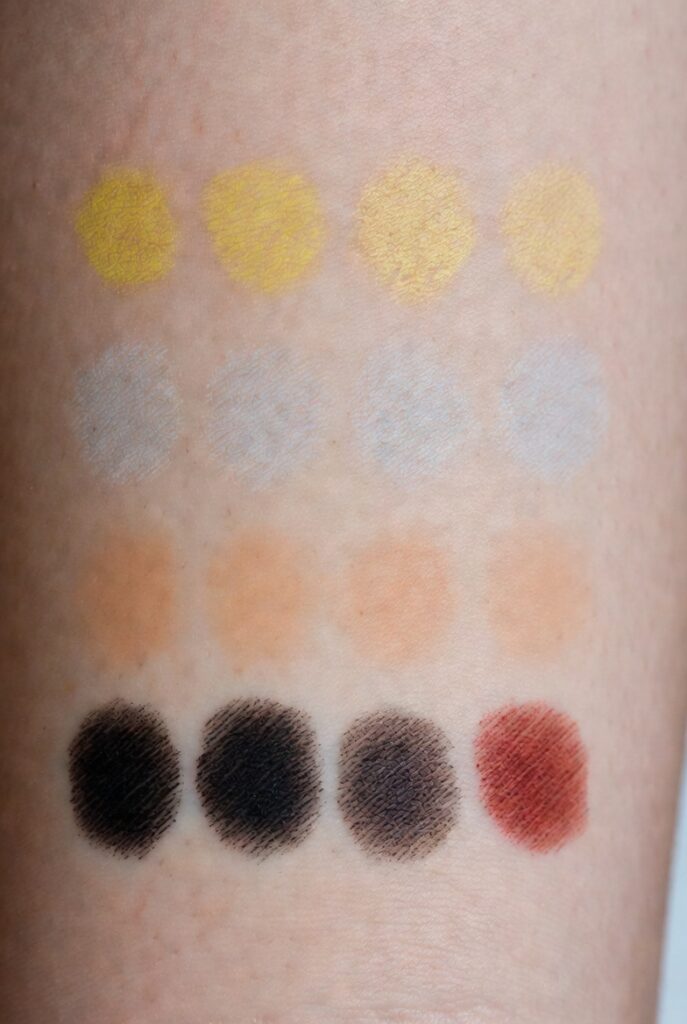
If you’re dealing with fading now, it helps to understand which pigments are naturally more fade-resistant for next time:
- Black and dark navy — most fade-resistant, holds contrast the longest
- Deep reds and greens — age reasonably well when applied by an experienced artist
- Pastels, light pink, and pale blue — fade fastest due to lower pigment density
- White ink — softens the quickest of all colors and often needs the most frequent refreshing
- Watercolor-style pieces — beautiful on day one, but the lack of bold outlines means they blur and dull faster than styles with heavier linework
Quick tip to remember: bold will hold. Tattoos with strong black outlines and solid color fills consistently age better than fine-line or no-outline designs, because the outline anchors the piece visually even as color softens underneath.
[Image placement 4: Vertical infographic-style graphic comparing fade-resistant ink colors vs. fast-fading colors. Overlay text idea: “Which Tattoo Colors Fade Fastest?” Alt text: “Chart comparing fade-resistant tattoo ink colors like black and navy versus fast-fading pastels”]
Preventing the Next Fade: A Simple Long-Term Routine
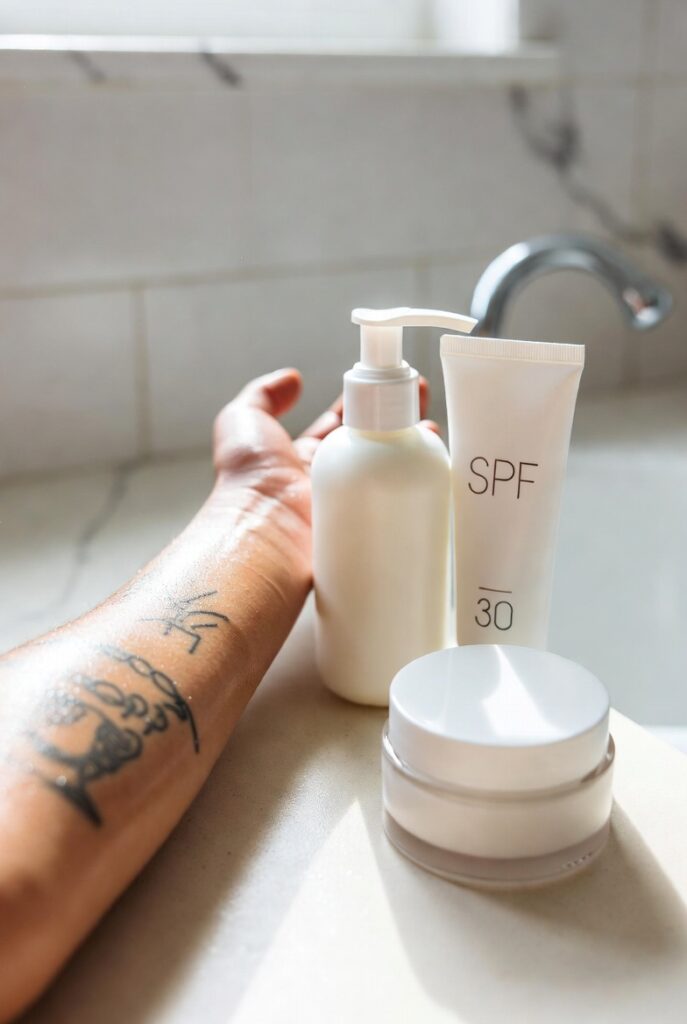
Fixing the fade you have now is only half the job. Here’s a routine that keeps a restored tattoo looking sharp for years instead of months:
- Moisturize daily, especially in dry climates or during winter months
- Apply SPF 30+ every time the tattoo sees daylight
- Avoid prolonged soaking in pools, hot tubs, or the ocean, particularly on newer ink
- Keep tattoos in high-friction areas (hands, feet, waistband) extra moisturized, since these fade fastest
- Schedule a check-in with your artist every couple of years, even before fading is obvious
- Avoid harsh skincare actives directly over tattooed skin
A tattoo that’s cared for consistently rarely needs a dramatic rescue — just small, steady maintenance.
Frequently Asked Questions
Can a faded tattoo be fully restored to how it looked originally?
In most cases, yes, especially with a professional touch-up or re-color. Full restoration is most successful when the original linework is still intact and only the color or shading has faded.
How long should I wait before getting a touch-up on a faded tattoo?
Wait until the tattoo is completely healed, which is typically several weeks to a few months after the original session, before requesting any touch-up work.
Does moisturizing really make a tattoo look less faded?
Yes, for surface dullness caused by dry skin. It won’t fix true pigment loss, but it’s a fast, free first step that often shows visible improvement within a couple of weeks.
Will my tattoo touch-up hurt as much as the original tattoo?
Most people report touch-ups hurting less than the original session, since the skin is already familiar with the process and the artist typically doesn’t need to go as deep.
How often do color tattoos need touch-ups?
There’s no universal timeline, but many color tattoos benefit from a touch-up every two to five years depending on placement, sun exposure, and skin type.
Bringing Your Ink Back to Life
A faded tattoo feels personal because it usually is personal , it’s rarely just a piece of art, it’s a memory, a milestone, or a story on your skin. The reassuring truth is that fading is one of the most fixable problems in the tattoo world. Start with the free fixes: hydration and sun protection. If the color still looks flat after that, a touch-up or re-color from a skilled artist can bring it right back , sometimes better than before.
Your ink isn’t gone. It’s just waiting on a little attention.
[Image placement 5: Vertical “quick recap” graphic listing the 3 main fixes: Hydrate → Protect → Touch Up. Overlay text idea: “Save This: 3 Steps to Fix Faded Tattoo Color.” Alt text: “Three-step summary graphic for fixing faded tattoo ink color”]