You’ve scrolled past a hundred sleeve tattoos this week and none of them stopped your thumb. Then one shows up — a dragon curling around a forearm, scales catching light through a swirl of clouds — and suddenly you’re not scrolling anymore. That’s the pull of a Japanese sleeve. It’s not just ink. It’s a story wrapped around your arm, built from centuries of symbolism most people never bother to learn before they book the appointment.
Here’s the thing: a great Japanese sleeve isn’t random. Every creature, flower, and background element means something specific, and the strongest designs pair them on purpose. Below are 14 Japanese sleeve tattoo ideas — from bold, full-color dragons to quiet, black-and-grey cherry blossom pieces — with the real meaning behind each one, so you walk into your consultation already speaking the language. Save this now so you don’t lose it before your appointment.
1. The Classic Dragon Sleeve
If one image defines Japanese tattooing, it’s the dragon. Unlike Western dragons, Japanese dragons (ryu) aren’t villains — they’re wise, benevolent guardians said to control rain, wind, and water.
A dragon sleeve typically coils from the shoulder down toward the wrist, its long serpentine body following the natural curve of your arm. Surrounded by swirling clouds or crashing waves, it becomes a design about protection and quiet power rather than aggression.
Best for: anyone who wants a bold, traditional centerpiece with real weight behind it.
2. Koi Fish Swimming Upstream
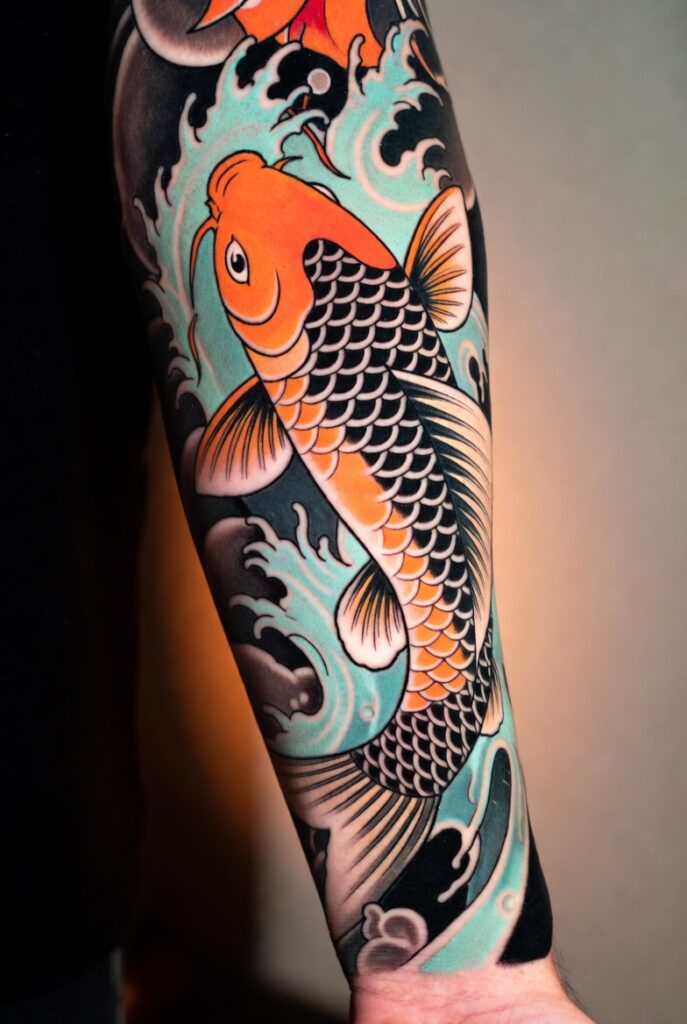
The koi legend is one of the best stories in Irezumi: a carp swims against the current of the Yellow River, fights its way to the Dragon Gate, and — because it never gave up — transforms into a dragon. This myth is why koi are associated with determination and achieving goals through persistence. Fountainhead NY
A koi sleeve usually shows the fish angled upward through churning water, scales rendered in bold reds, oranges, or black. Red koi tend to represent love and bravery, while black koi represent overcoming hard times — so the color choice becomes part of your personal story. Iglatattoo
Save-worthy detail: ask your artist to angle the koi’s head “upstream” toward your shoulder — it’s the traditional composition and instantly reads as intentional, not random.
3. The Koi-to-Dragon Transformation Piece
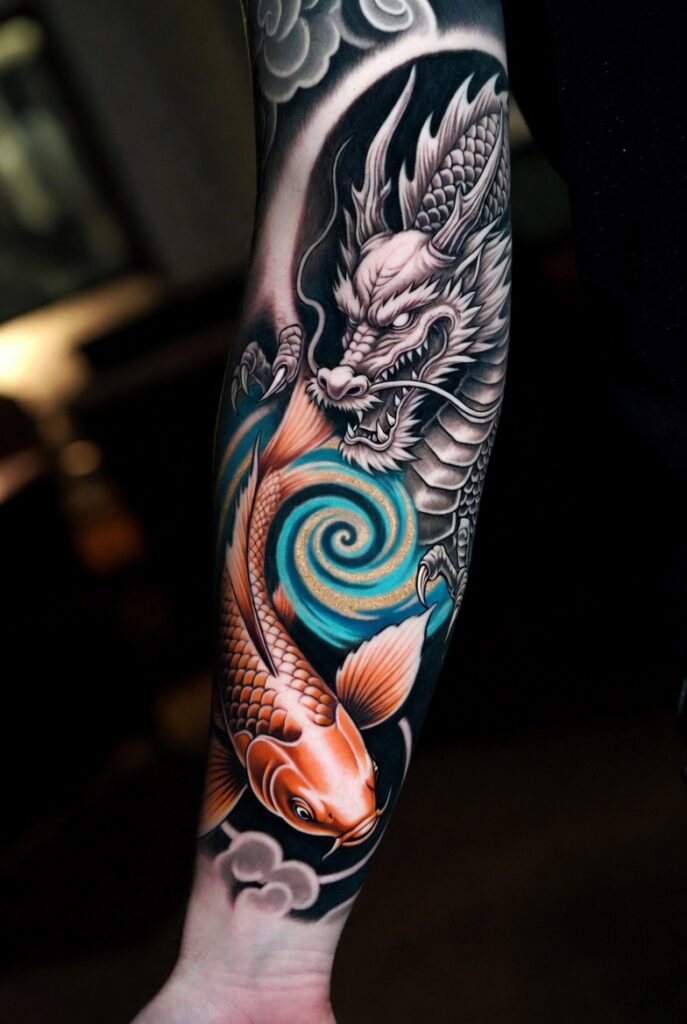
Want the full story in one sleeve? Some of the most striking pieces show the koi mid-transformation — fish scales blending into dragon scales as the creature climbs the arm. It’s a literal visual of the myth, and it reads as a powerful metaphor for personal growth, especially if you’re marking a hard chapter you’ve come out the other side of.
4. Cherry Blossom (Sakura) Half Sleeve
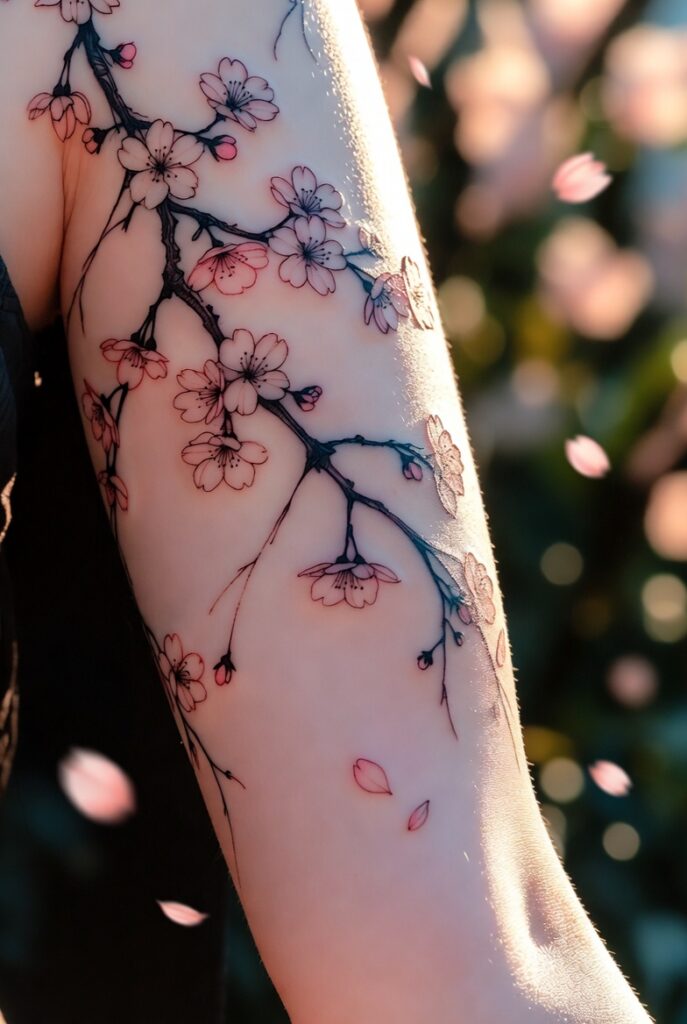
Not every Japanese sleeve needs to be loud. Cherry blossoms bring softness and depth instead. Their meaning centers on “mono no aware” — an awareness of impermanence and the bittersweet nature of life’s fleeting beauty. Aitattoogenerator
Petals are usually scattered across the arm as if caught mid-drift on the wind, often layered over a darker background so they pop. They also pair beautifully as an accent to a dragon or tiger sleeve, softening a fierce design into something with more emotional range.
Quick tip: sakura sleeves photograph exceptionally well in black-and-grey with pink accent shading — it’s one of the most requested “quiet but stunning” options right now.
5. Phoenix (Hō-ō) Rising Sleeve
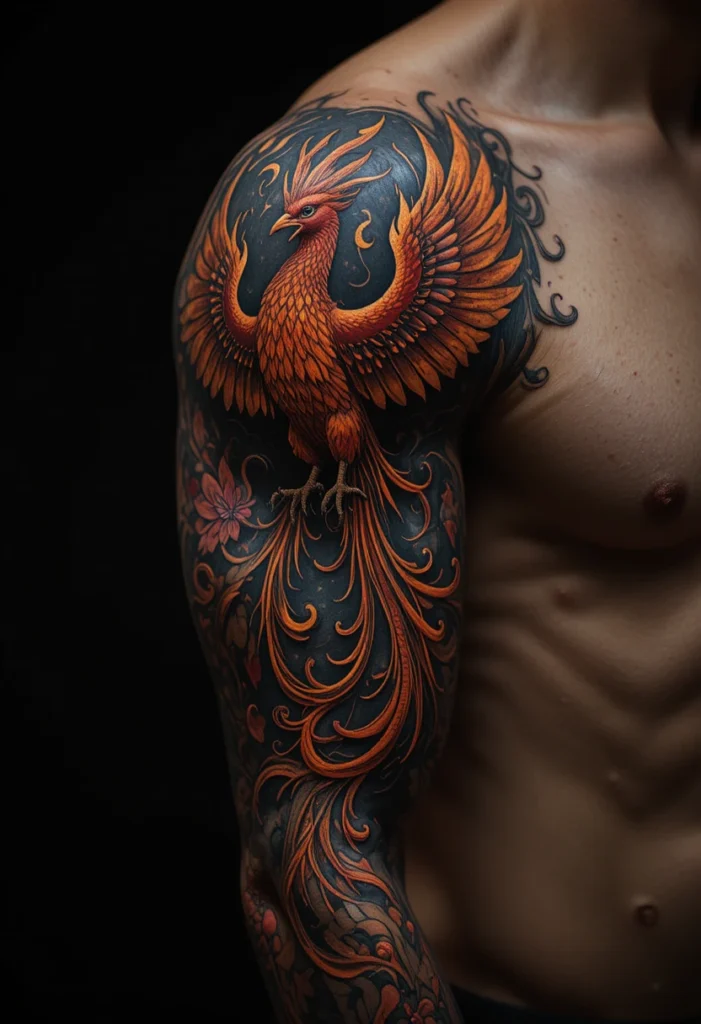
Here’s a detail most people get wrong: the Japanese phoenix isn’t the same as the Western one. Hōō is a creature of harmony and good fortune, said to appear only in times of peace and prosperity — it’s less about rising from ashes and more about renewal after hardship. Japanese Rituals
Phoenix sleeves lean into elaborate tail feathers that sweep down the arm in oranges, reds, and gold, often paired with peonies for extra richness. It’s a natural choice if your sleeve is meant to mark a turning point — recovery, a fresh start, a version of yourself you fought to become.
6. Tiger Prowling Through Bamboo
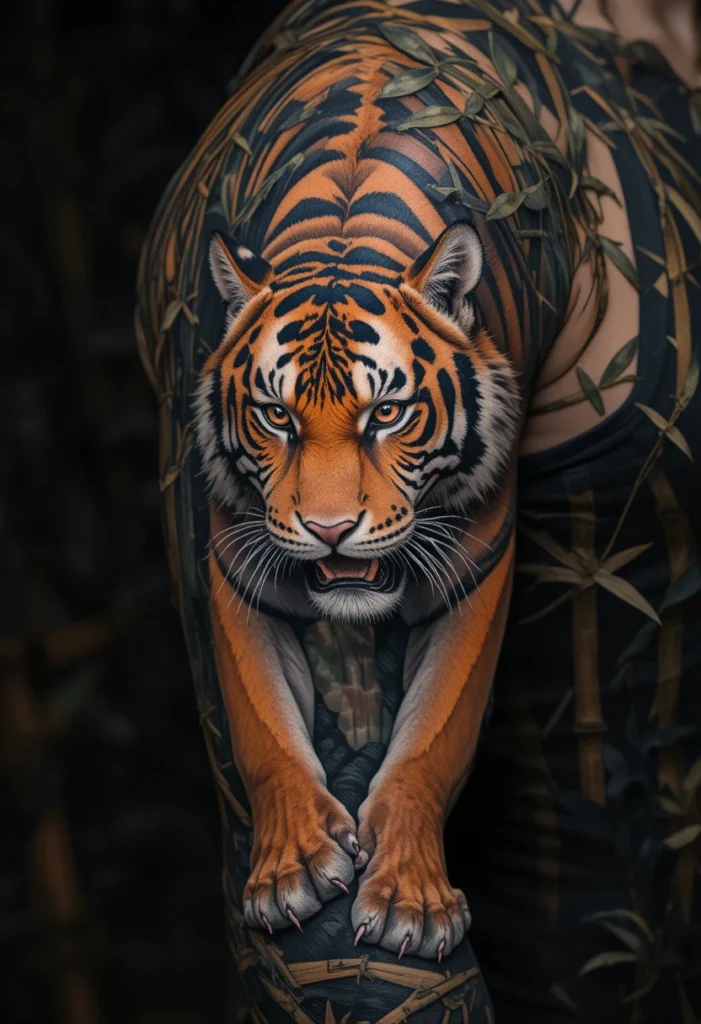
The tiger is the sleeve for anyone who wants strength without the mythology of a dragon. Tigers symbolize courage, protection, and the ability to ward off evil spirits and bad luck — and in Japanese folklore, the tiger controls the wind the way the dragon controls water.
Tattoo compositions usually show the tiger mid-stride through a bamboo grove, expression fierce but composed. But there’s a catch: a tiger sleeve lives or dies on the artist’s ability to capture motion. Look closely at an artist’s portfolio for tigers specifically before booking — not just their dragons.
7. Dragon and Tiger Combo Sleeve
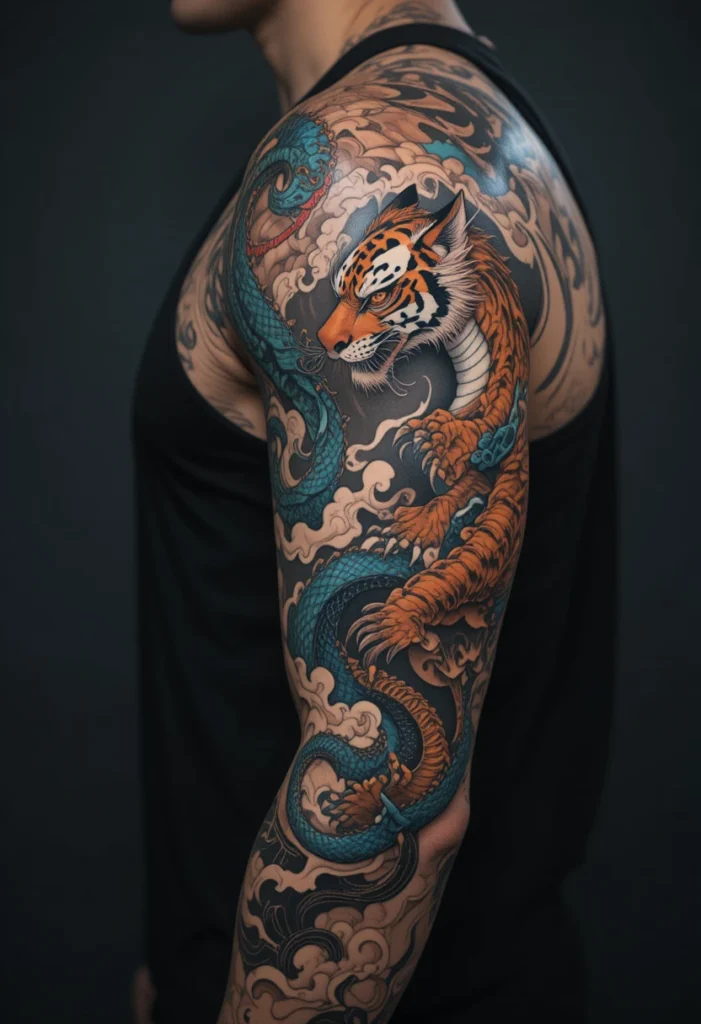
So what happens when you can’t choose between the two? You don’t have to. Dragon and tiger tattoos are traditionally paired precisely because they represent the balance of opposing forces — water and wind, wisdom and raw strength, similar to yin and yang.
This is one of the most requested full-sleeve combos because it tells a complete story on its own: the dragon usually flows down one side of the arm while the tiger prowls the other, meeting in the middle where their energies balance out.
8. Hannya Mask Centerpiece
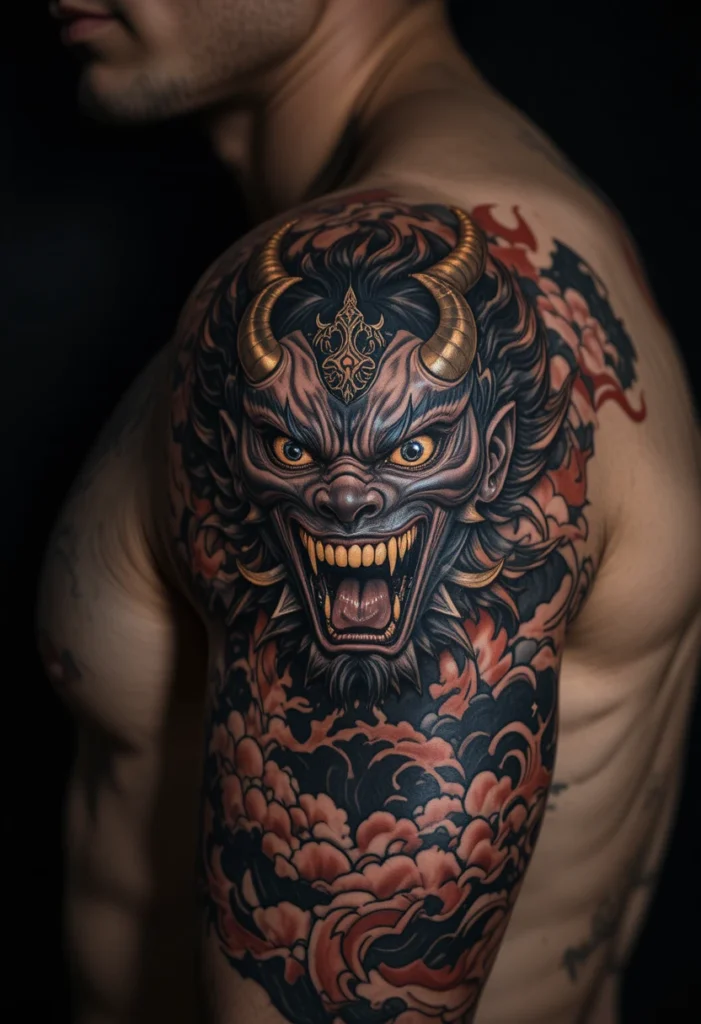
This one turns heads for a reason. The Hannya mask comes from Japanese Noh theater and depicts a woman overcome by jealousy and rage, with sharp horns, metallic eyes, and bared teeth. But it’s more layered than “scary demon mask” — it traces an arc from human emotion to transformation, jealousy tipping into something monstrous. Iglatattoo
As a sleeve anchor, the Hannya mask works best placed at the shoulder or upper arm where the dramatic shading has room to breathe, surrounded by wind bars or florals to soften the intensity.
9. Oni Demon Guardian Sleeve
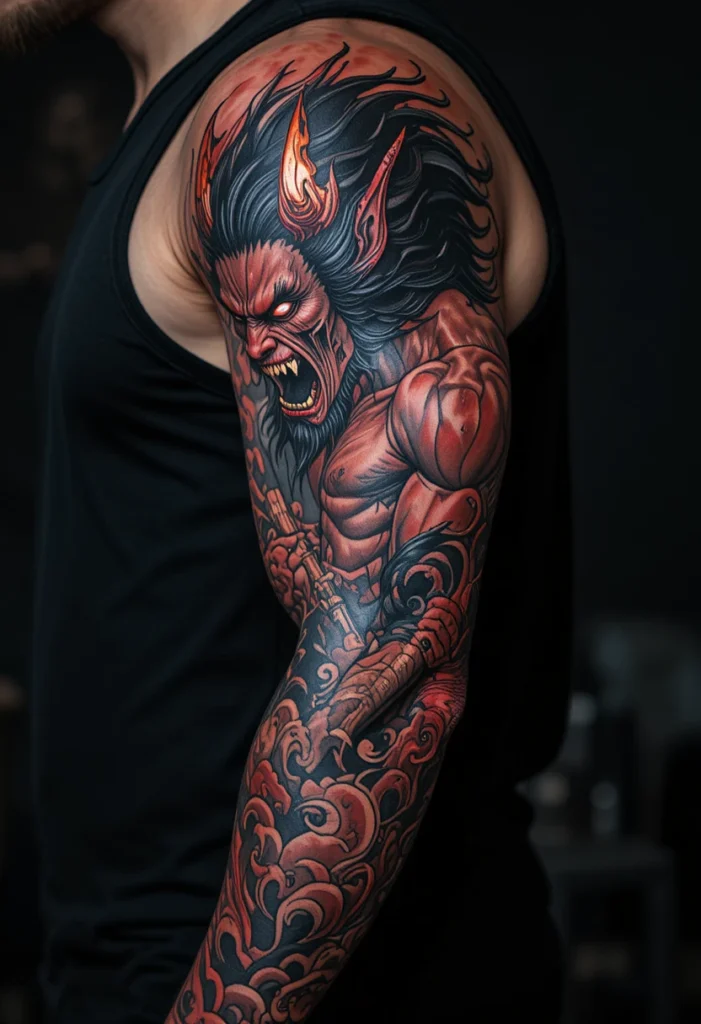
Don’t confuse the Oni with a villain either. In Irezumi, Oni are protectors against evil, often shown mid-motion with a weapon or curling smoke, embodying raw strength used in service of guarding what matters. It’s a bold, high-contrast option for anyone drawn to intensity with a protective meaning underneath it.
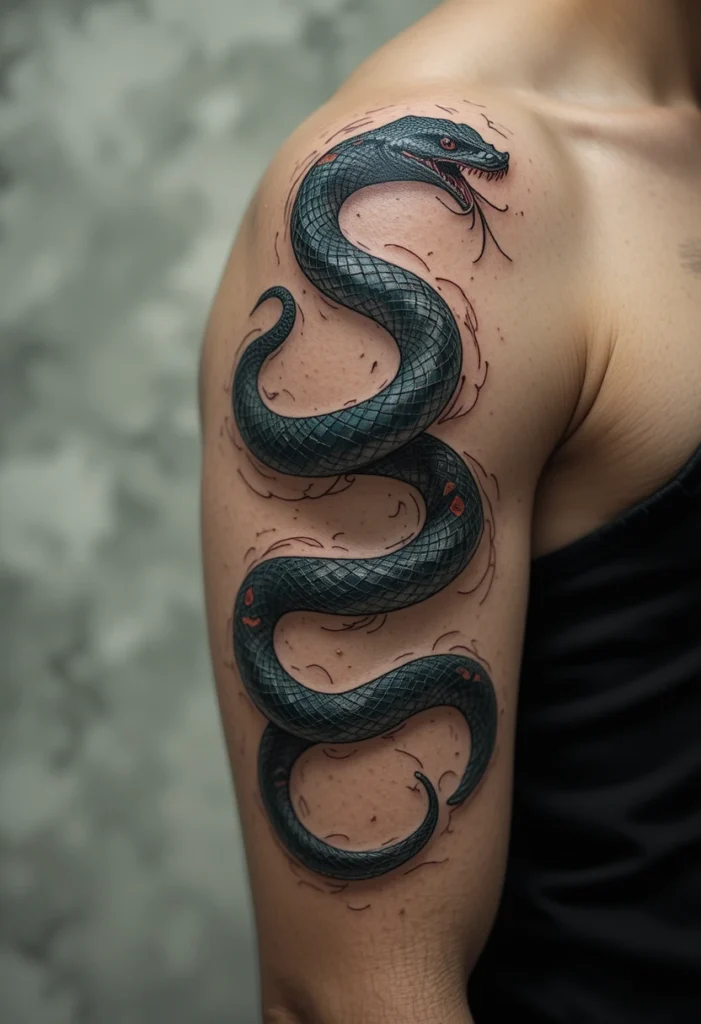
10. Coiling Snake (Hebi) Sleeve
Snakes are underrated in Japanese sleeve design, and that’s exactly what makes them stand out. Snakes are seen as guardians against bad luck, disaster, and illness, and are strongly associated with medicine and healing. Next Luxury
Their long, curving bodies are practically made for sleeves — an artist can wrap a snake around the entire length of your arm, coiling naturally with your muscle and bone structure. Pair it with cherry blossoms or peonies for contrast, or keep it stark in black-and-grey for something moodier.
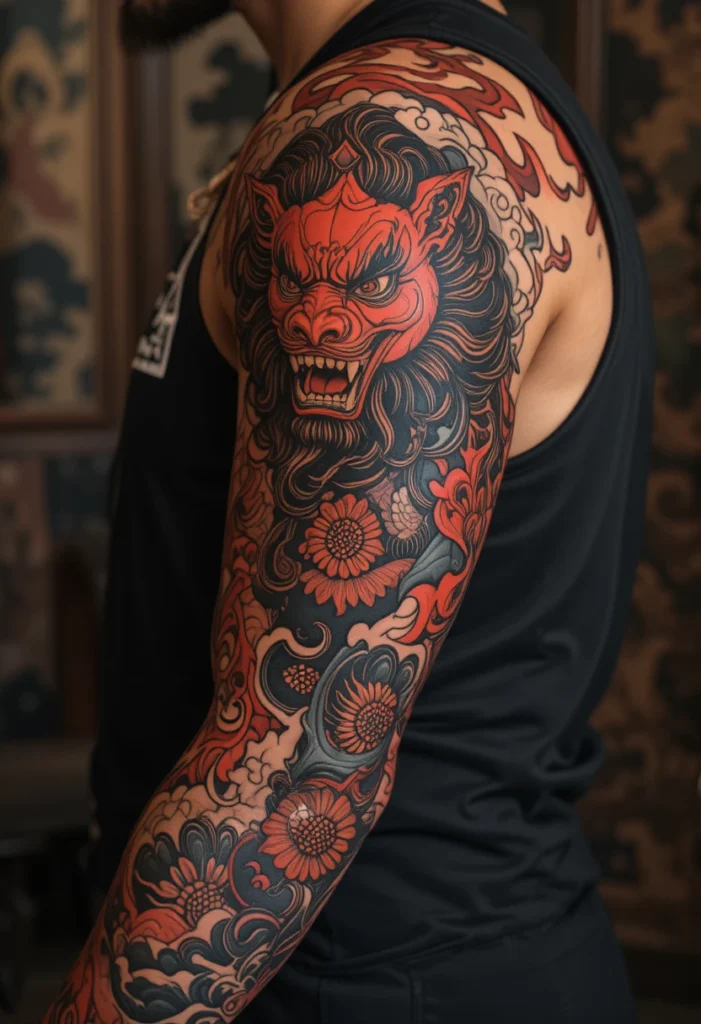
11. Foo Dog (Karajishi) Guardian Sleeve
If you want the protective symbolism of a mythical creature without going with a dragon, the karajishi — a lion-like guardian beast — is the move. A karajishi tattoo symbolizes bravery, loyalty, and divine protection, and it’s traditionally rendered with a shaggy mane and fierce expression, often paired with peonies as the “king of flowers” to reinforce its noble status. Your Site Title
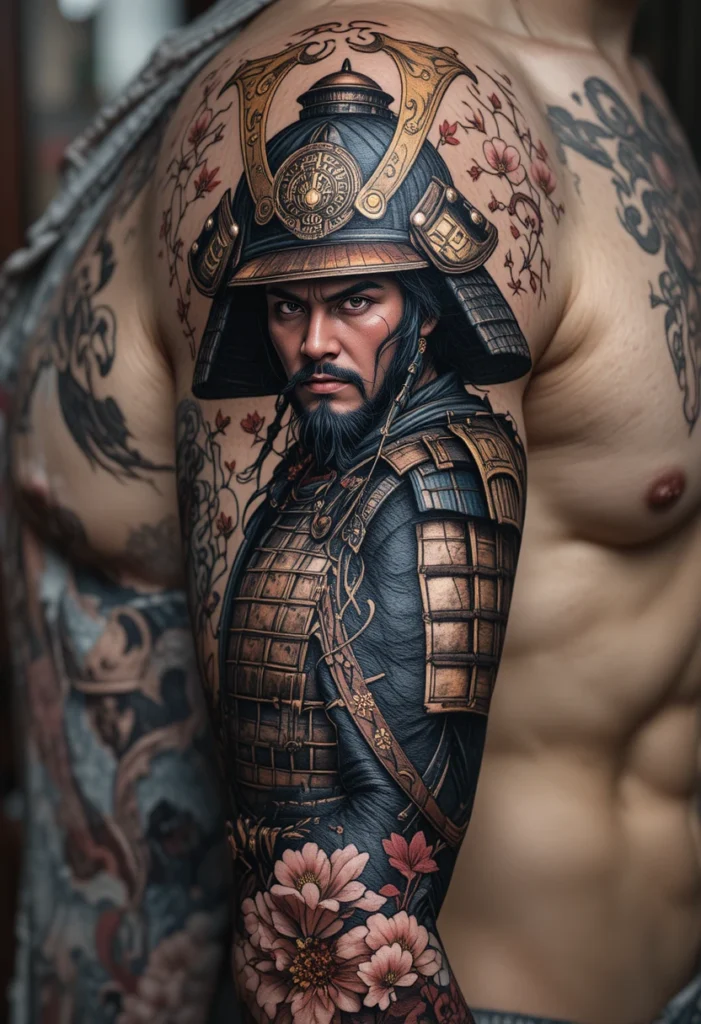
12. Samurai Warrior Portrait Sleeve
For a design with more narrative weight, a samurai portrait sleeve tells a story of honor and discipline through detailed armor work, battle elements, and a composed, resolute expression. This style demands serious artistic skill — portrait and historical detail work is unforgiving of shortcuts — so this is one idea where checking an artist’s specific samurai portfolio matters more than usual.
Quick summary for this one: if realism and storytelling matter more to you than pure symbolism, this is your pick.
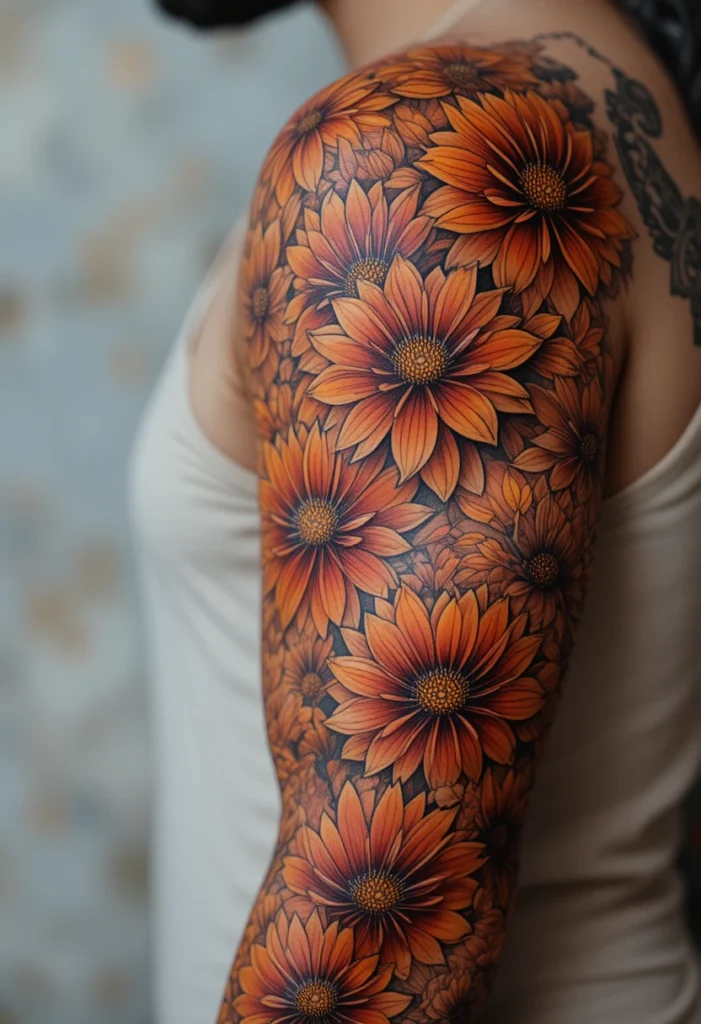
13. Chrysanthemum (Kiku) Fill Sleeve
The chrysanthemum is Japan’s imperial flower, and in tattoo work it represents longevity, perfection, and rejuvenation. Tightly layered petals radiating outward create a sense of order that works beautifully as a fill element between larger figures — but it’s also strong enough to anchor an entire sleeve on its own if you want something elegant rather than fierce.
Read also:Why Do Black Tattoos Fade Over Time? (And How to Stop It From Happening to Yours)
14. Wave (Namigata) Background Sleeve
Last but far from least: sometimes the background is the tattoo. A wave sleeve uses the rolling, foam-tipped Japanese wave pattern (namigata) as the dominant visual, either wrapping the whole arm solo or acting as the connective tissue behind koi, dragons, or cherry blossoms. Waves pair naturally with almost every other symbol on this list, which makes this a smart choice if you’re planning to add elements over time.
How to Choose the Right Design for You
Here’s the thing most people skip: your sleeve should be built around one lead symbol, with one or two supporting elements — not five competing focal points crammed onto one arm. Waves, clouds, and wind bars exist specifically to tie everything together, not to be the star.
A few quick questions to ask yourself before your consultation:
- What’s the story I actually want on my arm — perseverance, protection, transformation, or beauty?
- Full color or black-and-grey? Color suits florals, phoenixes, and dragons; black-and-grey often reads stronger for masks and animals.
- Half sleeve, 7/10, or full? A half sleeve (gobu) ends above the elbow, a 7/10 sleeve reaches mid-forearm, and a full sleeve (nagasode) runs to the wrist.
Japanese Sleeve Tattoo FAQ
How long does a Japanese sleeve tattoo take?
Plan for multiple sessions. A half sleeve typically takes 2–4 sittings depending on size, color, and detail level, while a full sleeve can stretch across many months as the design is built out in stages.
Does a Japanese sleeve have to include a background?
Not strictly, but traditional Irezumi almost always uses background elements — waves, clouds, or wind bars — to connect the main figures into one flowing composition rather than isolated images.
Can I combine two symbols, like a dragon and a tiger?
Yes, and it’s one of the most popular combinations precisely because the two represent balancing forces. The key is picking one as the lead and letting the other support it, rather than giving both equal visual weight.
Is color or black-and-grey better for a first Japanese tattoo?
Neither is objectively better — it depends on the symbol. Animals and masks often read powerfully in black-and-grey, while florals and phoenix designs tend to shine in color.
Final Thoughts
A Japanese sleeve is a long-term investment in both time and story, which is exactly why it’s worth choosing a design that actually means something to you — not just one that looked good on a Pinterest board at 1am. Whether you’re drawn to the quiet resilience of a koi fish, the guardian strength of a tiger, or the soft impermanence of cherry blossoms, the right sleeve is the one that still feels true to you ten years from now.
Pin this guide so you have it ready when you sit down with your artist — and if you’re still narrowing things down, start by picking your one lead symbol first. Everything else builds around it.