You’ve scrolled past a hundred tribal tattoos today already. Bold black lines, spirals wrapping around a bicep, geometric patterns that look powerful but tell you nothing. Here’s the thing most people never ask before booking an appointment: what does this design actually mean, and where does it come from?
That question is the difference between a tattoo you’ll love in twenty years and one you’ll quietly Google “cover up ideas” for. Tribal tattooing isn’t one style — it’s dozens of distinct traditions, each with its own symbols, rules, and centuries of history behind it. Below are 15 tribal tattoo designs, what they represent, and where they come from, so you can pick one that actually says something about you.
Save this for later — you’re going to want to compare a few of these before your consultation.
What Makes a Tattoo “Tribal,” Anyway?
“Tribal” gets used as a catch-all for anything with bold black lines and repeating patterns, but the term actually spans body art traditions from Polynesia, Africa, the Americas, and beyond — cultures that never influenced each other yet independently arrived at the same idea: solid black ink, high contrast, and designs that mean something beyond decoration.
Some of these traditions are open for anyone to draw inspiration from artistically. Others carry deep cultural or spiritual weight specific to a people group, and wearing them without understanding — or without connection to that heritage — can read as disrespectful. A good tattoo artist will talk you through this before the needle ever touches skin, and it’s worth doing your own research first too.
With that in mind, here are 15 designs worth knowing.
1. Polynesian Sleeve
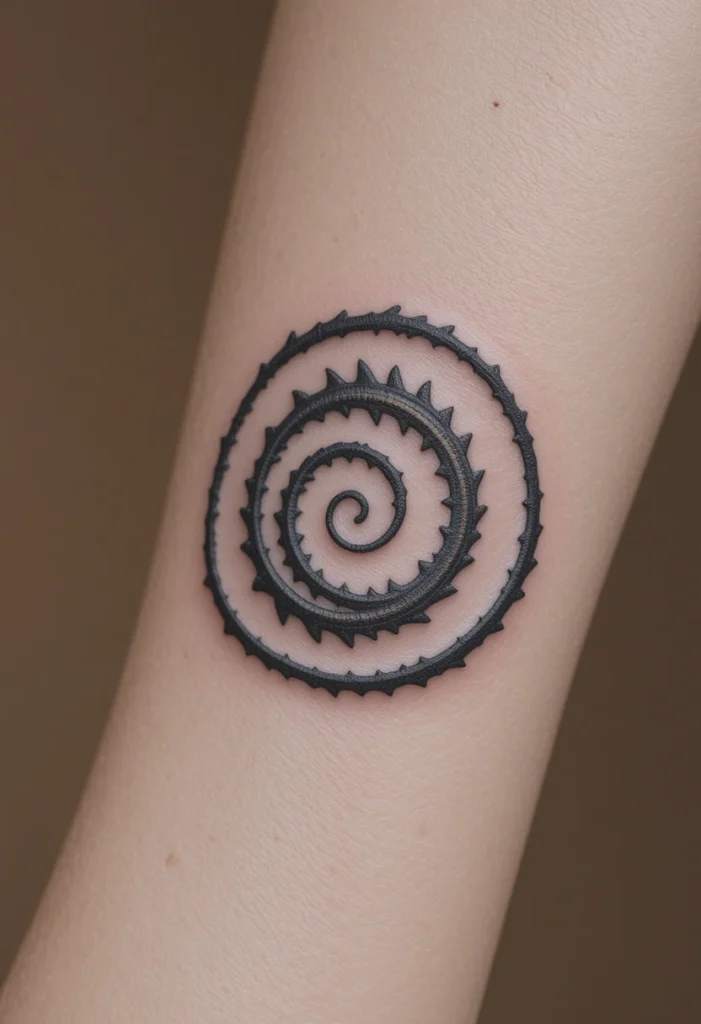
The most recognized tribal style in Western tattoo shops, Polynesian work uses spearheads, shark teeth, ocean waves, and interlocking spirals to build a continuous flow around the arm. Each symbol traditionally marked something specific — a warrior’s achievement, a family lineage, protection at sea. Modern sleeves borrow the visual grammar without claiming the exact ceremonial meaning, which is why working with an artist who understands the tradition matters here.
Best for: anyone wanting a bold, flowing full-arm piece with real visual movement.
2. Maori-Inspired Koru Spiral
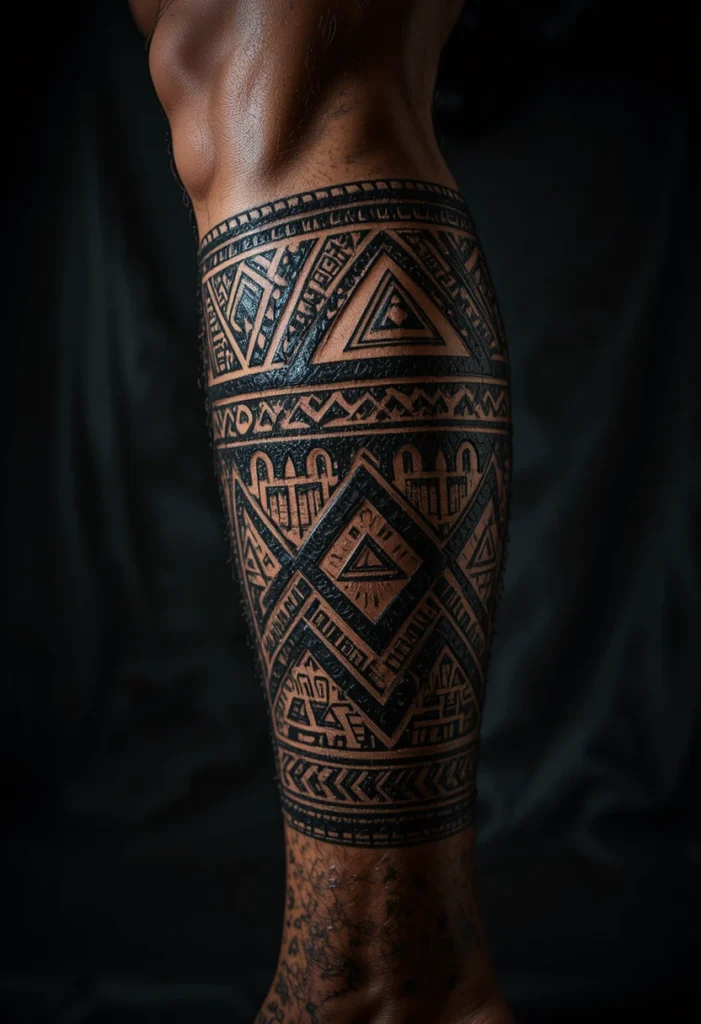
The koru — a spiral shape based on an unfurling silver fern frond — is one of the most iconic elements of Maori art. It represents new beginnings, growth, and peace. Full facial or body moko carries deep genealogical significance specific to Maori identity, so most non-Maori wearers opt for the koru spiral alone as a respectful nod to the symbolism of growth rather than attempting a full traditional moko.
Best for: a smaller, symbolic piece on the wrist, shoulder, or behind the ear.
3. Samoan Pe’a-Style Leg Band
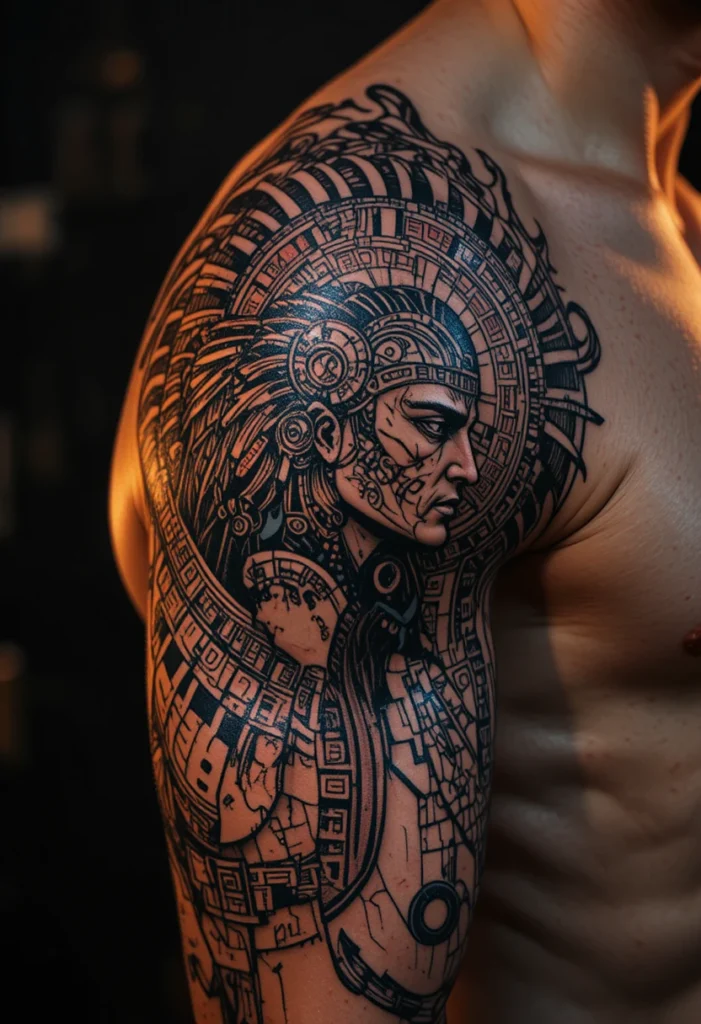
Traditional Samoan pe’a tattooing wraps the body from waist to knee in dense geometric bands, applied by hand using tools passed down for generations — an honor reserved for those within the culture. Contemporary tribal leg-band designs borrow the wide, wrapping structure and bold linework as a design language, built around strength and endurance rather than the ceremonial pe’a itself.
Best for: a statement thigh or calf piece with serious visual weight.
4. Aztec Sun Warrior
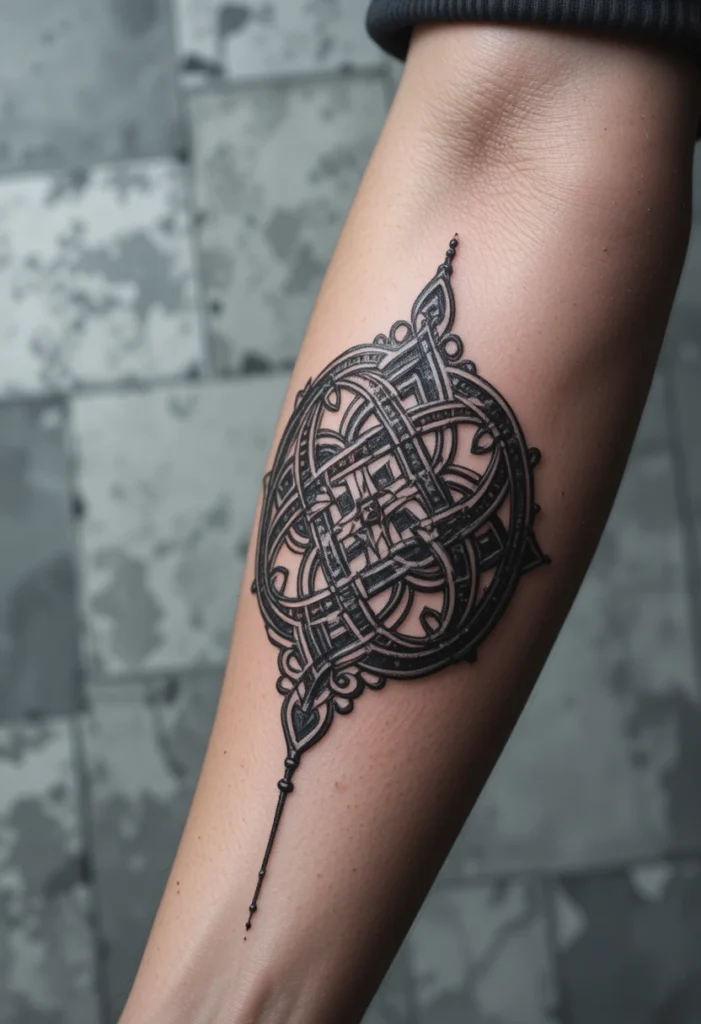
Centered on the sun disk, often paired with a warrior figure or serpent, Aztec tribal designs pull from Mesoamerican mythology where the sun represented life, sacrifice, and cosmic balance. Quick summary: if you’re drawn to imagery of power, protection, and ancestral pride tied to Mexican heritage, this is one of the most visually striking places to start.
Best for: a chest or back centerpiece — the sun motif needs room to breathe.
5. Celtic Knotwork
Unbroken, interwoven lines that loop endlessly — Celtic knots symbolize eternity, unity, and interconnected fate. No clean beginning or end, which is exactly the point. Popular variations include the trinity knot (three interlocking loops) and the endless knot, both easy to scale from a small wrist piece to a full sleeve.
Best for: anyone honoring Irish or Scottish heritage, or simply drawn to the idea of things that never truly end.
6. Native American Feather & Arrow
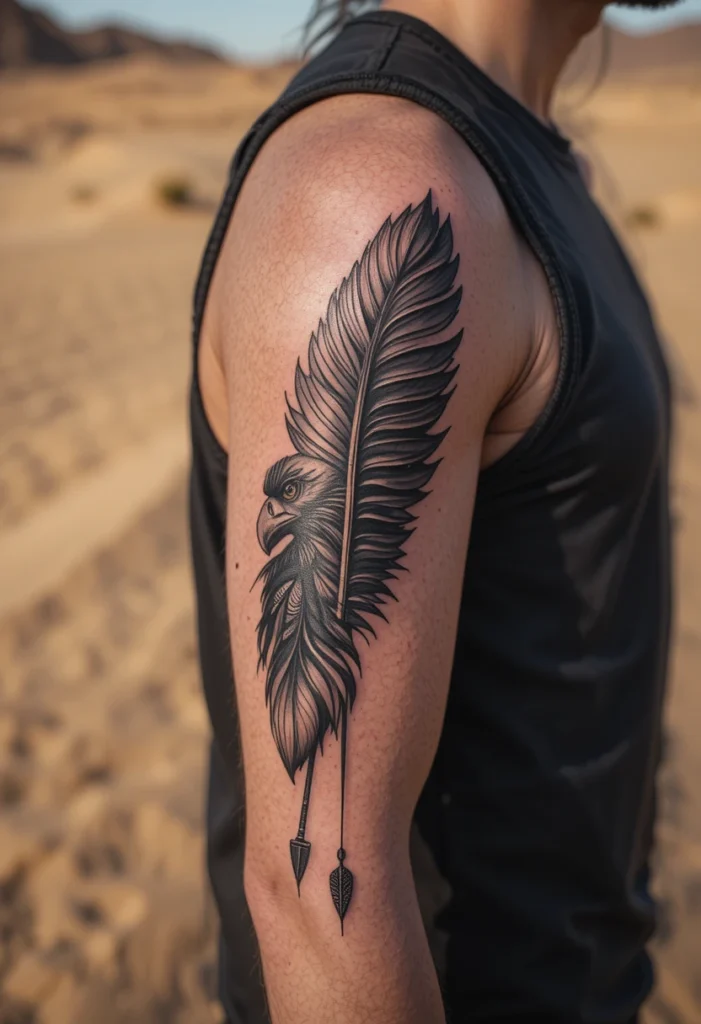
Feathers, arrows, and animal tracks dominate this style, pulling from the deep spiritual connection many Native American tribes hold with the natural world. An arrow pointing forward traditionally symbolizes moving past a struggle; a feather often marks honor or a connection to spirit. Because these symbols are tied to specific living cultures, it’s worth researching the specific tribal tradition you’re drawn to rather than treating it as generic “native” imagery.
Best for: minimalist single-symbol tattoos on the forearm or ribs.
7. Haida Formline (Pacific Northwest)
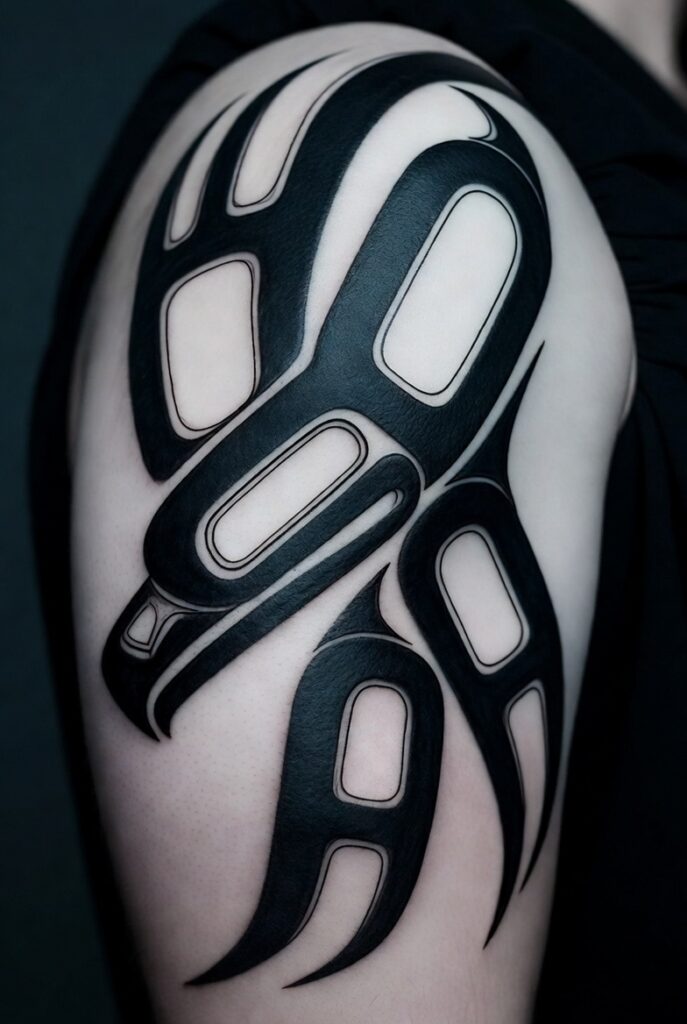
Bold black outlines filled with red or turquoise, built from ovoid shapes and thick curving lines representing animals like the raven, orca, and bear — Haida formline art comes from Indigenous peoples of the Pacific Northwest coast. Every curve in formline art is deliberate; nothing is improvised. This is a highly specialized tradition, so seek out an artist trained specifically in it.
Best for: those wanting a distinct animal-crest design unlike typical tribal blackwork.
8. African Adinkra Symbols
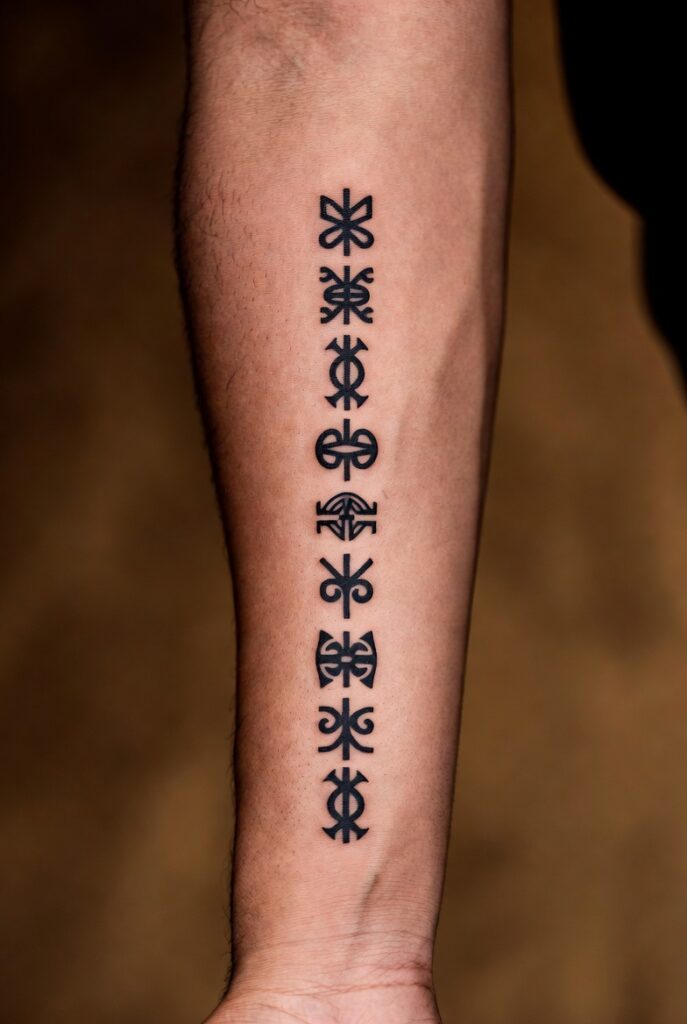
Originating with the Akan people of West Africa, Adinkra symbols each carry a specific proverb-like meaning — Sankofa (a bird looking backward) represents learning from the past, Gye Nyame speaks to the supremacy of a higher power. These symbols are compact, graphic, and were never designed to be complicated, which makes them some of the most tattoo-friendly tribal symbols out there.
Best for: small, meaningful single-symbol tattoos — perfect for a first tribal piece.
9. Filipino Batok
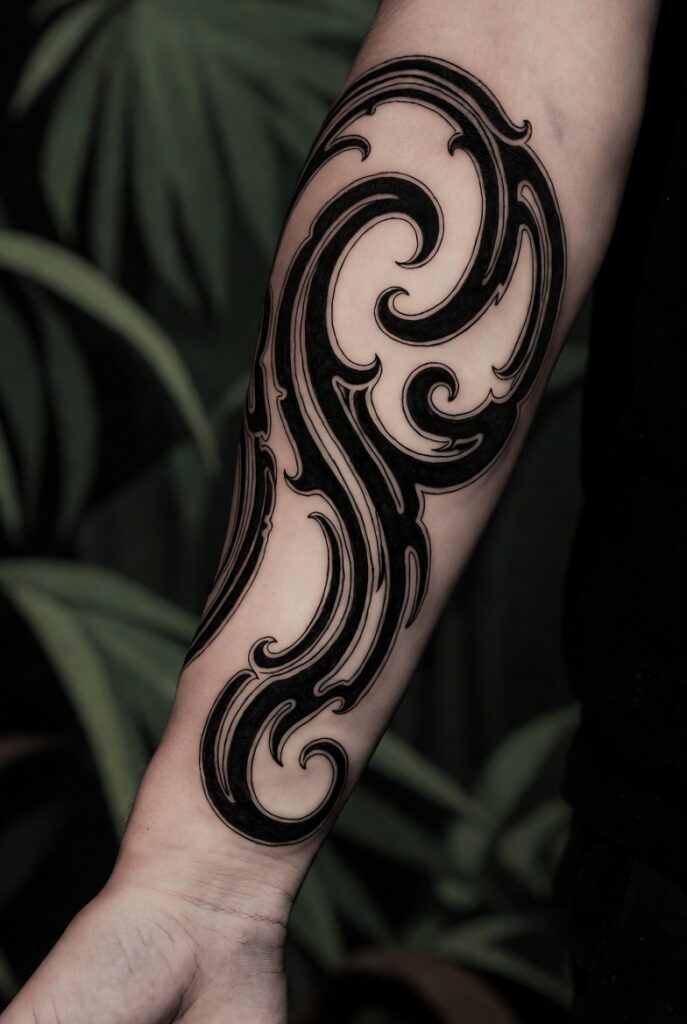
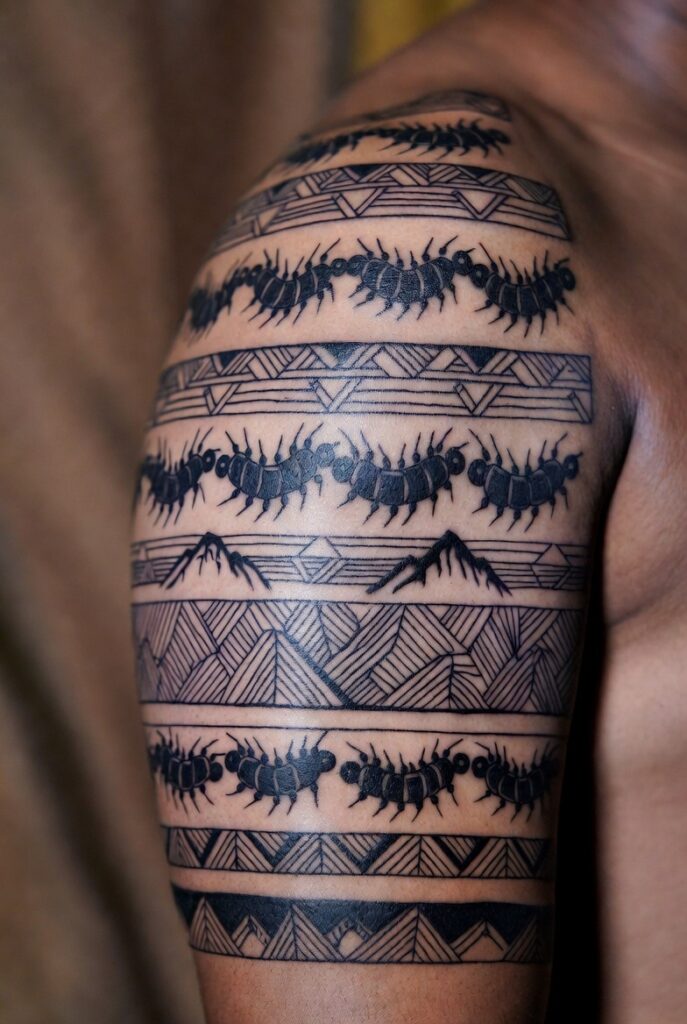
Batok is the traditional hand-tapped tattooing of the Philippines, historically marking bravery, achievement, and social rank among warriors. The linework is bold and geometric, often built from repeating triangles and centipede-like patterns running along the arms and torso. There’s been a strong cultural revival of batok in recent years, with practitioners intentionally reconnecting the art to its roots.
Best for: those with Filipino heritage looking to honor it directly, ideally through an artist practicing the tradition.
10. Borneo Iban Hook
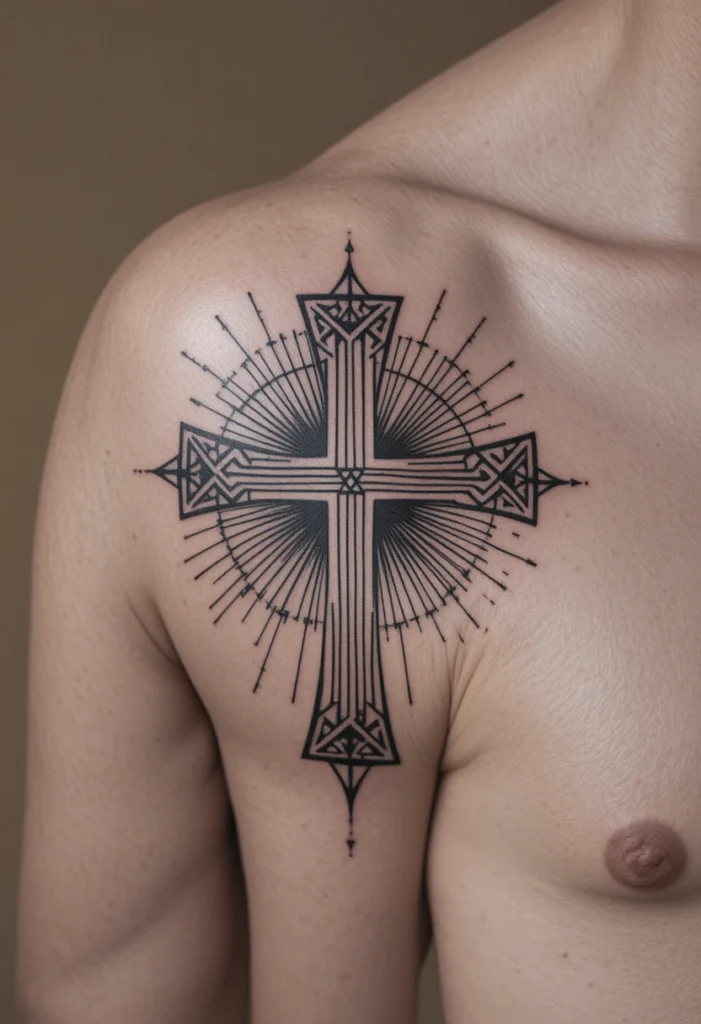
Originating with the Iban people of Borneo, this style is built around hook-like spirals called “bunga terung” (eggplant flower), historically representing protection and a spiritual connection to ancestors. It’s one of the traditions credited with sparking the modern Western tribal tattoo movement back in the 1970s, when it crossed over into blackwork studios worldwide.
Best for: a densely patterned sleeve or back piece with an unmistakably ancient feel.
11. Marquesan Cross
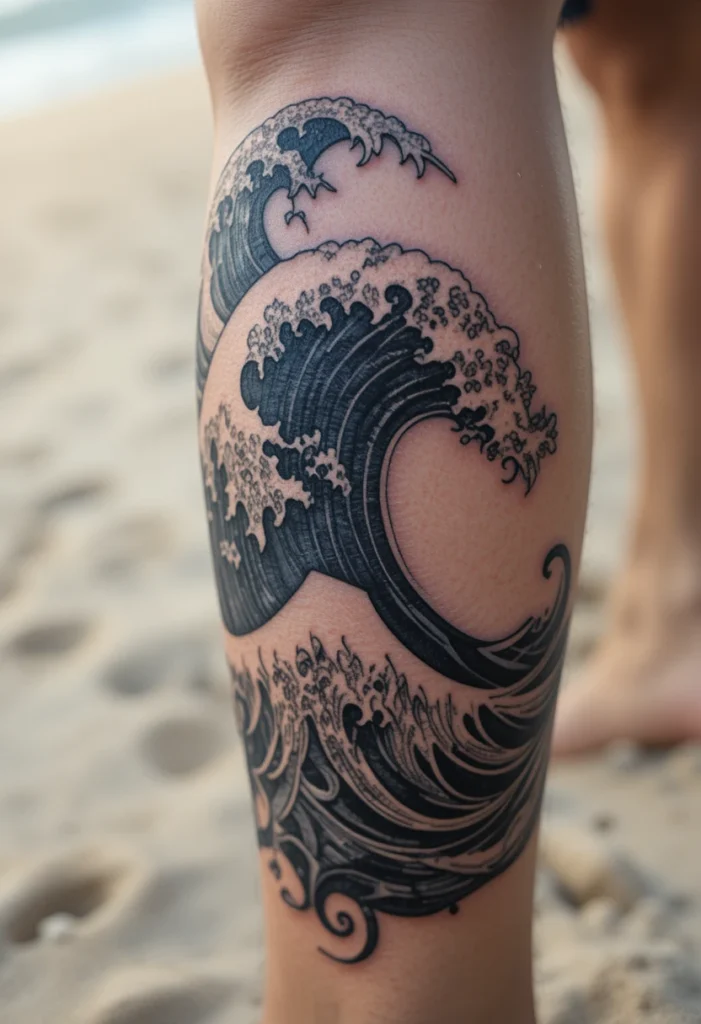
A four-pointed, symmetrical cross made from four spearheads meeting at a center point — the Marquesan cross represents balance across the four elements or four directions, depending on the interpretation. It’s one of the most compact, geometric symbols in the wider Polynesian tattoo family, which makes it a favorite standalone piece.
Best for: a clean, symmetrical tattoo on the sternum, back of the neck, or hand.
12. Hawaiian Ocean Wave (Kakau)
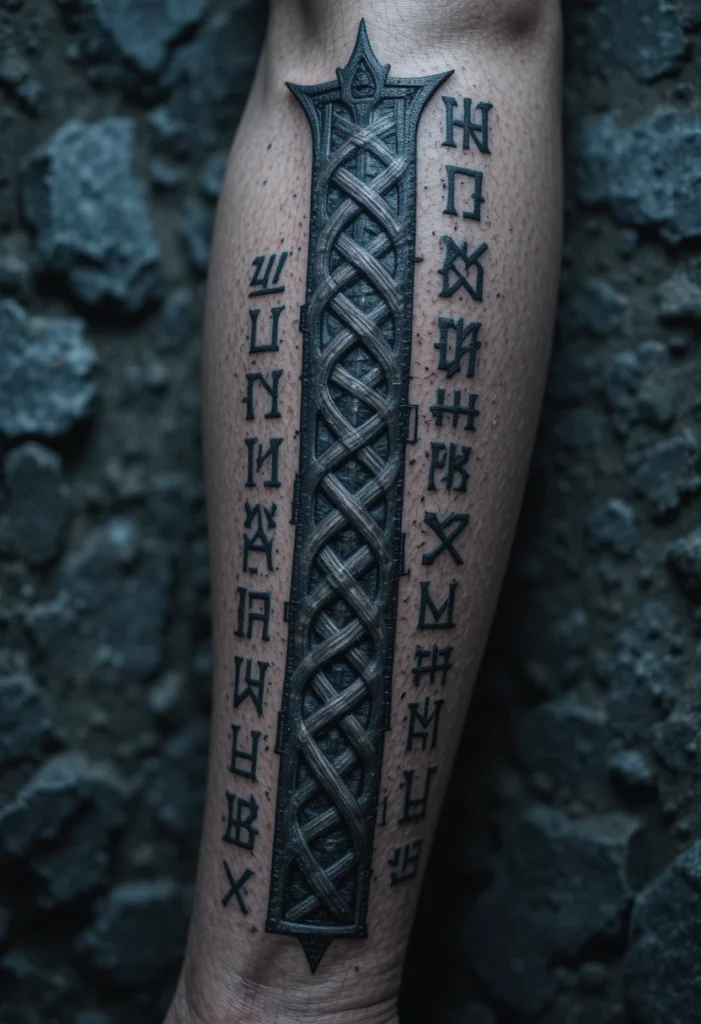
Traditional Hawaiian tattooing, or kakau, leans heavily on ocean imagery — waves, turtles (honu), and shark teeth (niho mano) representing protection, guidance, and family. The wave motif specifically ties to the constant motion of life and the ocean’s role as both provider and protector in Hawaiian culture.
Best for: anyone with a deep connection to the ocean or Hawaiian heritage; works beautifully as a rib or ankle piece.
13. Norse Runic & Knotwork
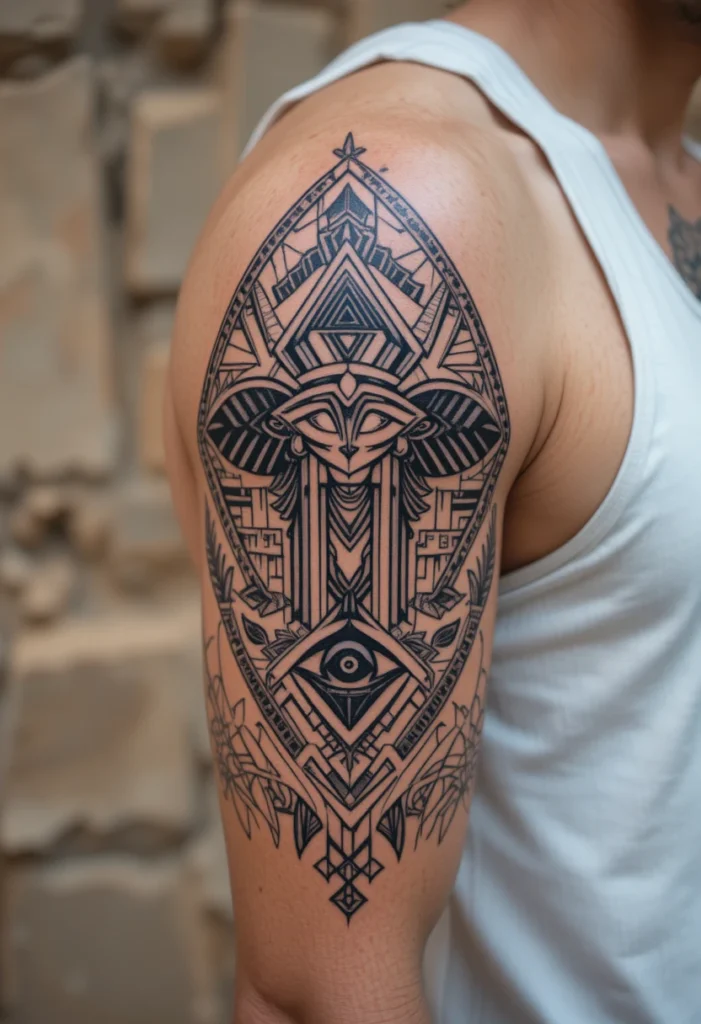
Pulling from Viking-era Scandinavian art, this style combines angular runic symbols with interlocking animal knotwork (Urnes style). Runes like Algiz (protection) or Vegvisir (a compass-like symbol for guidance) are popular standalone choices, often surrounded by the same interwoven linework found in Celtic design but with a distinctly sharper, more angular character.
Best for: forearm or shoulder pieces for anyone drawn to Norse mythology and history.
14. Egyptian Geometric
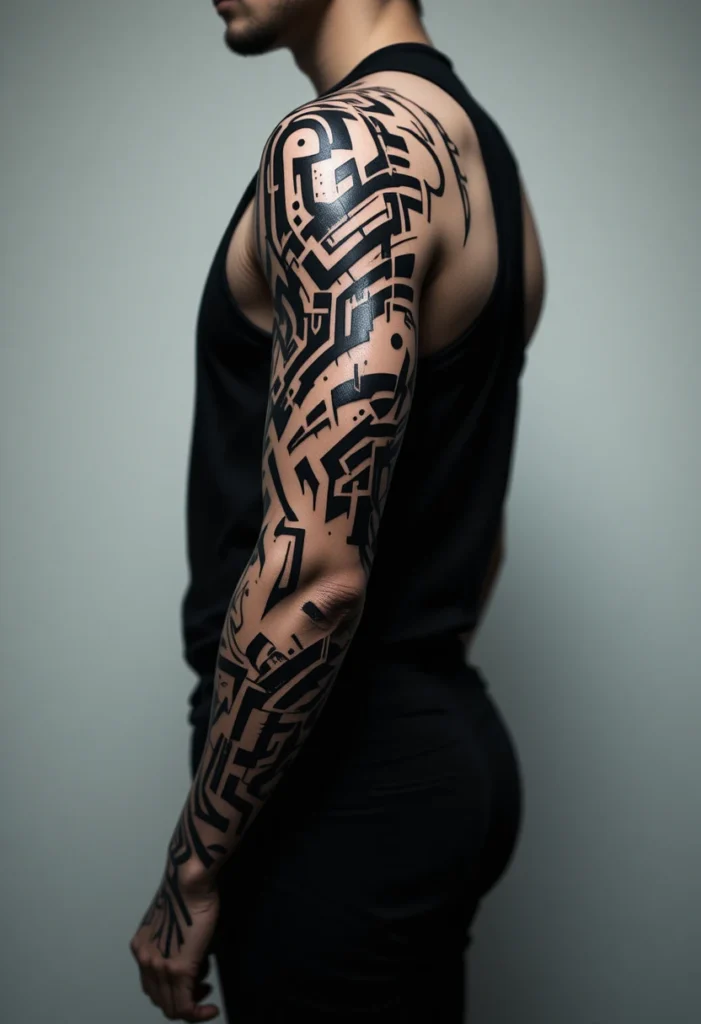
Ancient Egyptian tattooing used precise geometric patterns and symbols — the Eye of Horus for protection, the ankh for life — often applied in straight, deliberate lines rather than the flowing curves seen in Polynesian work. The rigid symmetry gives this style a distinct, almost architectural feel compared to other tribal traditions.
Best for: a striking, symmetrical piece on the sternum or upper back.
15. Modern Neo-Tribal Fusion
Neo-tribal takes the bold-fill, high-contrast visual language shared across tribal traditions and builds something entirely new — not tied to a single culture’s genealogy, but clearly descended from that shared graphic tradition. Think abstract blackwork, dotwork shading blended with solid fill, or tribal patterns fused with botanical or geometric elements.
Best for: anyone who loves the look of tribal tattooing but wants a fully original design with no specific cultural claim attached.
Read also:Why Do Black Tattoos Fade Over Time? (And How to Stop It From Happening to Yours)
How to Choose the Right Placement
Where you put a tribal tattoo changes how it reads as much as the design itself:
- Arms and shoulders — the classic choice for flowing Polynesian, Maori, or Haida-style pieces that follow natural muscle contours
- Back — the largest canvas, ideal for detailed Aztec, Samoan, or Borneo-style pieces that need room to tell a full story
- Chest and sternum — best for symmetrical, centered designs like the Marquesan cross or Egyptian geometric work
- Legs and calves — a natural fit for Samoan-style banding or Hawaiian wave motifs, following the leg’s vertical line
- Wrist, ankle, or behind the ear — perfect for smaller, single-symbol pieces like Adinkra symbols or a koru spiral
Bucket brigade moment: so how do you actually narrow 15 options down to one? Start with heritage and meaning, not just visuals.
Tribal Tattoo FAQ
Is it disrespectful to get a tribal tattoo that isn’t from your own culture?
It depends on the design and your understanding of it. Broad artistic styles like neo-tribal blackwork are generally fair game. Designs with deep, specific cultural or ceremonial significance — like full Maori moko or Samoan pe’a — are best left to those within that culture, or approached only with real research and a culturally informed artist.
Do tribal tattoos hurt more than other styles?
Not inherently — pain depends on placement and size, not style. Larger tribal pieces on the ribs or spine will hurt more simply because those areas are more sensitive, regardless of the design.
How much does a tribal tattoo cost?
Small single-symbol pieces (like an Adinkra symbol or Marquesan cross) often run $80–$200. Larger sleeve or back pieces from a specialized tribal artist can run well into the thousands, given the hours of detailed linework involved.
Can tribal tattoos be done in color?
Traditionally, most tribal styles use solid black ink for maximum contrast, but modern artists increasingly incorporate red, turquoise, or other accent colors — especially in Haida formline and Aztec-inspired work.
Final Thoughts
A tribal tattoo is one of the few styles where the story behind the design matters just as much as how it looks on your skin. Whether you’re drawn to the flowing spirals of Polynesian art, the sharp symmetry of Egyptian geometry, or a fully original neo-tribal piece, the best choice is the one you actually understand — not just the one that looked good in a search result.
Take your time, talk to an artist who knows the tradition you’re interested in, and pick the design that will still mean something to you decades from now.